Sign in
Welcome! Log into your account
Forgot your password? Get helpPrivacy PolicyPassword recovery
Recover your password
A password will be e-mailed to you.
GEN – Genetic Engineering and Biotechnology NewsHomeTopicsBioprocessingFree-Floating Bioelectronic Sensors for Fermentation Monitoring
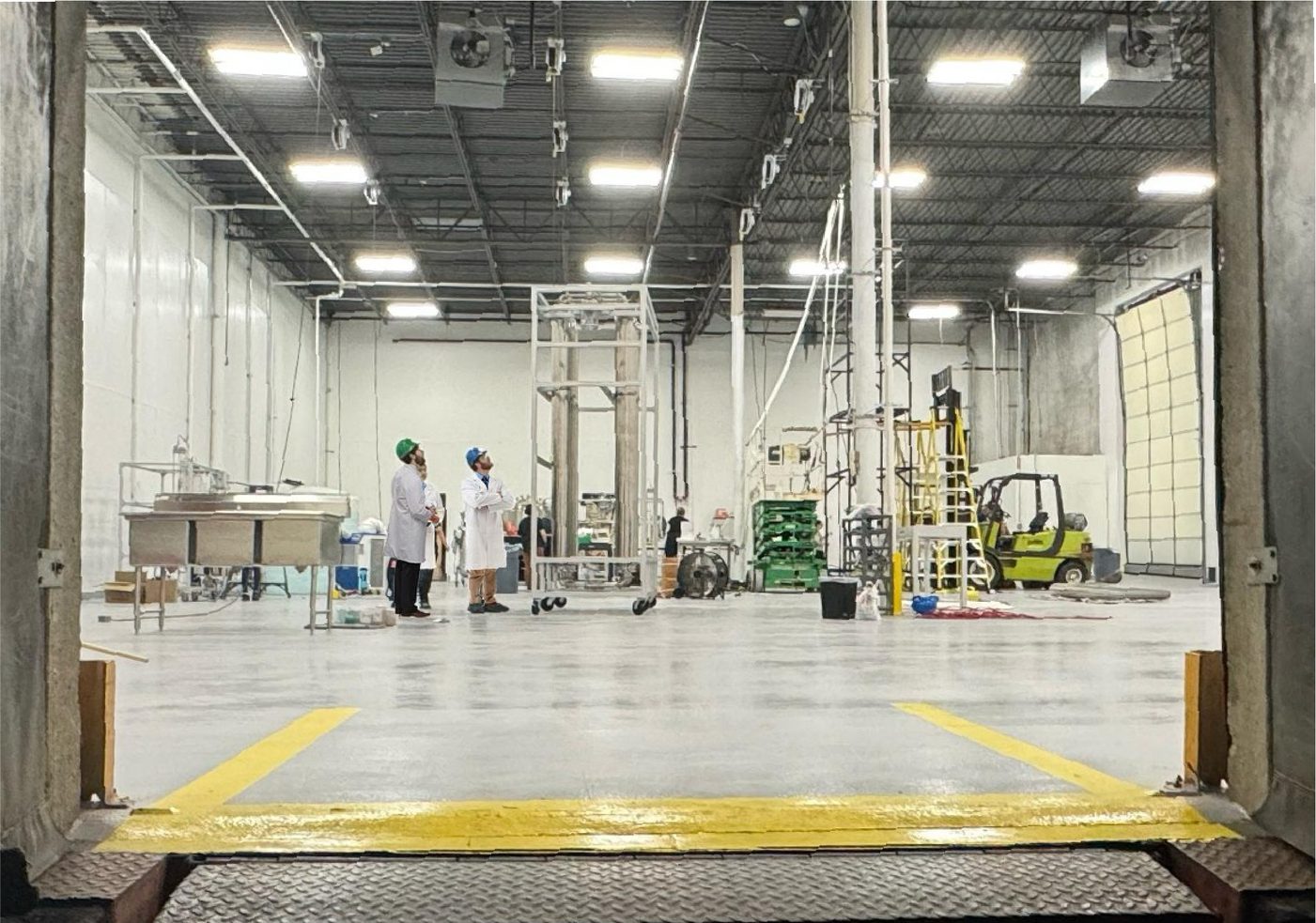
The factory of the future may use a network of free-floating bioelectronic sensors. [Capra Biosciences]
The static, mounted monitoring systems currently used inside fermentation vats are poised to be replaced in the near future with a network of free-floating bioelectronic sensors, if the vision of researchers from Boston University and Capra Biosciences reaches fruition.
Designed for both vat and continuous bioprocessing systems, this bioelectronic sensor network could, ideally “provide spatial information about where they are in a heterogeneous bioreactor platform…as well as multiple measurements of things such as temperature, pH, dissolved oxygen, and dissolved carbon dioxide,” Rabia Yazicigil, PhD, associate professor, Boston University (BU), and lead principal investigator for this project, tellsGEN.
Consequently, the network will report data that enable biomanufacturers to determine whether the solution is mixing properly and to identify transit times throughout the process, in addition to specific processing parameters.
“The key innovation…is that these systems integrate living cells into the electronics,” Miguel Jimenez, PhD, assistant professor, BU, emphasizes. The inclusion of microbes—bacteria or yeast cells, for example—“supercharges the sensors,” enabling them to monitor more parameters that are directly relevant to biomanufacturing.
Roughly the size of a chickpea, these sensors never leave the bioreactor. “That allows us to get measurements throughout the reactor… which helps us build a really rich data set that we can then feed into models to help us monitor and predict performance,” notes Mark Poole, PhD, senior director of manufacturing and applied AI, Capra Biosciences.
Paradigm-shifting potential
“Having lots of high-quality measurements at different points in the reactor is game-changing for any biomanufacturing company,” Poole says.
Jon Valdez, program manager at BioMADE, which funded the project as part of a $21.4 million investment in 14 projects to advance the bioindustrial manufacturing industry, agrees, calling it potentially paradigm-shifting. Potential applications extend to clinical monitoring—where a prior collaboration focused on human gut monitoring. The technology is solvent-agnostic but may be most effective in a water-based environment, enabling applications that may include soil and water quality monitoring. Benefits, he says, include lower costs per sensor (estimated at $10−$100) and decreased risk of contamination.
The project is two-tiered. The first tier, the electronics-only sensor, is the nearest to commercialization. Industrial-scale testing will be conducted soon at Capra facilities. “That [alone] would signify a big advance,” Jimenez says, citing the ability to field networked sensors capable of measuring multiple conditions throughout a bioreactor or continuous production process.
The second tier adds the bio component to those sensors. This feature is in academic development. Primary challenges are how to design biohybrid sensors that can be autoclaved or cleaned-in-place, and strategies to stabilize and encapsulate the microbes to be compatible with industrial requirements. The researchers are considering possible approaches now.
InsightsBacteriaBioprocessing methodsBioreactorBiosensorsFermentationYeastAlso of Interest
Manus and UT Austin Advance Biomanufacturing Product Recovery Through BioMADE ProgramTop 10 Contract Development and Manufacturing Organizations 2026Harnessing Real-Time DataPurifying Complex Therapeutics Requires Fresh ApproachesNew Spectrometry Technique Could Aid Formulation DevelopmentThe DNA Balancing Act in Boosting Bacterial ProductivityRelated Media
AI in Protein Design: Hype vs. Reality Explained by David BakerBoston and Bioprocessing: GEN Reports Live from the First Day at BPIThe First Computer-Generated Bacterial GenomeType O Blood from Any-Type DonorsSmartplantsGMO Yeast Makes Beer without HopsTop 5ResourcesRecommended For YouPodcast
Touching Base
Touching Base is the dynamic podcast series from the editors ofGEN. Each episode features a rotating case of senior editors—including John Sterling, Kevin Davies, Julianna LeMieux, Alex Phillippidis, Uduak Thomas, Corinna Singleman, and Fay Lin—who delve into emerging stories, exchange ideas, and debate the latest trends in biotech. Additionally, they talk to some of the leading voices in the industry about what's now and next.Start listening today!
Stay up to date with the lasted episodes of Touching Base bysubscribing to theGENPodcast Newsletter
Copyright © 2026 Sage Publications or its affiliates, licensors, or contributors. All rights reserved, including those for text and data mining and training of large language models, artificial intelligence technologies, or similar technologies.
MORE STORIES