Sign in
Welcome! Log into your account
Forgot your password? Get helpPrivacy PolicyPassword recovery
Recover your password
A password will be e-mailed to you.
GEN – Genetic Engineering and Biotechnology NewsHomeMultimediaSummitsSpotlight on RNA Therapeutics
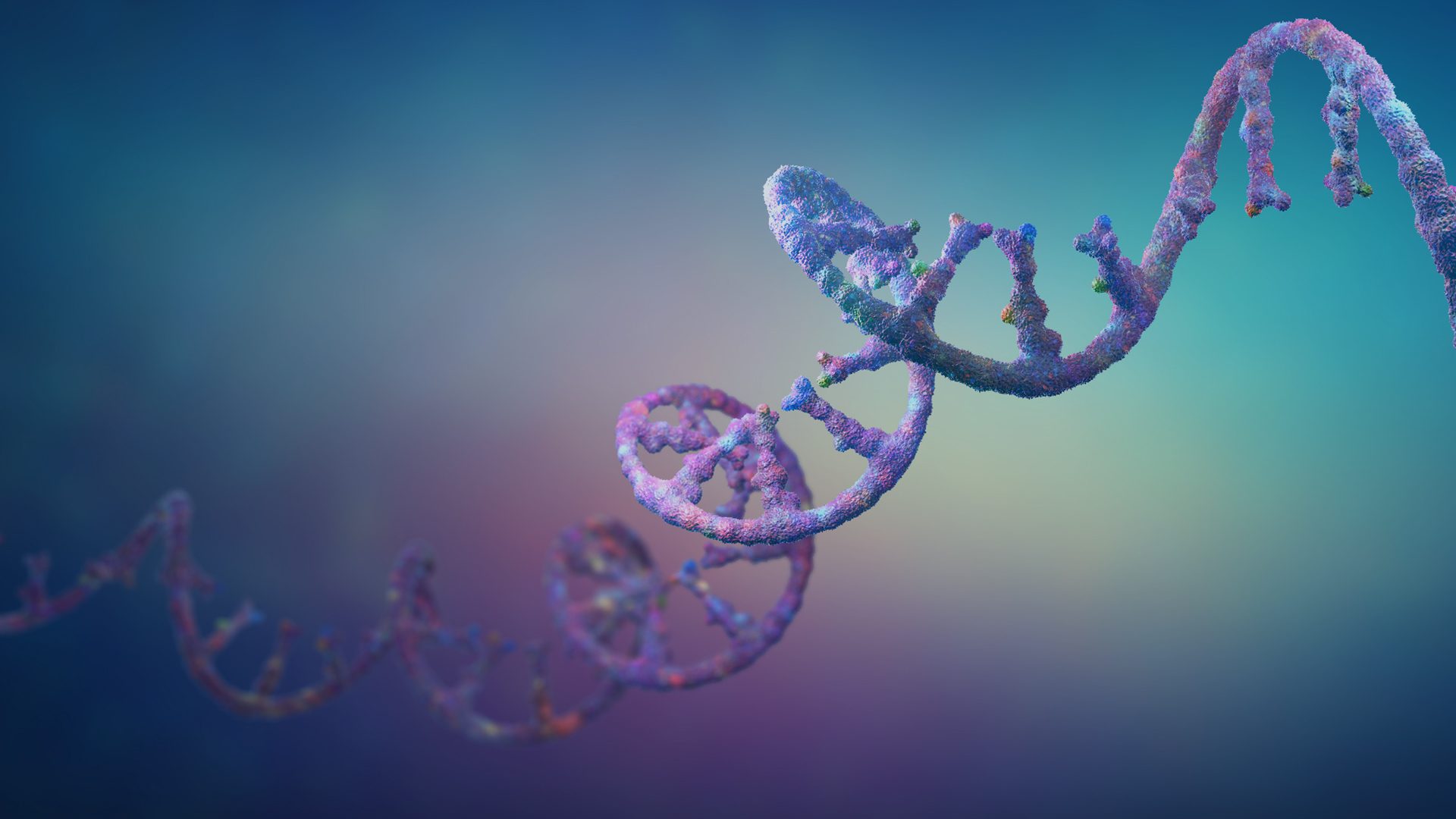
Credit: Christoph Burgstedt / Science Photo Library / Getty Images
VIEW NOWDrew Weissman, MD, PhD
Professor in Vaccine Research
Penn Medicine
Panelist
Drew Weissman, MD, PhD
Drew Weissman, MD, PhD, is a world-renowned physician and Roberts Family Professor in Vaccine Research at Penn Medicine. He is best known for his contributions to RNA biology and the development of COVID-19 RNA vaccines. Weissman and Katalin Karikó, PhD, were jointly awarded the 2023 Nobel Prize in Medicine for their discoveries that enabled the modified mRNA technology used in Pfizer-BioNTech and Moderna’s vaccines to prevent COVID-19. More than 15 years ago, Weissman and Karikó found a way to modify mRNA and developed a delivery technique to package the mRNA in lipid nanoparticles. The COVID-19 RNA vaccine received FDA approval in August 2021.
Weissman is one of the academic leaders of the NSF AIRFoundry, an effort to leverage AI to improve, accelerate, and scale the design, manufacture, and delivery of RNA, which officially opened in April 2026. Weissman’s lab is currently working on a pan-coronavirus vaccine, a universal flu vaccine, and a vaccine to prevent herpes. They are working with Penn colleagues to develop cancer therapeutics with mRNA technology. And they are developing a SARS-CoV-2 mRNA vaccine with Chulalongkorn University in Thailand to help residents of Thailand and other Asian countries access lifesaving vaccines.
Before joining Penn in 1997, Weissman was a fellow at the National Institutes of Health studying HIV in the lab of Anthony Fauci, MD. Weissman received his bachelor’s degree and master’s degree from Brandeis University. He earned his MD and PhD from Boston University and completed his residency at Beth Israel Hospital.
Zachary Ives, PhD
Professor of Computer and Information Science
University of Pennsylvania
Panelist
Zachary Ives, PhD
Zachary Ives, PhD, is the department chair and Adani President’s Distinguished Professor of Computer and Information Science at the University of Pennsylvania. Zack’s research interests include data integration and sharing, data provenance and trustworthiness, and machine learning systems. He is a recipient of the National Science Foundation (NSF) CAREER award, and an alumnus of the DARPA Computer Science Study Panel and Information Science and Technology advisory panel. He has also been awarded the Christian R. and Mary F. Lindback Foundation Award for Distinguished Teaching and an IEEE Technical Committee on Data Engineering Education Award, and he is a fellow of the ACM.
Zack is one of the academic leaders of the U.S. NSF Artificial Intelligence-driven RNA BioFoundry (NSF AIRFoundry), an $18-million effort to leverage AI to improve, accelerate, and scale the design, manufacture, and delivery of RNA. The center officially opened in April 2026.
Zack studied computer science at Sonoma State University and holds a PhD in computer science from the University of Washington. He joined the faculty of Penn in 2003. He is a co-author of the textbookPrinciples of Data Integration. He has been an associate editor for theProceedings of the VLDB EndowmentandThe VLDB Journal.
Silvi Rouskin, PhD
Asst. Professor of Microbiologyy
Harvard Medical School
Panelist
Silvi Rouskin, PhD
Born in Bulgaria, Silvi Rouskin, PhD, is an assistant professor of microbiology at Harvard Medical School. She is the winner of the 2021 Vilcek Prize for Creative Promise in Biomedical Science. Following a six-year spell at the Whitehead Institute, where she was the Andria and Paul Heafy Whitehead Fellow, Silvi joined the faculty of Harvard Medical School in 2021.
Silvi’s Harvard lab studies alternative RNA structures and the myriad roles they have in both viral and human biology. In particular, the lab studies how RNA folding informs alternative splicing and how misfolding can lead to disease. The lab developed DMS-MaPseq (dimethyl sulfate mutational profiling with sequencing) and DREEM (Detection-of-RNA-folding-Ensembles-using-Expectation-Maximization) algorithm to distinguish multiple RNA conformations formed by the same underlying sequencein vivoat single nucleotide resolution.
Silvi immigrated to the United States as a teenager to pursue a career in science. She holds a degree in physics from Florida Institute of Technology and a PhD in biochemistry and molecular biology from the University of California, San Francisco. Her interest in RNA began while working as a staff research associate in the lab of Joseph DeRisi, PhD, at UCSF, where she began developing techniques for the detection of viruses associated with human disease.
Konstantina Skourti-Stathaki, PhD
VP, ASO Discovery & Research
n-Lorem Foundation
Panelist
Konstantina Skourti-Stathaki, PhD
Konstantina Skourti-Stathaki, PhD, is vice president, ASO Discovery & Research at the n-Lorem Foundation in San Diego. She has a strong passion for RNA research, and her mission is to utilize it to save people’s lives. Prior to joining n-Lorem in 2023, Konstantina led the RNA Biology and Technology team at MiNA Therapeutics. In this role, she specialized and oversaw pre-clinical RNA therapeutics drug discovery, specifically target identification and validation, oligonucleotide design and targeting, and mechanism of action studies. She led the strategic planning of new targets and shaped early decisions on the drug discovery process of rare disease targets. Konstantina also co-led programs from drug discovery to IND filing.
Prior to her industry position, Konstantina spent 15 years in academia studying RNA biology and biochemistry, transcription, and epigenetics. After receiving a Master of Science degree in biochemistry and molecular biology from the University of Crete, she received her PhD from the University of Oxford, where she made the pioneering discovery that naturally formed RNA/DNA hybrids control transcription and chromatin in mammalian cells. She was then awarded a Sir Henry Wellcome independent postdoctoral fellowship, which she spent at the University of Edinburgh and the Max Delbruck Centre for Molecular Medicine in Berlin, Germany, where she pioneered how RNA structures affect stem cell homeostasis and DNA damage repair. Konstantina is a recipient of the L’Oréal/UNESCO Women in Science award.
Broadcast Date:Wednesday, July 29, 2026
- Time:09:00 PDT, 12:00 EDT, 18:00 CET
In anticipation ofRNA Day(on August 1),GENinvites you to join our exciting Spotlight virtual event onRNA Therapeuticson Wednesday, July 29.
We are living in a “post-genomic” world where RNA is no longer just a messenger but a programmable drug and molecular therapeutic. From the global impact of mRNA vaccines to advances in RNA editing and the potential of circular RNA, the field of RNA therapeutics is truly taking off. RNA is rapidly becoming a universal software for precision medicine.
Over 2.5 hours, this GENSpotlight onRNA Therapeuticsbrings you three interlinked sessions that feature outstanding researchers exploring various aspects of RNA biology and therapeutics, including:
- A keynote panel including two founding members of the AIRFoundry (Artificial Intelligence-driven RNA BioFoundry) at the University of Pennsylvania—Zachary Ives, PhD, and Nobel laureateDrew Weissman, MD, PhD
- A talk fromSilvi Rouskin, PhD, a leading microbiologist at Harvard Medical School, presenting new research on alternative RNA structures and their relevance in health and disease
- Konstantina Skourti-Stathaki, PhD, discussing advances in antisense oligonucleotide technology for rare disease therapeutics
- Presentations from our two sponsors, 4basebio and Aldevron
Registration to our Spotlight onRNA Therapeuticsis entirely free. We look forward to celebrating RNA Day with you (a few days early).
Produced with support from:
Copyright © 2026 Sage Publications or its affiliates, licensors, or contributors. All rights reserved, including those for text and data mining and training of large language models, artificial intelligence technologies, or similar technologies.
MORE STORIES