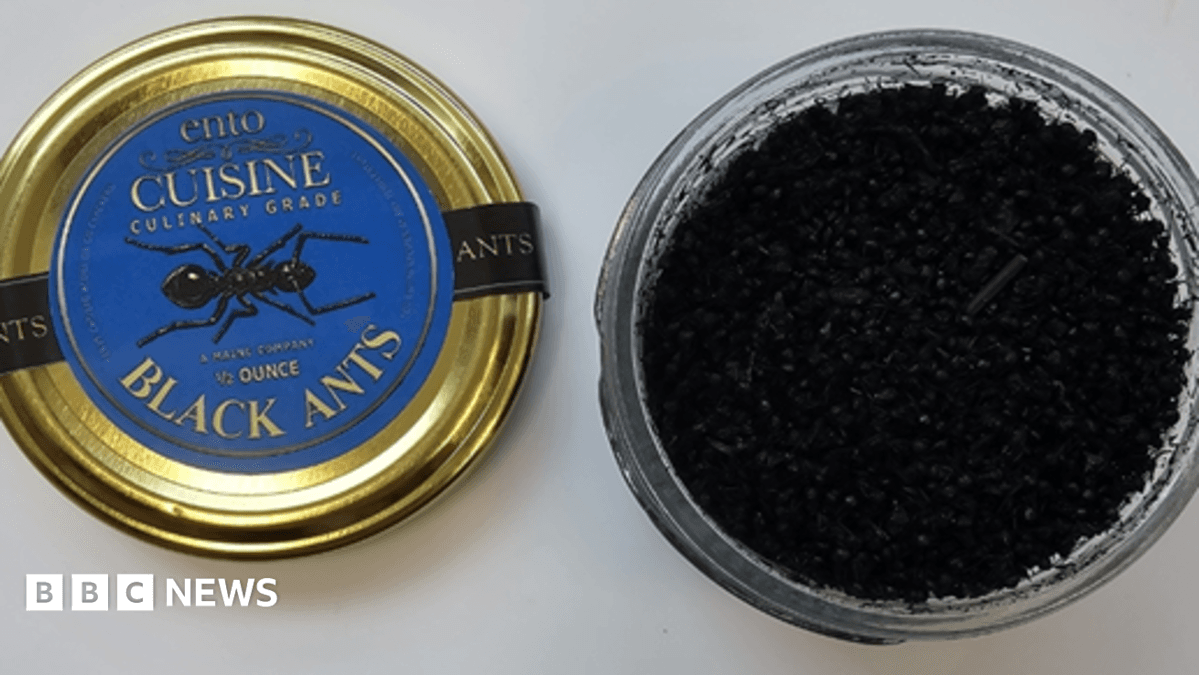
Most of the ants came from the US, with some coming from Thailand
By
Malu Cursino
- Published5 hours ago
A two Michelin-starred restaurant in Seoul has been fined for using ants as a dessert garnish.
The owner of Evett in the South Korean capital was fined 15 million won (£8,144; $10,965), while the company operating the restaurant was fined 10 million won for violating the Food Sanitation Act, local media report.
Ants are not among the 10 insect species approved for human consumption in the east Asian nation. The approved list includes grasshoppers, locusts and some silkworms.
Prosecutors had sought a one-year prison term for the restaurant's owner, as well as a 20 million won fine - but the judge took the owner admitting the charge and having no prior criminal record into account.
However, the judge is reported as saying that, as well as violating food standards, the presence of heavy metals exceeding standards was detected in the ants when they were tested, meaning the "culpability is not light".
The owner was said to have been unaware that providing ants in food was prohibited in South Korea, as they are used as food elsewhere.
Their use as a topping for sorbets at Evett came to light after the Ministry of Food and Drug Safety found online reviews accompanied by photographs.
It said the owner had sprinkled three to five ants on certain dishes to give them a "sour taste", over a period of nearly four years - amounting to approximately 49,000 ants used as a garnish.
Most of the ants were imported from the US, while some came from Thailand, the ministry said.
The owner had argued that they were used in a "small part" of the restaurant's 15-course menu and that diners were told they could opt for a non-ant alternative topping.
Ants are eaten and sometimes even valued as a delicacy in several Asian, African and Latin American cultures. Weaver ants and their eggs are used in Thai and Cambodian cooking, while in Colombia, queen ants are as prized as caviar.
The Michelin Guide considers a two-star establishment as one that does "excellent cooking" and is "worth a detour".