Sign in
Welcome! Log into your account
Forgot your password? Get helpPrivacy PolicyPassword recovery
Recover your password
A password will be e-mailed to you.
GEN – Genetic Engineering and Biotechnology NewsHomeTopicsBioprocessingAI Accelerates Biomanufacturing from Discovery to Translation
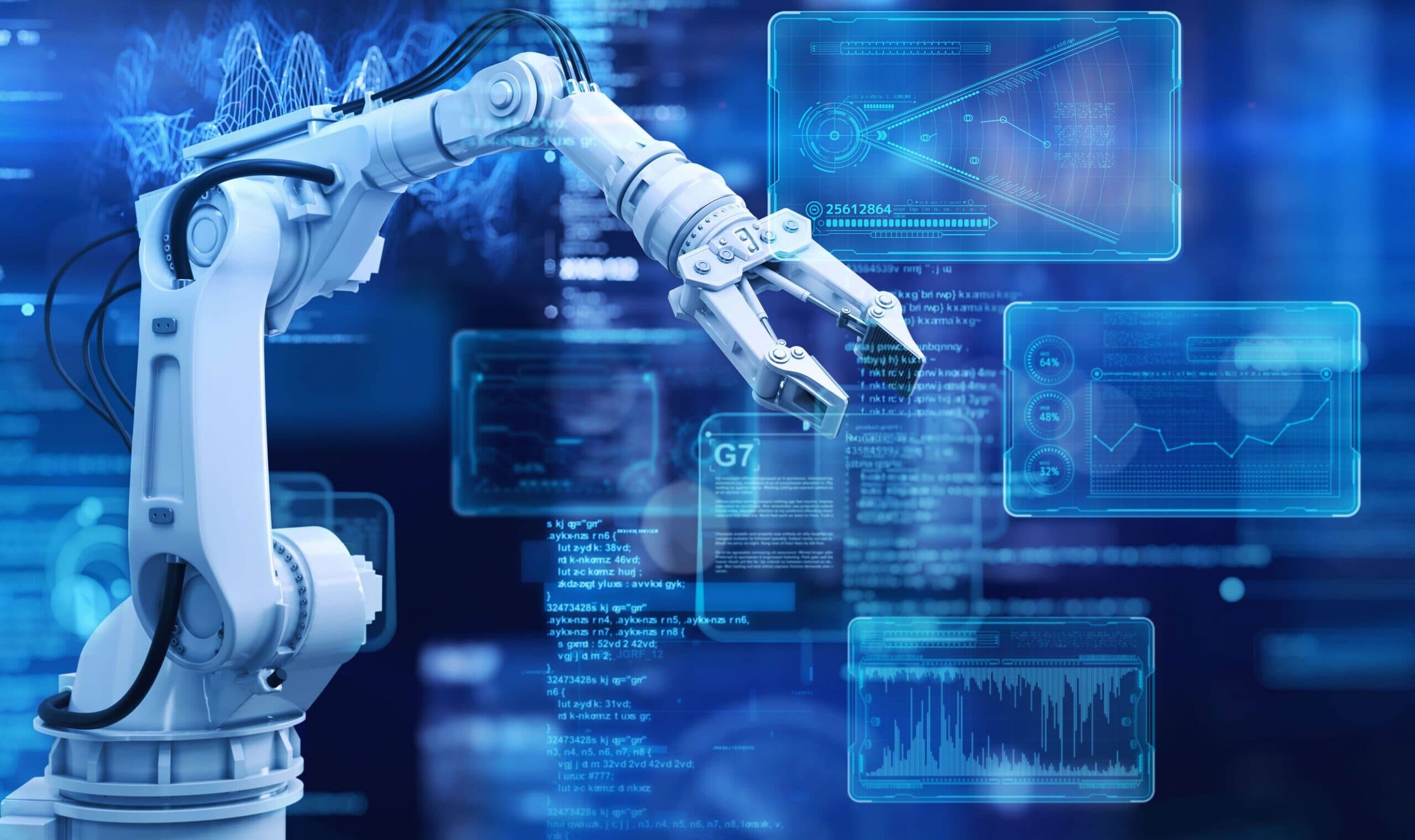
Credit: Yuichiro Chino / Getty Images
Josh Haimson traces his interest in drug discovery to an experience from infancy. As a baby, he underwent a year of treatment with digoxin for a heart condition. The treatment restored normal heart function, and, although he has remained healthy ever since, the experience left a lasting impression.
“If you go into the history of digoxin, it was discovered in the 18th century,” Haimson explained. “The scientist who spent time characterizing that molecule 300 years ago fundamentally had a tremendous impact on my health today.”
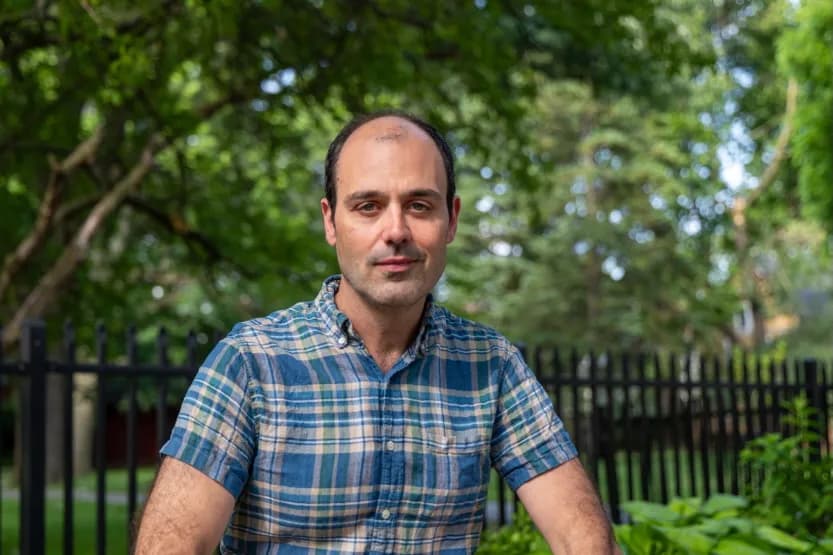
As founder and CEO of Inductive Bio, an AI-driven biotech company building virtual labs enabling small molecule drugs, Haimson is inspired to develop medicines that touch patient lives for centuries to come.
Poor translation from preclinical models to humans remains one of drug discovery’s biggest challenges. “There’s the old trope that it’s a great time to have cancer if you’re a mouse,” says Haimson.
Inductive’s platform combines AI chemistry assistants with predictive ADMET (absorption, distribution, metabolism, excretion, and toxicity) and pharmacokinetic (PK) models to predict how small-molecule candidates will behave in the human body. By identifying potential development risks earlier, these AI-driven workflows help accelerate candidate nomination.
Recently, Inductive Bio placed first in OpenADMET’s PXR Blind Challenge, a competition in which participants predict properties of previously unseen compounds to benchmark ADMET modeling under real-world conditions.
The challenge tasked participants to predict activation of the pregnane X receptor (PXR), a protein that detects foreign compounds and triggers metabolism and removal. PXR induction is a common liability often undetected until mid- to late-stage lead optimization.
Inductive outperformed more than 350 researchers across large pharma, biotech, academic, and AI organizations.
5,000 tasks
While small molecules are produced through scalable chemical synthesis, Fred Parietti, PhD, has set his sights on manufacturing biologics, including cell and gene therapies, RNA medicines, and antibodies. Producing these therapeutics requires growing living cells under tightly controlled manufacturing conditions that minimize the risk of contamination. In addition, each therapeutic modality requires specialized manufacturing processes, while personalized treatments—produced for individual patients—remain particularly challenging and costly to produce at scale.
Parietti is currently co-founder and CEO of Multiply Labs, a physical AI company for GMP-grade biomanufacturing. In contrast to industrial automation, physical AI equips hardware with sensors to enable intelligent decision-making.
“A typical biomanufacturing workflow can involve nearly 5,000 individual tasks,” Parietti explained. Ninety percent of those actions—opening a vial or operating a syringe, as examples—are repetitive and allow engineers to implement deterministic programs. Yet the remaining 10%, such as resuspension, a process that gently mixes cells that have settled to the bottom of a container back into solution, is far more difficult to recapitulate. These tasks rely on the artisanal nature of human expertise.
“Even the most detailed batch record doesn’t contain trajectories teaching the robot how to react,” Parietti says. “That’s all in the mind of the scientist.”
By leveraging NVIDIA Omniverse and NVIDIA Isaac Sim, Multiply Labs builds digital twins of laboratory environments and trains robotic systems using first-person videos of scientists performing experiments. Humanoid robots can then autonomously perform laboratory tasks in sterile clean rooms, reducing the risk of contamination.
The company also provides modular manufacturing clusters containing specialized equipment, such as bioreactors, electroporation systems, and cell counters, to allow partners to configure the technology for their specific therapeutic workflow. Notably, Multiply Labs has announced strategic partnerships with clinical-stage biotechnology companies, including AstraZeneca and Legend Biotech, in cell-therapy manufacturing.
Parietti argues that biomanufacturing is one of the highest-value applications for physical AI because of the direct impact on patients.
“It’s one thing to work on a robot that sweeps the floor,” he says. “It’s another to work on a robot that makes potentially lifesaving therapies. It’s much more meaningful.”
Medra, another physical AI company, has the ambitious goal of accelerating end-to-end drug discovery campaigns. Founder and CEO Michelle Lee, PhD, argues that these robotics platforms are the solution to addressing experimental validation at scale.
“Building foundation models in biology that can predict and cure disease will take thousands of years of data generation,” Lee explained. “The more I looked at the field, the more I realized that this data problem is actually a robotics problem.”
In a collaboration announced in June with the Defense Advanced Research Projects Agency (DARPA), Medra launched AI Experimentalist, the scientific reasoning layer of its robotics platform. The system translates high-level research goals using natural language into executable workflows spanning the entire experimental cycle, from literature review and wet-lab execution to data analysis and protocol refinement.
Medra is currently working with partners across academia, biopharma, and government to run and develop assays across a wide array of applications, including antibody discovery, protein engineering, gene editing, and cell biology.
Biobanks at scale
Parallel Bio aims to replace animal models with more predictive models of human biology that can model the immune system. Drug development pipelines that rely on inbred laboratory mice are difficult to scale and not representative of human populations. To address this gap, Parallel Bio is focusing manufacturing efforts on building diverse biobanks at the scale of hundreds of thousands of organoids.
The organoid company is developing replicas of human lymph nodes that exhibit key biological behavior, such as swelling during inflammation and the formation of germinal centers. Theseex vivosystems provide a physiologically relevant platform for evaluating drug efficacy and toxicity, with the potential to improve clinical outcomes for patients with autoimmune diseases and cancer.
“We realized that the bottleneck is really about the biology, not the drugs,” said Robert DiFazio, PhD, co-founder and co-CEO of Parallel Bio.
Among the applications of the company’s platform is identifying new opportunities for existing drug candidates. Pharmaceutical partners can evaluate in-licensed compounds or therapies that have stalled after Phase I clinical trials, identify potential safety risks, and make more informed decisions before advancing them to late-stage development.
Most biobanks consist of frozen tissue sections or preserved samples that cannot be revived and no longer retain the three-dimensional architecture needed to study immune function. Instead, Parallel Bio converts fresh tissue, such as lymph nodes, into viable single-cell suspensions that preserve living immune cells for use in organoid models. Additionally, the company is increasingly implementing automation, computer vision, and physical AI to standardize steps for organoid production.
From small molecule synthesis to immune system biology, AI tools are streamlining the manufacturing process to bring therapies closer to patient impact.
InsightsArtificial intelligenceBiobankingBiomanufacturingCell therapyDrug development (Pharmacology)Drug discoveryGene therapy (Genetic engineering)OrganoidsRoboticsMultiply LabsNVIDIA Isaac SimNVIDIA OmniverseAlso of Interest
Bone Marrow-on-a-Chip Model Offers New Window Into Immune Cell Development and BehaviorCloudScope Enables Continuous Remote Monitoring of Brain Activity in Freely Moving MiceManus and UT Austin Advance Biomanufacturing Product Recovery Through BioMADE ProgramSmarter Cell Culture Starts with Better MediaCAR T Manufacturing in Japan Gets Boost from Teijin-Shinshu University Research CollaborationRevvity Signs Agreement to Acquire Human Cell DesignRelated Media
Data Integrity as the Foundation for AISmall Molecules, Big Expectations: How CDMOs Are Helping Sponsors Navigate Complexity, Speed, Scale-Up, and SustainabilityBeyond the Technology: AI Readiness in Regulated LaboratoriesAACR 2026 Video Update: Cancer Research Edges Toward an AI-Driven EraOmics in Orlando Day 2: A Video Report from AGBTRobots on the Red Line: A Video Update from SLAS 2026Top 5ResourcesRecommended For YouPodcast
Touching Base
Touching Base is the dynamic podcast series from the editors ofGEN. Each episode features a rotating case of senior editors—including John Sterling, Kevin Davies, Julianna LeMieux, Alex Phillippidis, Uduak Thomas, Corinna Singleman, and Fay Lin—who delve into emerging stories, exchange ideas, and debate the latest trends in biotech. Additionally, they talk to some of the leading voices in the industry about what's now and next.Start listening today!
Stay up to date with the lasted episodes of Touching Base bysubscribing to theGENPodcast Newsletter
Copyright © 2026 Sage Publications or its affiliates, licensors, or contributors. All rights reserved, including those for text and data mining and training of large language models, artificial intelligence technologies, or similar technologies.
MORE STORIES