For the third time this month, SpaceX has sent a national security mission to orbit.
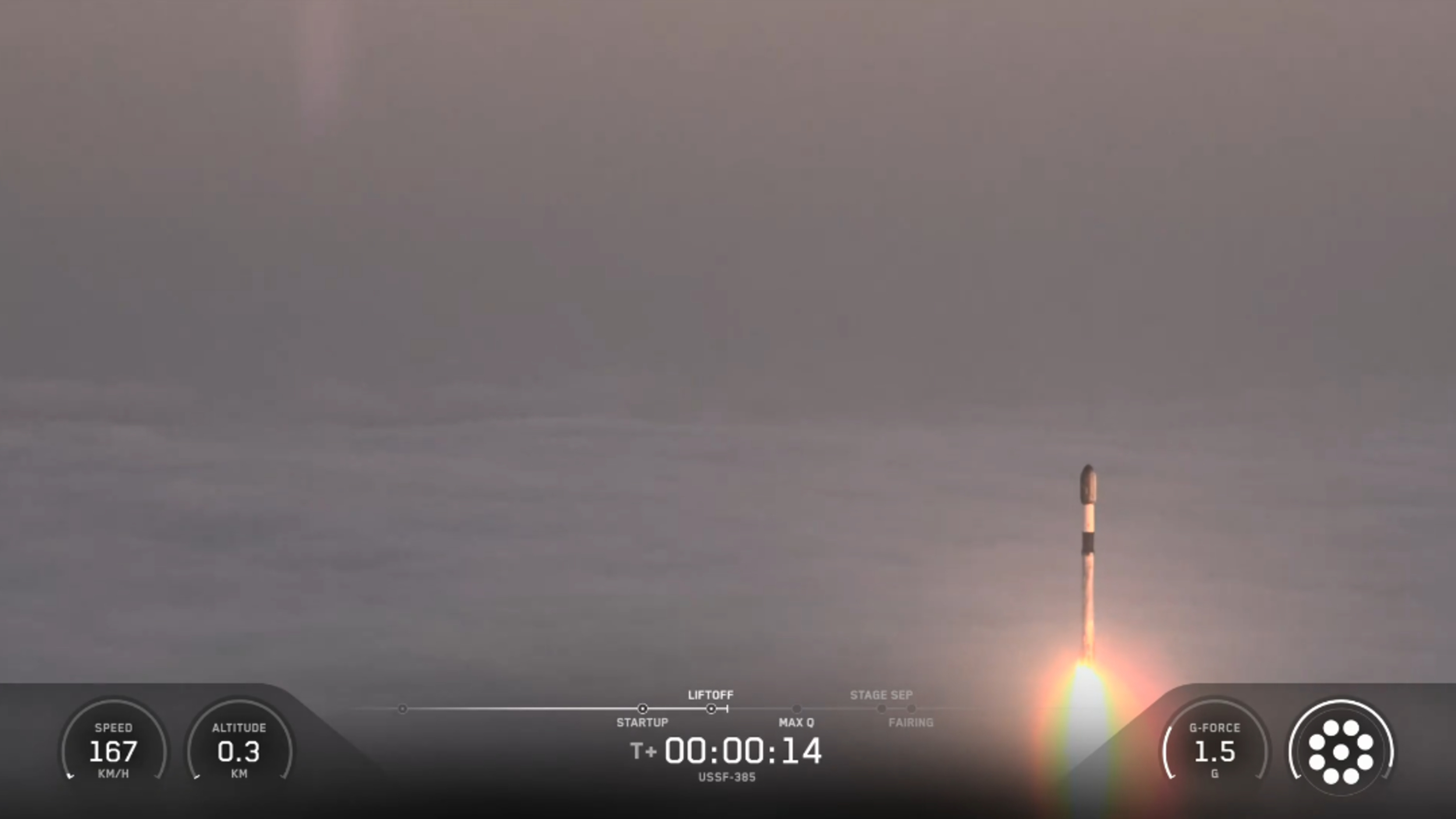
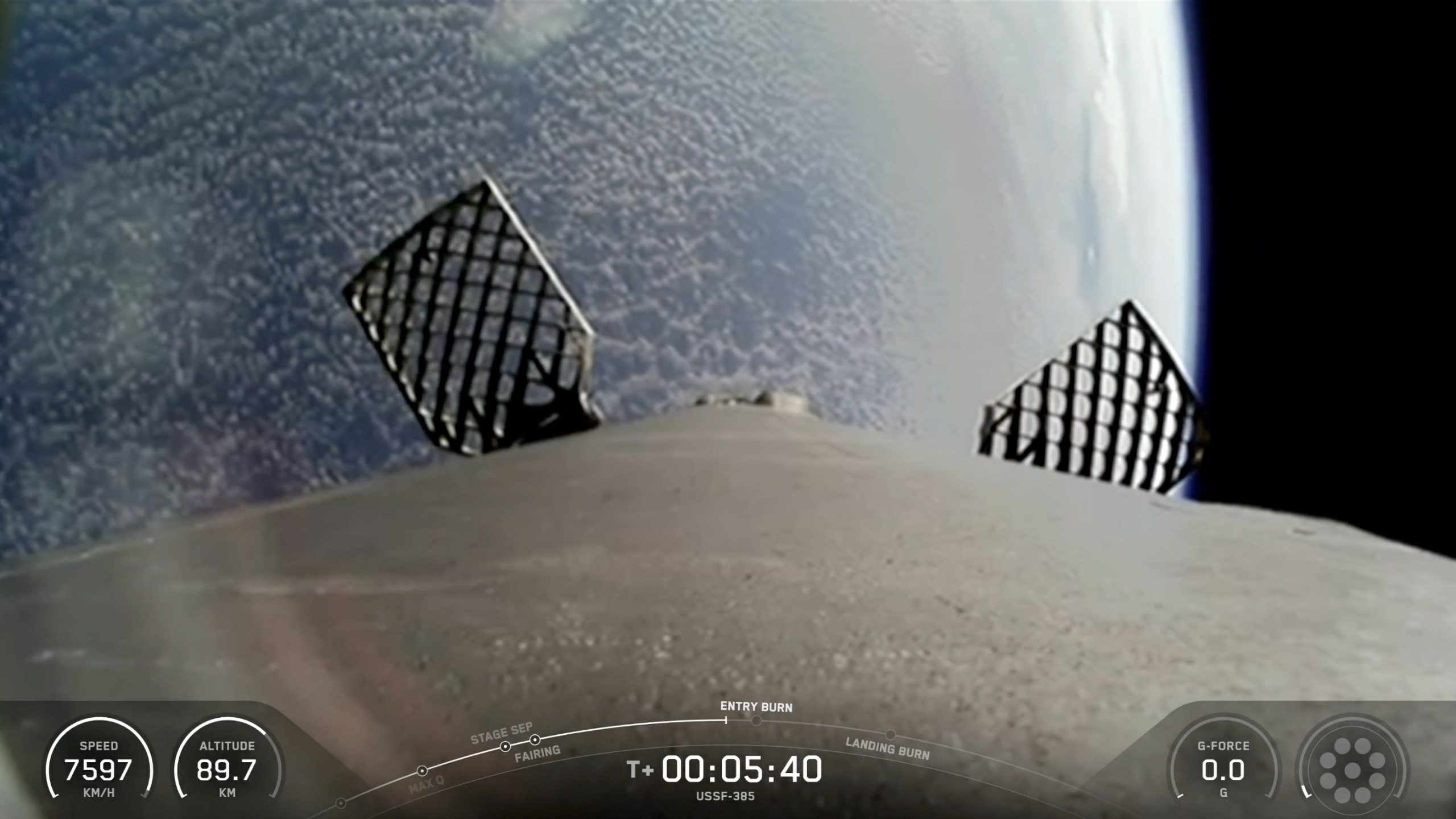
AFalcon 9rocket carrying the USSF-385 mission for theU.S. Space Forcelaunched from California's foggyVandenberg Space Force Basetoday at 10 a.m. EDT (1400 GMT; 7:00 a.m. local California time).
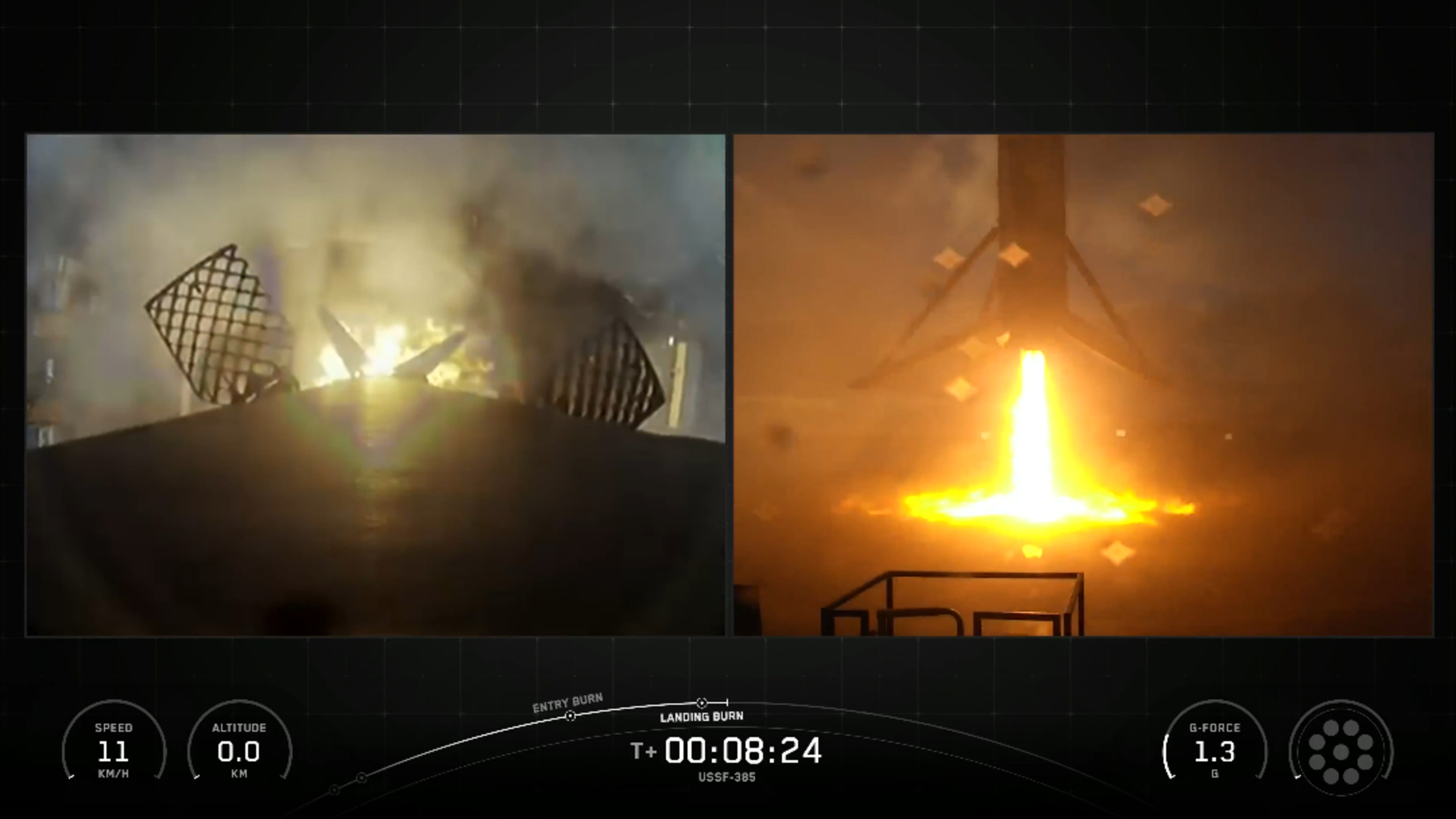
The rocket's first stage came back toEarthas planned 8.5 minutes later, touching down in the Pacific Ocean on theSpaceXdrone ship "Of Course I Still Love You." It was the 10th launch and landing for this particular booster, which is designated 1100.
Image 1 of 3
Image 1 of 3
View Original
Image 2 of 3
View Original
Image 3 of 3
View Original
We don't know much about USSF-385; its payloads, and their activities, are classified. We don't even know exactly where it's headed. SpaceX cut off its launch webcast shortly after booster touchdown, as it usually does on national security missions. (Generally, the company keeps its streams going through payload deployment.)
This was the third Space Force flight in the past 16 days for SpaceX. Falcon 9s also launched the classified USSF-153 and USSF-259 missions from Vandenbergon Sept. 10andSept. 16, respectively.
The Falcon 9 has now flown 108 times in 2026. The vast majority of these missions — 75% of them — have been dedicated to building out SpaceX'sStarlinkbroadband constellation, which currently consists of more than 11,000 satellites inlow Earth orbit.
Previous Booster 1100 missions
NROL-105| 8 Starlink missions
SpaceX has also launched two flights apiece of itsFalcon HeavyandStarshiprockets so far this year. And it's gearing up for the third Starship launch of 2026, which is scheduled to take place Monday morning (Sept. 28) during a 75-minute window that opens at 8:15 a.m. EDT (1215 GMT).
This test flight, which you can watch here at Space.com, is a big one for the Starship program and for SpaceX overall. Starship willattempt to reach orbit, something the megarocket has never done before.
Spaceflight and Tech Editor
Michael Wall is the Spaceflight and Tech Editor forSpace.comand joined the team in 2010. He primarily covers human and robotic spaceflight, military space, and exoplanets, but has been known to dabble in the space art beat. His book about the search for alien life, "Out There," was published on Nov. 13, 2018. Before becoming a science writer, Michael worked as a herpetologist and wildlife biologist. He has a Ph.D. in evolutionary biology from the University of Sydney, Australia, a bachelor's degree from the University of Arizona, and a graduate certificate in science writing from the University of California, Santa Cruz. To find out what his latest project is, you can follow Michael on Twitter.
You must confirm your public display name before commenting
Please logout and then login again, you will then be prompted to enter your display name.