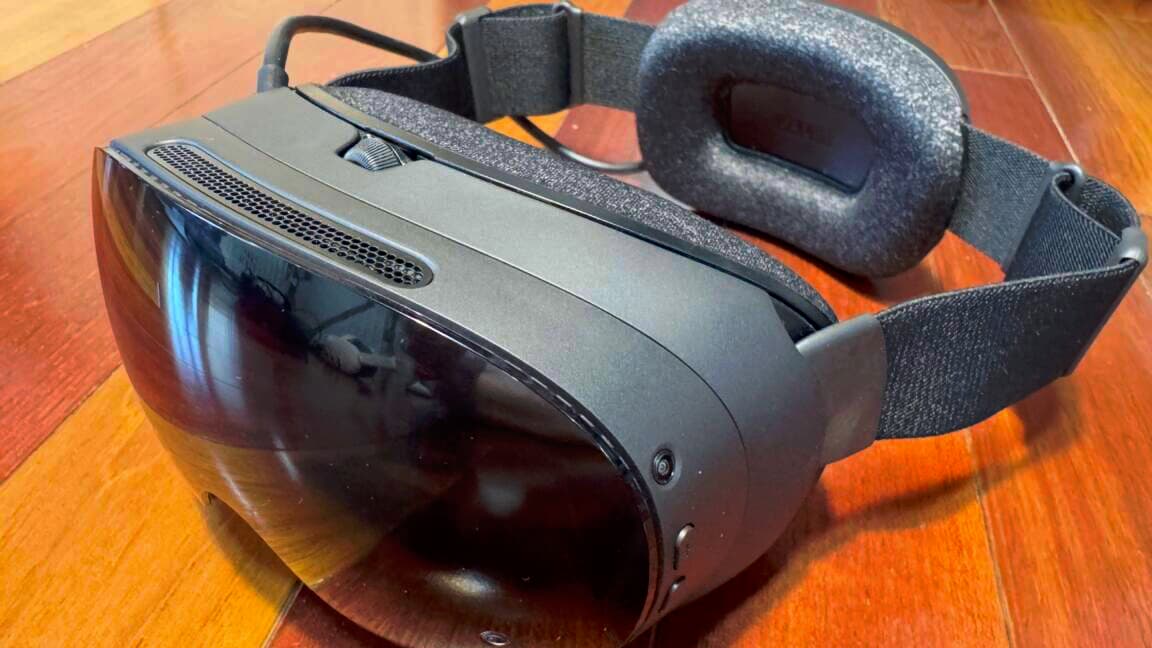
In the 2010s, Valve was at the forefront of a virtual reality revolution thatlooked to somelike it would upend the gaming industry. The Valve of six to ten years ago seemed committed to being a major player in the world of PC-connected VR headsets, first through its “strategic partnership” with HTC onthe impressive-for-the-time Vive headset(plus theSteamVR platform standardthat powered it) and thenyears later with its own Index headset(and proof-of-concept adventureHalf-Life: Alyx).
Then camethe Meta (previously Oculus) Quest, a low-powered, low-cost headset that proved the vast majority of VR-curious gamers didn’t want to bother with being literally tethered to a bulky, expensive gaming PC. As the Quest linecarved out a modest nichethrough the 2020s, Valve seemed more or less satisfied to let its earlier VR hardware and software ambitions wither on the vine.
Those years of Valve’s benign neglect of VR make the imminent release of the $1,049 Steam Frame—which starts taking reservations today—more than a little surprising. Now that virtual reality’s hype-fueled, revolutionary promiseshave decidedly not played out, Valve is somehow ready and willing to limp headfirst into the world of standalone VR headsets—today, in 2026. And after spending a week or so with Valve’s latest foray into gaming hardware, the Frame somehow feels simultaneously overengineered and underbaked, depending on how you look at it.
A new high-water mark in comfort
The Steam Frame makes a great first impression on your face. The entire setup weighs just 440 g (a bit under a pound), a roughly 15 percent weight reduction from the Meta Quest 3’s 515 g. That weight reduction inches us ever closer to the 250 g target that Meta’s former CTO John Carmacksaid he was once trying to achieveat the company.