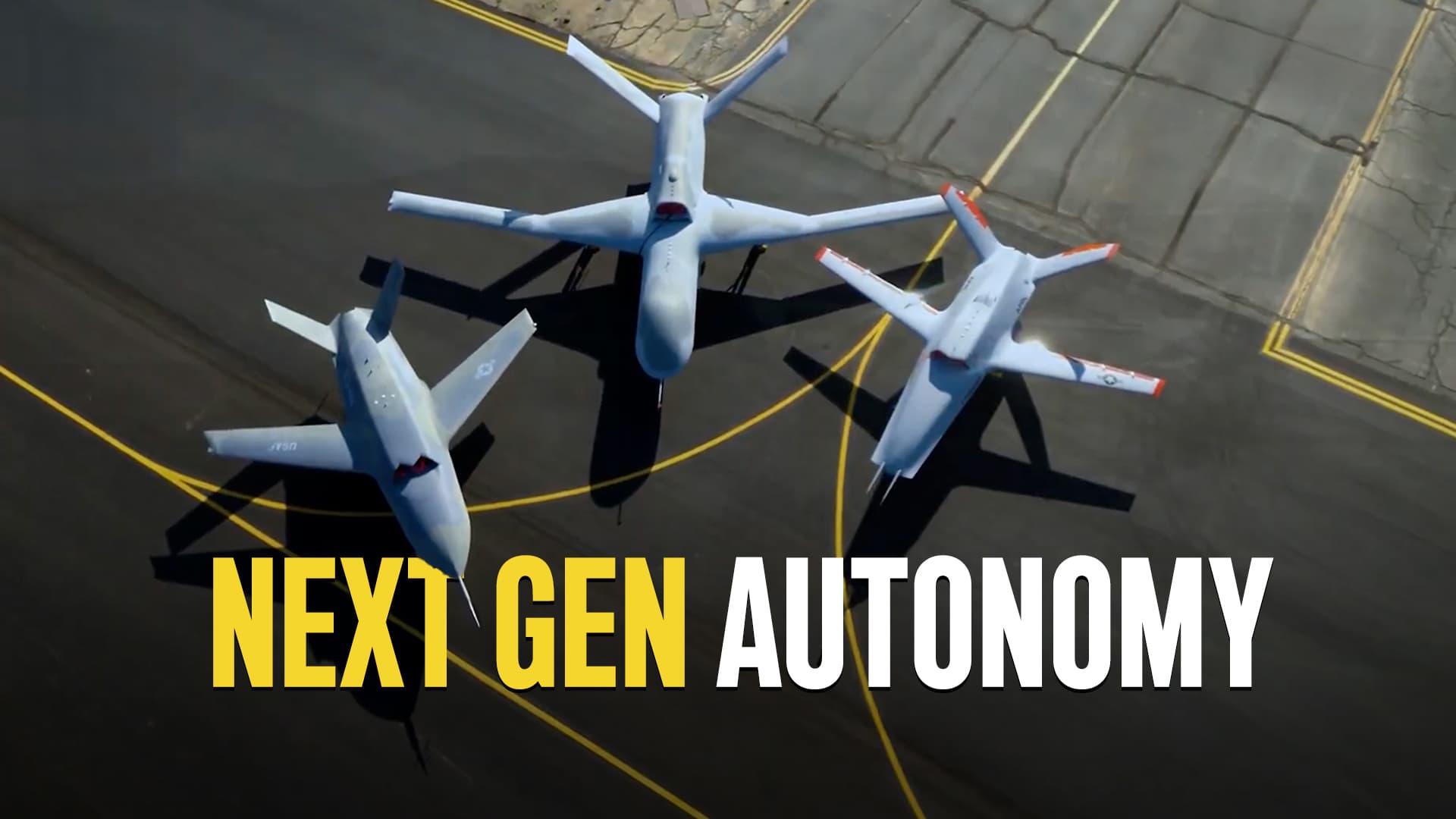
Air combat is entering a new phase in which superiority will be defined by affordable and rapidly scalable uncrewed platforms. The U.S. Air Force is developing Collaborative Combat Aircraft (CCA) to operate with traditionally piloted fighters during tomorrow’s most demanding missions.
General Atomics Aeronautical Systems, Inc. (GA-ASI) has spent more than three decades developing uncrewed aircraft for missions where situational awareness and coordinated action matter.
The MQ-20 Avenger®is one example of this progress. For more than six years, this jet-powered uncrewed aircraft has been instrumental in testing and advancing autonomous technology. GA-ASI also builds other platforms, including the XQ-67A in partnership with the Air Force Research Laboratory and the FQ-42A CCA, as loyal wingmen to operate alongside crewed fighters such as the F-22 Raptor and F-35 Lightning II.
Building awareness in real time
Autonomy begins with the aircraft understanding its surroundings. Onboard sensors collect information about the environment, other friendly aircraft, signals, and potential threats. That data combines into a live picture of the battlespace, allowing the aircraft to respond as conditions change.
This ability is important in places where communication is tough and threats can appear suddenly. An autonomous aircraft must make sense of the information it has while staying on mission. The goal is to give the aircraft enough awareness to adjust its actions within the limits set by its human operators. Humans remain in charge of everything the platforms do.
Working with crewed fighters
The CCA concept extends autonomy beyond individual aircraft. In a mixed formation, a human pilot can provide objectives and priorities while autonomous aircraft handle their assigned tasks. A pilot could direct an aircraft to patrol an area, investigate a sector, or monitor a signal.
The autonomous aircraft can then manage their own navigation, formation spacing, sensor positioning, and other flight functions. No human pilot is flying them live from a ground control station. Data also can be transmitted back to the crewed aircraft, expanding the pilots’ view of the battlespace and helping identify potential threats farther away from the cockpit.
A single pilot can coordinate multiple uncrewed aircraft at once, increasing the number of platforms available during a mission — without requiring a matching increase in cockpit workload.
Keeping humans in control
The central idea behind this approach is human-machine collaboration. Autonomy can manage large volumes of information and execute time-sensitive tasks while the pilot remains responsible for mission-level judgment. This is why although these platforms often are described as “autonomous,” the U.S. Air Force prefers the term “semi-autonomous” — because the jets can’t take any action unless they’ve been authorized.
For GA-ASI, the XQ-67A and FQ-42A aircraft are steps toward this way of working. By bringing together sensors, computing, machine learning, and coordinated flight, these systems help aircraft perform well in complicated airspaces.