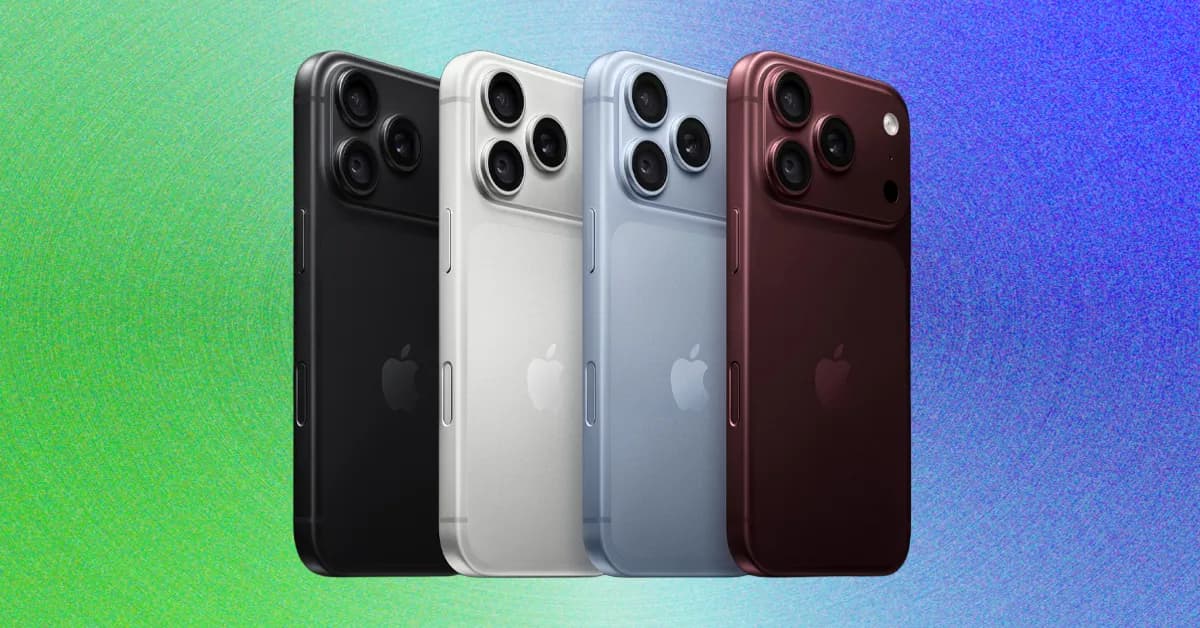
With a freshfolding form factor, the newiPhone Duois Apple’s most radical redesign in years. It lands alongside the more familiar-looking iPhone 18 Pro and iPhone 18 Pro Max. There’sno regular iPhone 18, or at least, not yet. Rumors suggest we may see a more affordable base model, perhaps flanked by an iPhone 18e and a second-generation iPhone Air, in spring 2027.
The two new Pro iPhones are available to preorder on September 12 and ship on September 18. You can preorder the iPhone Duo from October 16, ahead of a full release on October 23. But which iPhone 18 model is right for you? I’ll break down the differences and what these phones have in common, so you can choose with confidence. For options beyond the iPhone 18 lineup, read ourBest iPhones guide.
Table of Contents
- Why You Might Not Need to Upgrade
- Which iPhone 18 is Right for You?
- The Similarities
- The Processor
- The Display
- The Usual Specs
- The Differences
- How to Get the iPhone 18 Unlocked
Why You Might Not Need to Upgrade
Before you drop all those hard-earned dollars, remember that you probably don’tneedthe latest iPhone. If you have an older iPhone, Apple does a good job of updating the software (theiPhone 11 Prois still supported), and for hardware issues,your iPhone might be repairable; maybe it needs abattery replacementor thesetroubleshooting tips. Don’t feel like you have to spring for Apple’s shiny new thing.
Sadly, Apple raised iPhone Pro prices this year, so both models are $100 more expensive than the iPhone 17 Pro series.
If you’re set on upgrading, consider raising funds byselling your old iPhone. Just be sure toback up your iPhone,andfactory resetit before you sell or give it away. Once the new device arrives, we have tips onhow to set up your new iPhoneand whatsettings to changeto get the most out of it.
Which iPhone 18 Is Right for You?
Photograph: Julian Chokkattu
Apple
iPhone Duo, iPhone 18 Pro, and iPhone 18 Pro Max
$1,999Apple (Duo)
$1,199Apple (18 Pro)
$1,299Apple (18 Pro Max)
The Similarities
We’ll start by looking at what’s the same across the iPhone 18 models this year.
The Processor
All three new iPhones have Apple’s A20 Pro chip inside, and, you guessed it, this is Apple’s most powerful chip ever. Now, iPhones are already the most capable phones for raw compute power, but the A20 Pro promises a significant jump in performance (around 20 percent faster and 30 percent more efficient than the last generation). It also packs a new neural engine to power on-device AI and a new thermal design with a larger vapor chamber to keep things cool. For the iPhone Duo, the A20 Pro has a display engine to ensure smooth transitions between two screens. While Apple doesn’t list the RAM, every model is rumored to have 12 GB.
The Display
While they come in different sizes and the Duo has two, every iPhone features an OLED screen that Apple calls a Super Retina XDR display. They also have ProMotion technology, otherwise known as a120-Hz refresh rate. These adaptive refresh rates can drop as low as 1 Hz when there's little activity on the screen, enabling features like the always-on display without draining the battery too much.
The displays are protected by the scratch-resistant and antireflective Ceramic Shield 2, the same as last year’siPhone 17 range. And they can go from 1 nit up to 3,000 nits of brightness. Only the iPhone Duo has a custom nano-texture finish on the interior screen, giving it a matte look that’s designed to reduce glare and crease visibility.
The Usual Specs
All the phones have an IP68 rating for water and dust resistance, meaning they can survive a short dunk in fresh water. They all come in four storage options (256 GB, 512 GB, 1 TB, or 2 TB), supportQi2 magnetic wireless charging(MagSafe), USB-C 3.2, Dual SIM,Wi-Fi 7,Bluetooth 6,Thread, and Ultra-Wideband (UWB). It also hasSiri AI, Apple Intelligence, Emergency SOS via Satellite, and Crash Detection.
The Differences
To help you better understand which model to buy, here's precisely where they diverge.
SpecsiPhone DuoiPhone 18 Pro
iPhone 18 Pro Max
Display:5.4 inches (outer) and 7.6 inches (inner, unfolded), 120 Hz, OLED, 3,000 nits (peak), always-on display, antireflective coating
6.3 inches, 120 Hz, OLED, 3,000 nits (peak), always-on display, antireflective coating
6.9 inches, 120 Hz, OLED, 3,000 nits (peak), always-on display, antireflective coating
Processor:A20 Pro (6-core GPU)
A20 Pro (6-core GPU)
A20 Pro (6-core GPU)
Storage:256, 512 GB, 1, 2 TB
256, 512 GB, 1, 2 TB
256, 512 GB, 1, 2 TB
Cameras:48-MP main camera, 48-MP ultrawide with macro, 48-MP front camera
48-MP main camera with variable aperture, 48-MP ultrawide with macro, 48-MP telephoto with 8X zoom, 48-MP front camera
48-MP main camera with variable aperture, 48-MP ultrawide with macro, 48-MP telephoto with 8X zoom, 48-MP front camera
USB-C speeds:USB 3, up to 10 Gb/s
USB 3, up to 10 Gb/s
USB 3, up to 10 Gb/s
Colors:Star White, Night Sky
Black, Silver, Glacier, Burgundy
Black, Silver, Glacier, Burgundy
Material:Titanium frame and hinge, Ceramic Shield 2 on front, Ceramic Shield on back
Aluminum, Ceramic Shield 2 on front, Ceramic Shield on back
Aluminum, Ceramic Shield 2 on front, Ceramic Shield on back
Weight and thickness:254 grams, 11.3 mm (closed), 5.2 mm (opened)
211 grams, 8.75 mm
249 grams, 8.75 mm
Extras:Qi2 25W (MagSafe) wireless charging, Touch ID, Dynamic Island, Ultra Wideband, IP68, Dual Capture, Center Stage, 4K 120 fps video
Qi2 20W (MagSafe) wireless charging, Face ID, Dynamic Island, Ultra Wideband, IP68, Dual Capture, Center Stage, 4K 120 fps video
Qi2 25W (MagSafe) wireless charging, Face ID, Dynamic Island, Ultra Wideband, IP68, Dual Capture, Center Stage, 4K 120-fps video
Price:$1,999$1,199$1,299