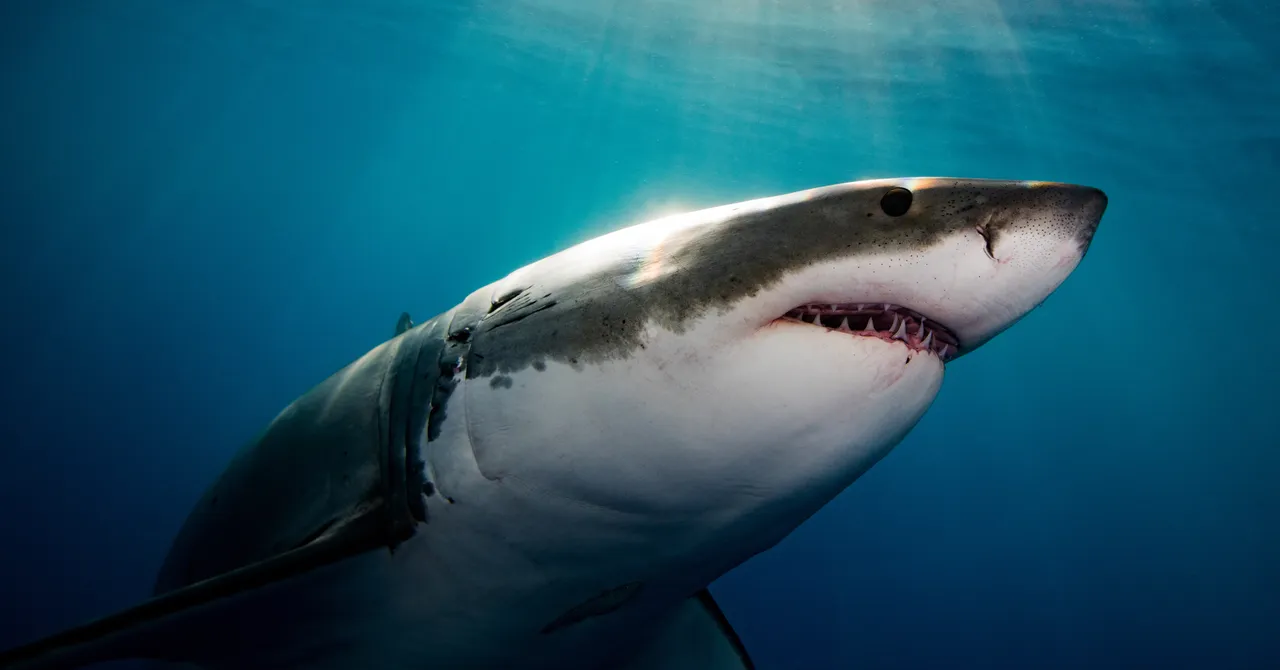
Lifeguard Greg Wilfertwas swimming off the coast of Scarborough, Maine, in August when he was yanked underwater by a force tugging on his rescue buoy. Wilfert, a lifeguard of 55 years, toldlocal news outlet WFSBthat he first thought he’d gotten caught on a boat propeller, but the real culprit was agreat white shark.
The incident is one in a long line of great white sightings off the coast of Maine this year. It was a busy summer forsharksightings along the rest of the East Coast, but Maine, in particular, seems to have had a great white bonanza. Adozen sightingswere reported in a two-day period near Pine Point Beach in southern Maine in August. Beaches were temporarily closed all over the state following multiple sightings throughout July and August. The sharks followed beachgoers through the end of summer: A great white wasspotted off Wells Beachover Labor Day weekend, while a fishermancaught anotheron the holiday about 30 miles down the coast.
The waters off the coast of Maine are some of theworld’s fastest-warming,and the Atlantic has seen a series of marine heat waves. The El Niño weather phenomenon is onlyboosting global heatfurther. But experts told WIRED that the reason for our recent glut of shark encounters is a lot more complicated than just attributing them to climate change, especially when it comes to great whites. Instead, a successful conservation effort decades ago is likely starting to pay dividends, coupled with more people bringing technology that can spot sharks to the beach.
When Steven Spielberg’s classic movieJawscame out in 1975, great whites were in trouble. The species had declined in waters off both the east and west coasts of the US thanks to overfishing, bycatch, and trophy hunting. In the 1990s,federal protectionswere instated for both the sharks and for gray seals, one of their key prey species.
Maine’s state shark monitoring system uses a technology called acoustic telemetry, which outfits the animal with a tag that emits a unique electronic signature. Underwater stations can then pick up on that signal and log the tagged sharks, helping track their movement up and down the coast. Maine’s program is less than a decade old, and “not every shark is tagged,” says Matthew Davis, a shark expert at Maine’s Department of Natural Resources. That makes pinpointing exactly what is going on with this uptick in sightings a little more challenging.
But Davis and Walter Golet, an associate professor at the University of Maine School of Marine Science who collaborates on shark research, both believe that there were more great whites off the coast this summer compared to decades past. They attribute it in part to federal protections working. Great whites males take 26 years to reach adulthood, while females can take up to 33 years. That timeframe aligns with when federal protections were put in place and could help explain why more sharks are showing up off of Maine. Research generally backs this up:Multiplestudieshave found that protections for both sharks and seals helped to increase populations along the East Coast.
While climate change has driven massive changes in the ocean, including pushing many species northward as waters warm, its direct effect on great white sharks is a little more murky. Some research has suggested that great whites could suffer from very hot ocean temperatures bycausing them to overheatand forcing them to slow down or move to colder water to seek food. But James Sulikowski, the director of the Coastal Oregon Marine Experiment Station at Oregon State University, emphasizes that great whites can control their body temperature, which enables them to withstand much larger ranges in ocean temperatures than other shark species.


