Sign in
Welcome! Log into your account
Forgot your password? Get helpPrivacy PolicyPassword recovery
Recover your password
A password will be e-mailed to you.
GEN – Genetic Engineering and Biotechnology NewsHomeSponsoredOne Antibody, Fewer Scientific Surprises
Credit: ustas7777777 / Shutterstock
Sponsored content brought to you by
In biomedical research, promising programs rarely collapse for lack of scientific ambition. More often, they collapse under the weight of inconsistency. One assay produces compelling results, the next model delivers confusion, and suddenly, researchers are left wondering whether the biology changed or whether the tools did.
That uncertainty sits at the heart of translational continuity, a concept gaining increased attention as drug-discovery pipelines become more complex and expensive. According to Cody Spencer, PhD, Director of Scientific Affairs at Bio X Cell, maintaining continuity across experimental systems is less about rigidly replicating conditions and more about reducing unnecessary variability.
“I define translational continuity as the ability to study the same underlying biology as you move from early discovery into more complex preclinical models without introducing unnecessary variability,” Spencer explains.
In practice, translational continuity means researchers can move fromin vitroassays to organoids toin vivomouse models while remaining confident that their findings reflect real biological phenomena, not artifacts created by inconsistent reagents or shifting methodologies. That distinction matters more than many researchers realize.
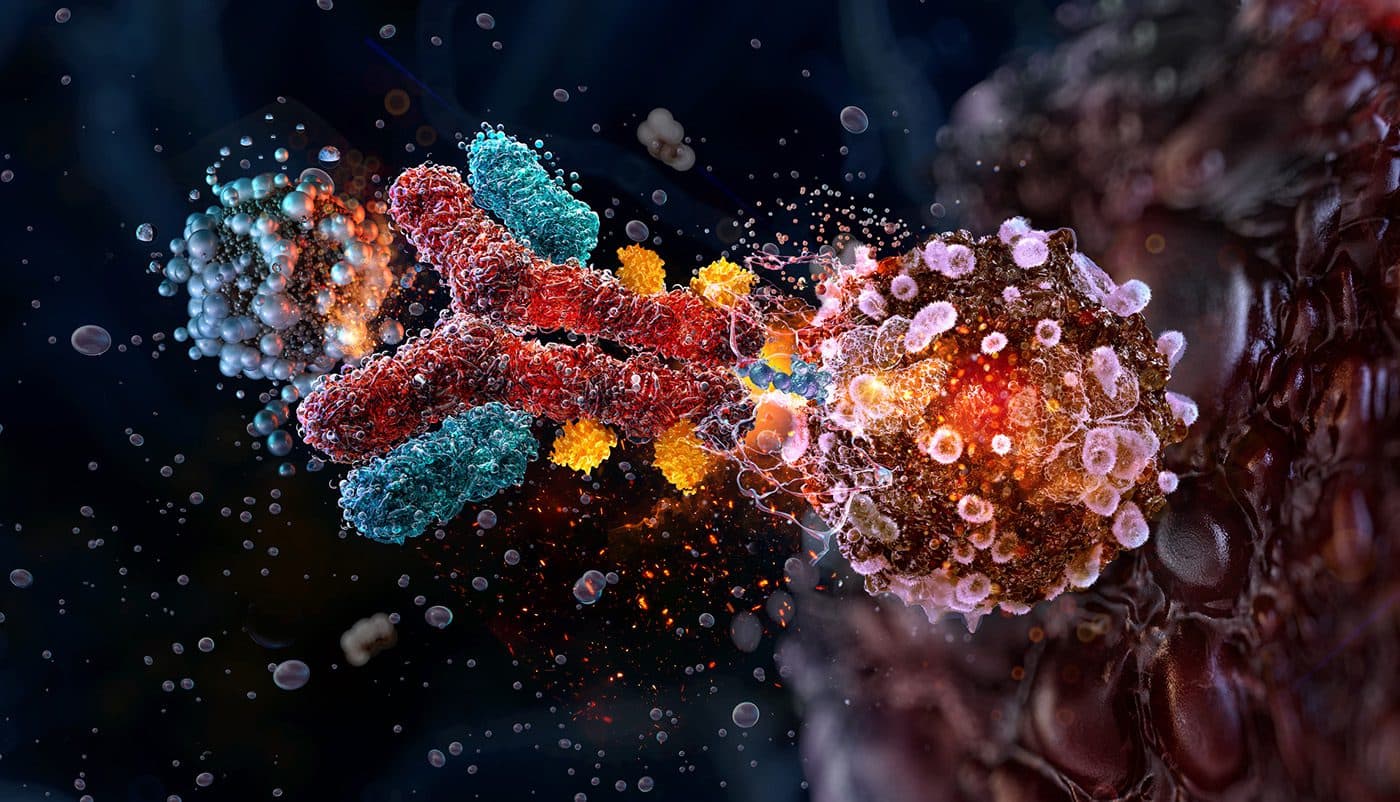
The greatest threat to continuity, Spencer argues, is often surprisingly mundane: switching antibodies or suppliers midway through a research program. Even antibodies marketed against the same target protein can behave differently depending on clone selection, sequence, production methods, formulation, or purification standards. When an antibody’s functional profile—whether blocking, agonistic, or depleting—is well characterized, researchers can select tools aligned with their experimental goals from the start, reducing the need to switch reagents mid-program. “When you switch suppliers, you’re often introducing a new variable without fully realizing it,” Spencer says.
Those differences might seem subtle initially, but they can snowball dramatically in translational studies. Inconsistent potency, altered dose responses, or unintended immune engagement can suddenly emerge even when earlier experiments appeared rock solid. Researchers then face a dangerous interpretive trap: Are they observing a genuine biological effect or merely the consequences of a reagent change? “That’s where you start to see promising early data that doesn’t hold up in more complex models,” Spencer notes.
The consequences extend beyond scientific frustration. Failed translation burns time, funding, and institutional confidence. Entire programs can stall while teams attempt to reconcile conflicting datasets generated by technically different reagents presenting as equivalent tools. For companies operating in high-stakes therapeutic areas like immuno-oncology, autoimmune disease, and inflammatory disorders, that level of ambiguity can become extraordinarily expensive.
The formulation of antibodies also plays a surprisingly large role in reproducibility, particularlyin vivo. Preservatives, endotoxin contamination, and formulation inconsistencies can introduce unintended biological effects that distort experimental outcomes. “Forin vivostudies, antibodies need to have ultra-low endotoxin levels and be free of preservatives to avoid introducing unintended biological effects,” Spencer explains.
This emphasis on reproducibility has reinforced the case for recombinant antibodies, which are derived from defined sequences rather than traditional hybridoma methods. Recombinant production offers stronger lot-to-lot consistency and allows researchers to better control host species, isotype selection, and Fc functionality.
That predictability becomes even more critical as antibody engineering grows more sophisticated. Bispecific antibodies, for example, can engage two targets simultaneously, enabling researchers to model increasingly complex biological interactions. But those advanced formats also amplify the risks associated with inconsistency. “Small changes can significantly impact activity,” Spencer warns.
Ultimately, translational continuity is about preserving confidence. In an era where reproducibility concerns continue to challenge biomedical science, researchers are increasingly recognizing that experimental reliability depends not only on biological insight but also on the consistency of the tools used to generate it. “When translational continuity is strong, the data become much easier to interpret,” Spencer says. “If the biology is real, it should carry across systems.”
Learn morebioxcell.com.
SponsoredBiological drug productDrug discoveryMouseOrganoidsTranslational researchBio X CellAlso of Interest
Bone Marrow-on-a-Chip Model Offers New Window Into Immune Cell Development and BehaviorTranscenta Therapeutics and WuXi Biologics Team Up to Accelerate Commercialization of HiCB TechnologyChronic Interferon Exposure Linked to Immunosuppression in CancerRevvity Signs Agreement to Acquire Human Cell DesignAI Accelerates Biomanufacturing from Discovery to TranslationAI Drug Discovery Hits a New Bottleneck: Experimental ValidationRelated Media
AACR 2026 Video Update: Cancer Research Edges Toward an AI-Driven EraOmics in Orlando Day 2: A Video Report from AGBTReporting Live from JPM 2026: Alex Philippidis and Jonathan Grinstein, PhDThe Future of Bioinformatics: Scaling Interactive and Computational Workflows with SeqeraGlobal Single-Use Network Support Assurance of SupplyResins Address Downstream Purification ConcernsCopyright © 2026 Sage Publications or its affiliates, licensors, or contributors. All rights reserved, including those for text and data mining and training of large language models, artificial intelligence technologies, or similar technologies.
MORE STORIES