Patient-Derived Tumor Organoids Show Promise for Personalizing Cancer Treatment
The development of patient-derived tumor organoids for preclinical research will undoubtedly advance precision medicine research. Now, researchers have developed a pan-cancer patient-derived organoid (PDO) platform comprising 220 PDOs from 191 patients across 15 cancer types. This advance points to an increase in the use of tumor organoids as models for evaluating and optimizing cancer treatments.
This work is published inScience Advancesin the paper, “Patient-derived organoids across cancers reveal conserved tumor heterogeneity and actionable therapeutic vulnerabilities.”
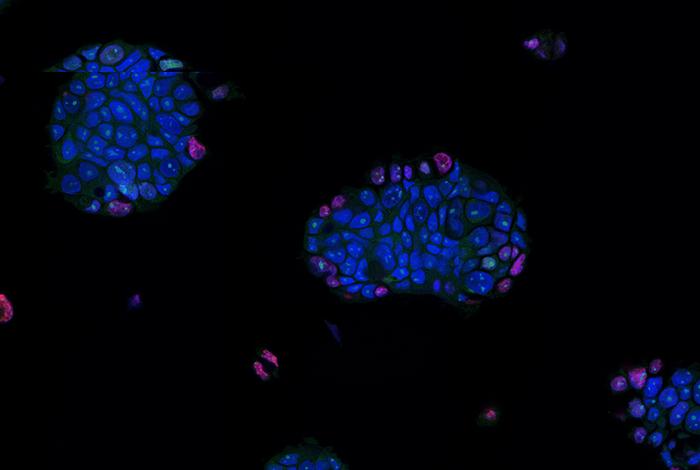
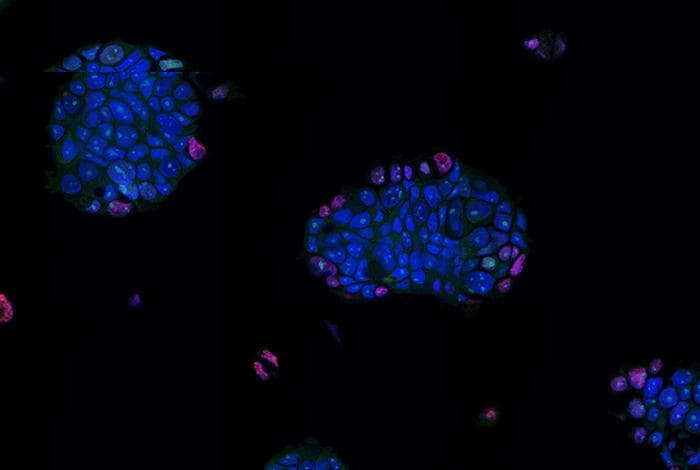
The team characterized the organoids extensively, showing that they retained key characteristics of the parent tumors over extended periods and showed promise in screens to identify unrecognized treatment candidates. The organoids had similarity to their parent tumors in terms of microscopic appearance, driver DNA mutations, gene expression patterns and other features.
More specifically, the comprehensive characterization demonstrated “high fidelity to parent tumors, with 93% histopathology concordance, 80% median genomic concordance for driver mutations, and a 0.85 median gene expression correlation.” Expression profiles remained largely stable over 10 passages, ensuring reproducibility for long-term screening. And clonality analysis, the authors note, showed that 85% of dominant tumor clones were preserved, with genomic concordance directly reflecting clonal similarity.
“Essentially, these organoids appear to be very good preclinical models of the parent tumor, and are practical models because they can be used long-term,” said Andrea Sboner, PhD, associate professor of pathology and laboratory medicine, director of informatics and computational biology in the Englander Institute for Precision Medicine and a member of the Sandra and Edward Meyer Cancer Center at Weill Cornell.
The team selected a subset representing patient tumors that, based on standard clinical criteria, had been deemed ineligible for treatment with a new class of drugs—PARP inhibitors. They then tested a PARP inhibitor, talazoparib, on the organoids, and found that more than half—58%—showed substantial sensitivity, implying that the current clinical criteria are excluding patients who could benefit from such drugs. The team characterized the mutational and other features that made these organoids susceptible—offering clues to how the clinical criteria might be expanded—and identified drugs that synergistically enhance talazoparib’s effects.
“You can use these organoids as patient ‘avatars’ during clinical trials of experimental therapies, for example, to get an early picture of treatment effects and side effects,” notes Juan Miguel Mosquera, MD, a professor of pathology and laboratory medicine and director of research pathology at the Englander Institute.
The scientists also envision the future use of tumor organoid technology in selecting treatments for individual patients—growing an organoid from a sample of the patient’s tumor and then testing it rapidly with different treatment regimens.
NewsClinical trialDrugsGene expressionMutationOrganoidsPrecision medicinePreclinical developmentPrevious article
Memory Shaped by Brain Remodeling During Adolescence in MiceNext article
Protein Protects Against Tau Tangles, Synaptic Loss in Mouse Model of TauopathyAlso of Interest
Bone Marrow-on-a-Chip Model Offers New Window Into Immune Cell Development and BehaviorAI Accelerates Biomanufacturing from Discovery to TranslationIncreasing CHO Cell ProductivityNRAS Mutations May Require Mutation-Guided Combination TherapiesNewBiologix and Synastra Join Forces to Advance rAAV Manufacturing for Duchenne Gene TherapyBicistronic Vectors + piggyBac = Improved Antibody Cell Line ProductionRelated Media
AACR 2026 Video Update: Cancer Research Edges Toward an AI-Driven EraOmics in Orlando Day 2: A Video Report from AGBTBiotech and Beignets: The News from Day One of ASGCTGoodbye Chicago: A Final Video Update From AACRAACR 2024: A Video Update from San DiegoSickle Cell Salvation: The Victoria Gray InterviewTop 5ResourcesRecommended For YouPodcast
Touching Base
Touching Base is the dynamic podcast series from the editors ofGEN. Each episode features a rotating case of senior editors—including John Sterling, Kevin Davies, Julianna LeMieux, Alex Phillippidis, Uduak Thomas, Corinna Singleman, and Fay Lin—who delve into emerging stories, exchange ideas, and debate the latest trends in biotech. Additionally, they talk to some of the leading voices in the industry about what's now and next.Start listening today!
Stay up to date with the lasted episodes of Touching Base bysubscribing to theGENPodcast Newsletter