Jump To:
- 5 lunar targets to celebrate International Observe the Moon Night 2026
- Montes Apenninus
- Shadow drenched craters
- Tranquility Base
- Mare Crisium
- Rupes Recta
International Observe the Moon Night is upon us!
To celebrate, we've put together a list of 5 breathtaking lunar targets to explore with the help of a telescope, ranging from a dramatic array of thought-provoking craters to a 62-mile-long "straight wall" that appears onthe moonaround its first quarter phase.
So grab your telescope and step outside to witness the majesty of the half-lit moon as it glows on the southern horizon close to thestarsof the constellation Sagittarius on the evening of Sept. 19.
A telescope with an aperture of 4 inches or more will reveal plenty of detail in the lunar landscape, while larger scopes will help you bring finer features into view.
5 lunar targets to celebrate International Observe the Moon Night 2026
Discover a mountain range on the moon
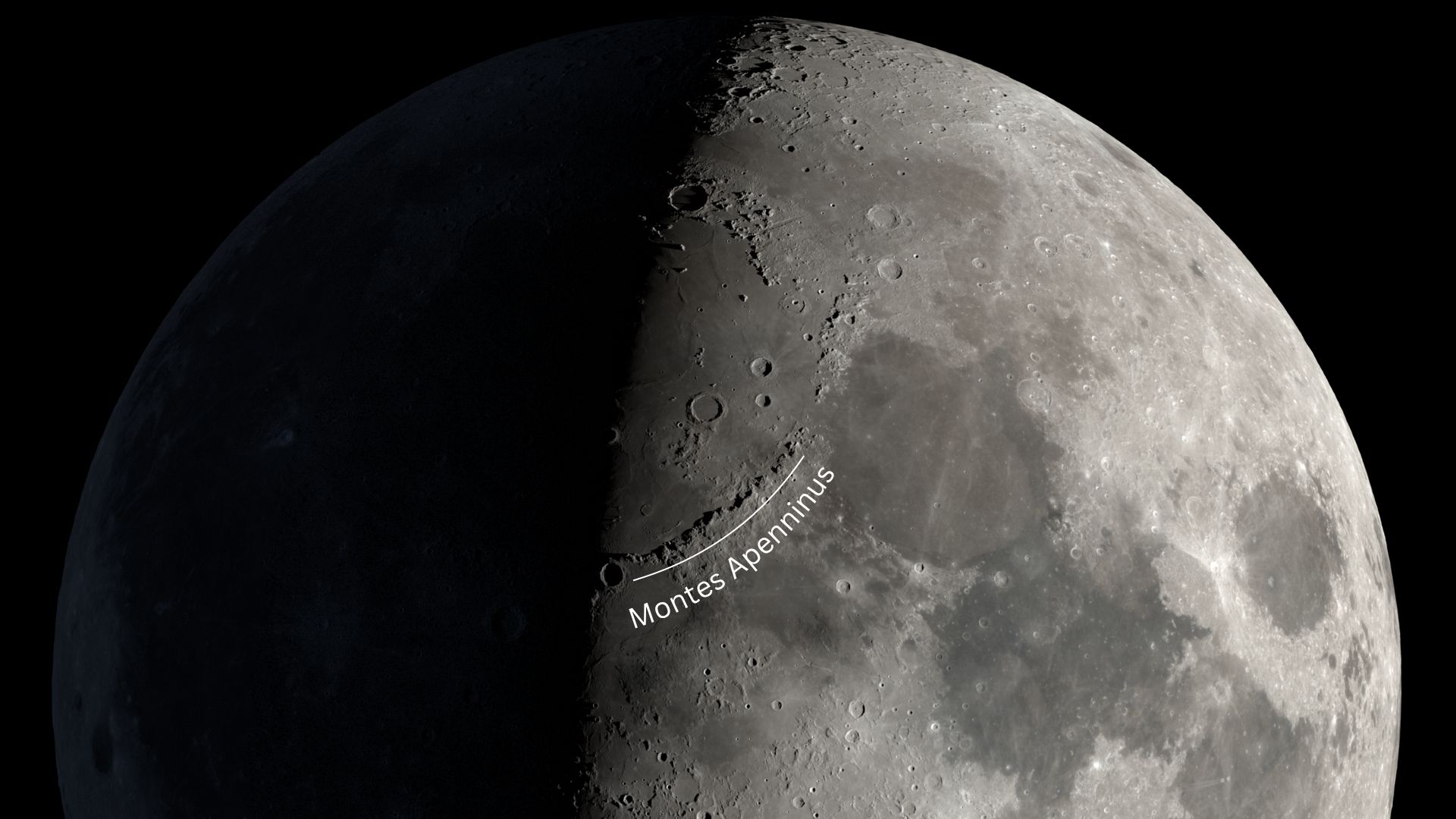
The moon's first quarter phase is the perfect time to spot the majestic sweep of the Montes Apenninus mountain range casting its shadow across a swathe of the lunar disk as sunlight strikes its eastern flanks.
Sweep your telescope 20 degrees north of the lunar equator, close to the terminator line separating night from day on the sunlit side of the moon. The373-mile-wide (600-kilometer)mountain range can be seen casting a shadow as it looms up to3.1 miles (5 km)above the southeastern shore of Mare Imbrium (the Sea of Showers).
3 great thinkers brood across the terminator
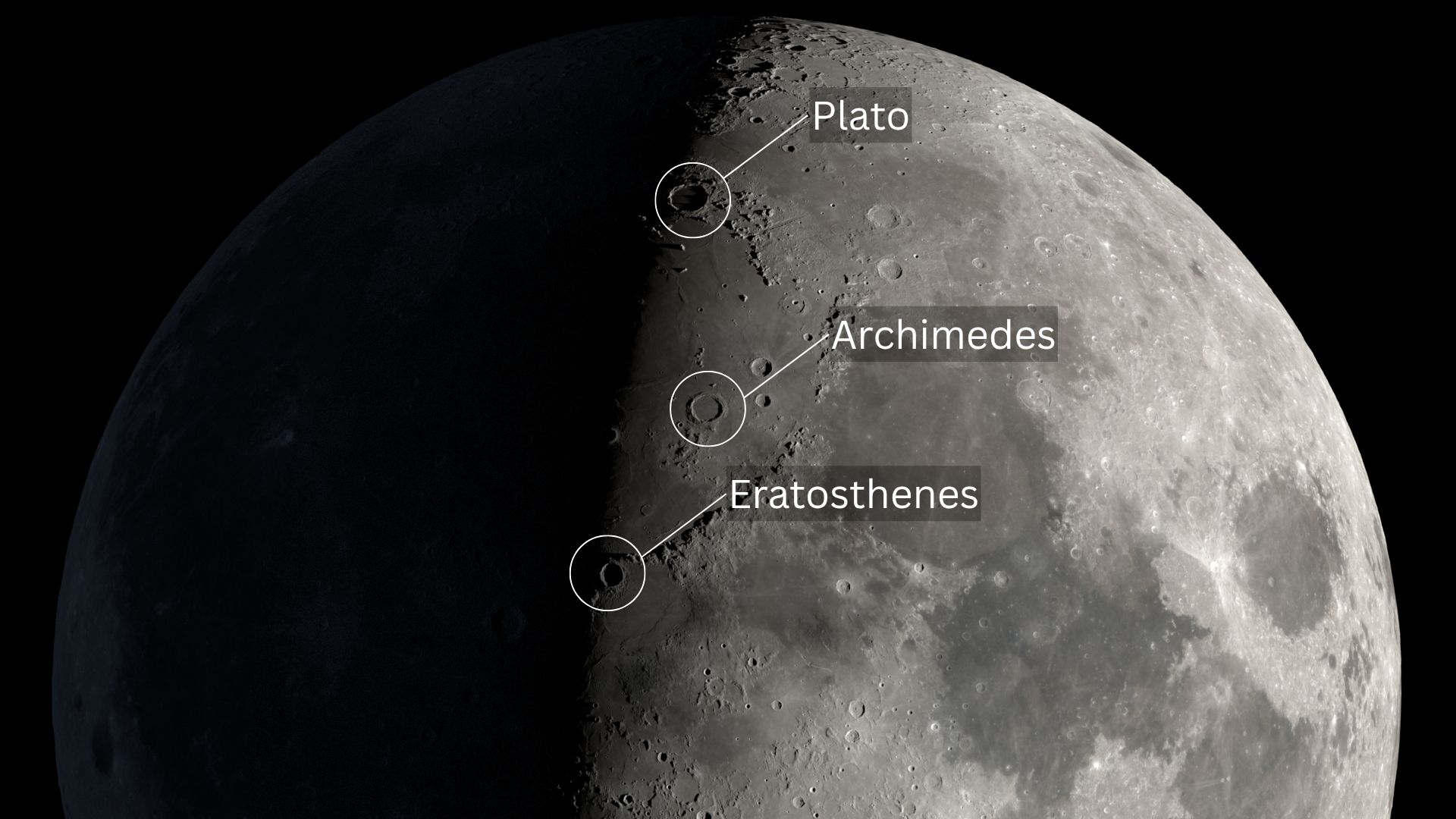
Next, look out for a collection of shadowed craters named after famous astronomers, mathematicians and philosophers lurking close to the terminator line.
The68-mile-wide (109 km)Plato crater makes for a spectacular sight on the northern edge of Mare Imbrium, while the smaller Archimedes impact site is visible, marking the smooth terrain of the lunar sea to the north of the Montes Apenninus mountain range.
Follow the curve of the Montes Apenninus range to its most southerly point to discover the Eratosthenes Crater, named after theGreek philosopher and astronomerwho first calculated the circumference ofEarthin 240 BC. The interior will be lost to shadow on the night of Sept. 19, while the complex structure of its western rim presents a fascinating target for telescopes with an aperture of 6-8 inches or more.
Tranquility Base
Moving on from ancient to modern history, our next stop is the historic landing site of NASA'sApollo 11mission, where astronautsNeil ArmstrongandBuzz Aldrintook humanity's first steps on the surface of another world on July 20, 1969.
Read More:Apollo landing sites: An observer's guide on how to spot them on the moon.
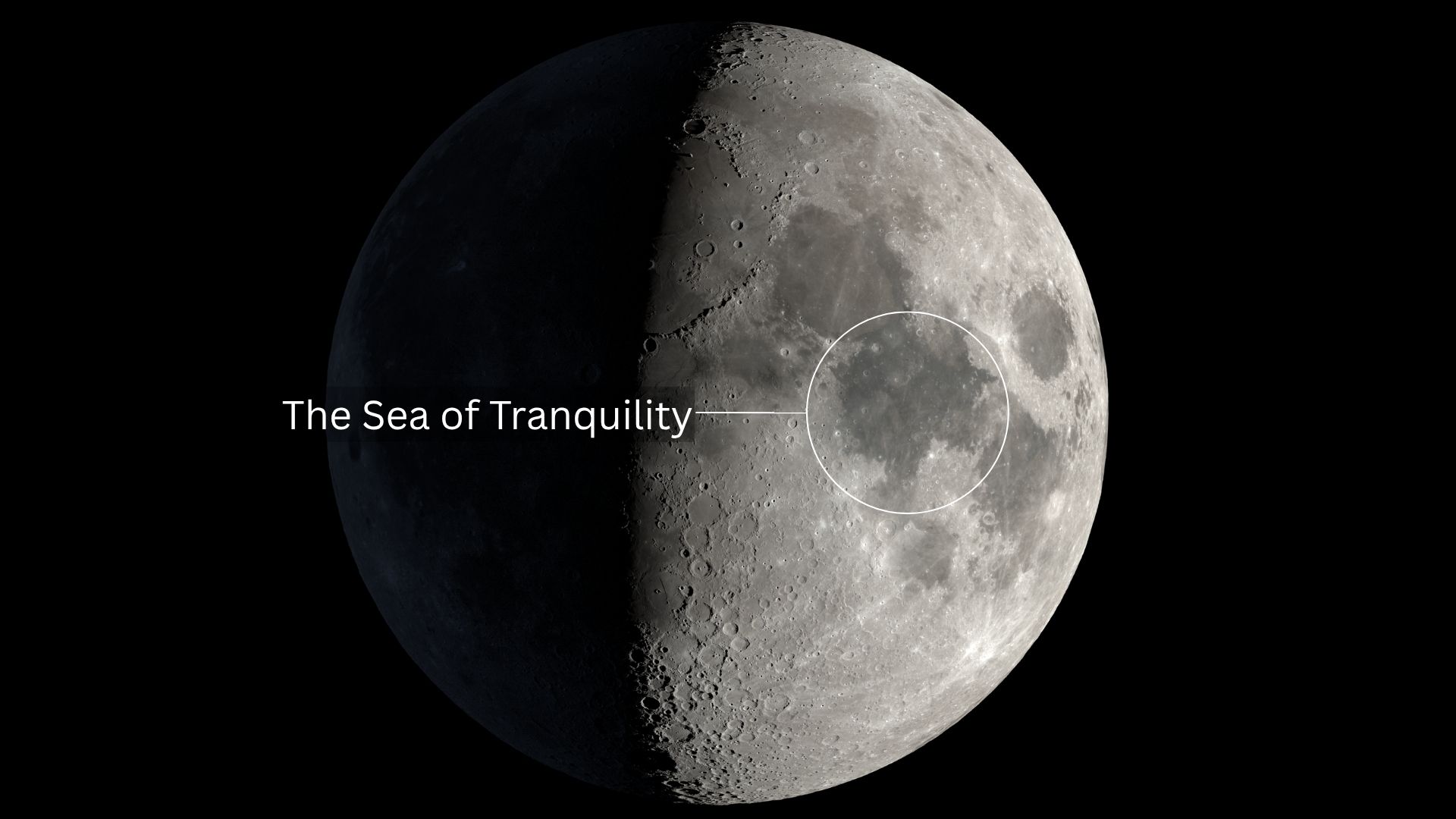
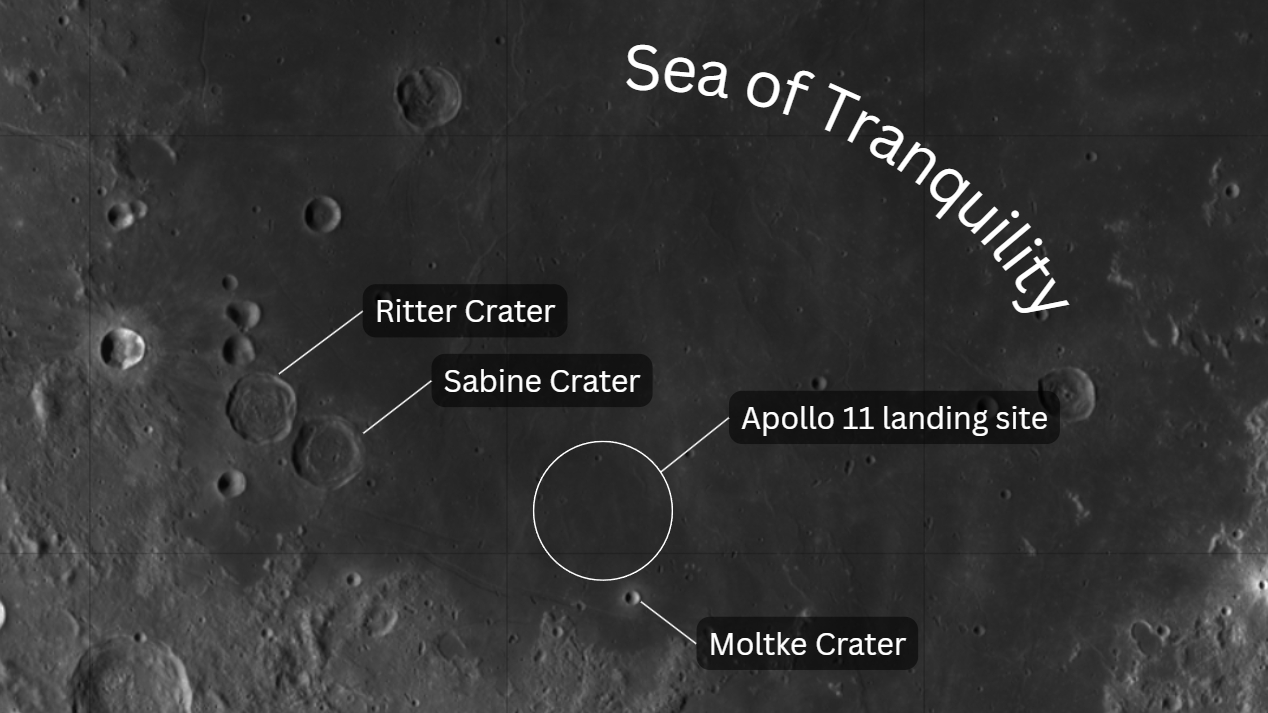
First, locate the basaltic plain of the Sea of Tranquility near the lunar equator. Then find the Ritter, Sabine and smaller Moltke impact craters on its southwestern shore.
Draw a line from the northern rim of Sabine to the northern rim of Moltke. The Apollo 11 landing site — also known as Tranquility Base — sits just north of that imaginary line roughly ⅘'s of the way from Sabine to Moltke, though the flag and hardware left behind are far too small to see, even with the most powerful Earth-based telescopes.
Mare Crisium
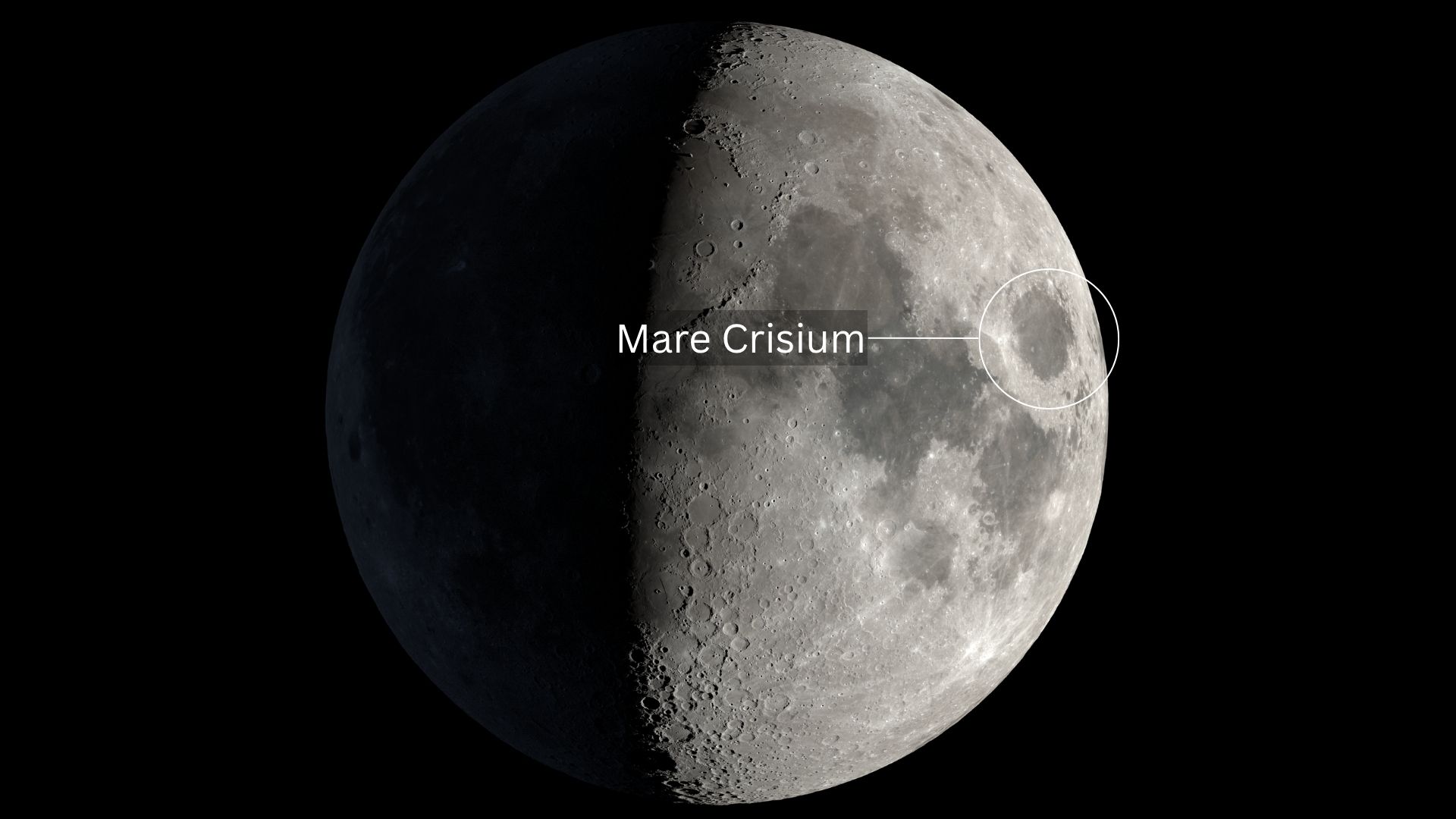
Next, look to the eastern edge of the sunlit side of the lunar disk just above the equator to spot the vaguely circular shape of Mare Crisium (the Sea of Crisis) scarring the moon's silvery surface.
This vast lunar sea was created in the wake of a colossalasteroidimpact that excavated a vast impact basin, which later flooded with lava from the moon's interior. The lava flows eventually hardened to form a colossal basaltic plain that sits1.1 miles (1.8 km)below the lunar "sea level".
Rupes Recta, the straight wall
Our final target is a seemingly mysterious, striking dark line that appears on the lunar surface soon after the moon's first quarter phase.
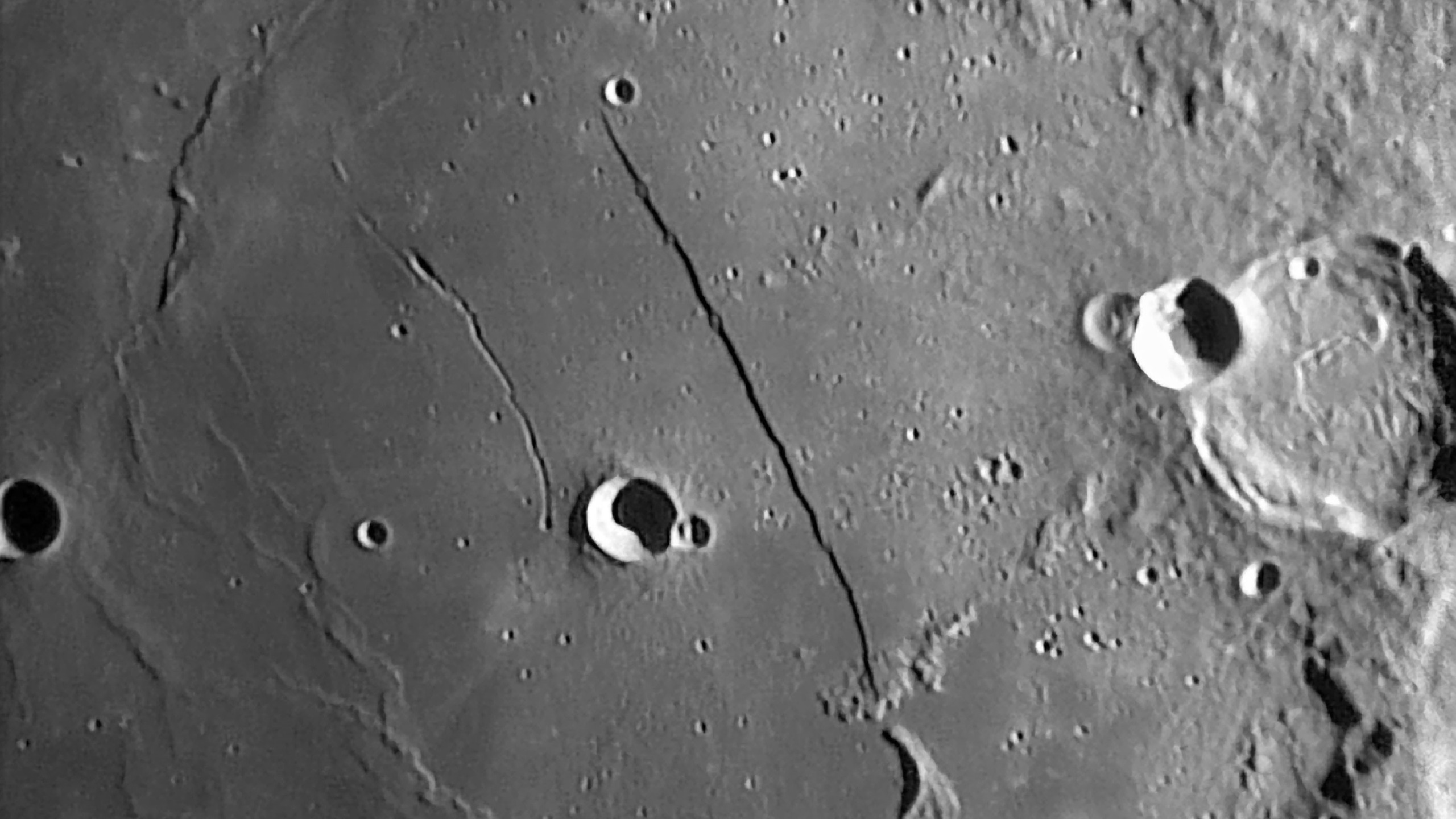
The feature is known as Rupes Recta, also known as the "straight wall" — a 62-mile-long (100 km) long cliff-face that formed as the lunar crust was pulled apart along a structural fault.
Rupes Recta is found cutting between shadowed craters within the southeastern part of Mare Nubium close to the terminator on the day side of the moon, south of the equator.
Want to get even more involved? Check out our article detailinghow you can celebrate International Observe the Moon Night 2026either virtually or in person and be sure to peruse our roundups of thebest telescopesfor exploring the night sky.
Editor's Note:If you would like to share your astrophotography with Space.com's readers, then please send your photo(s), comments, and your name and location to spacephotos@space.com.
Skywatching Writer
Anthony Wood joinedSpace.comin April 2025 after contributing articles to outlets including IGN, New Atlas and Gizmodo. He has a passion for the night sky, science, Hideo Kojima, and human space exploration, and can’t wait for the day when astronauts once again set foot on the moon.
You must confirm your public display name before commenting
Please logout and then login again, you will then be prompted to enter your display name.