AI Framework Surfaces New CAR T Target with Multi‑Cancer Potential
A new study inCelldescribes an AI‑enabled strategy that could accelerate the search for next‑generation CAR T cell targets—an enduring bottleneck in expanding the therapy beyond blood cancers. The work, titled“AI‑driven discovery of GPNMB CAR T cells as a multi‑cancer therapy,”was led by researchers at thePerelman School of Medicine at the University of PennsylvaniaandPenn’s Abramson Cancer Center, with collaborators at theIcahn School of Medicine at Mount SinaiandRWTH Aachen University.
The Penn team developed ahuman‑in‑the‑loop AI frameworkdesigned to systematically nominate antigens suitable for CAR T cell therapy. Rather than replacing expert judgment, the system integrates large language models (LLMs) with single-cell RNA sequencing datasets from human skin cancer and healthy tissue to generate and refine target lists that scientists then evaluate experimentally.
The challenge is well known: while CAR T therapies have transformed treatment for several hematologic malignancies, identifying safe, selective targets in solid tumors remains slow and labor‑intensive. “Discovering a good CAR target is like trying to find a needle in a haystack, except the haystack keeps growing as more sequencing data becomes available,” said lead authorDaniel Baker, PhD, who completed the work under the mentorship ofCarl June, MD, andZoltan Arany, MD, PhD. LLMs, Baker added, excel at scanning broad datasets, while human experts “go deep”—a complementary pairing the team sought to formalize.
To test the framework, the researchers focused onskin cancer, integrating four publicly available single‑cell RNA‑seq datasets with additional public resources. More than 10,000 potential antigens were filtered using criteria relevant to CAR T design, including tumor composition, tissue specificity, and clinical feasibility. Multiple LLMs then repeatedly simulated target nomination—1,000 independent runs—to reduce noise and mitigate hallucinations. The resulting consensus list was reviewed by the team, who selected Glycoprotein non-metastatic melanoma protein B (GPNMB)as the top candidate.
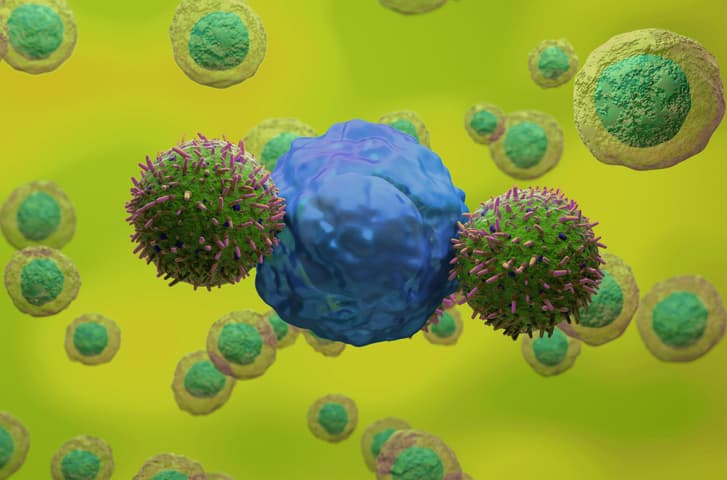
The researchers then engineered aGPNMB‑directed CAR T celland validated its activity across several preclinical models. In mouse studies, the CAR T cells eliminated tumors not only in melanoma—the original focus of the dataset—but also inmonoblastic leukemiaandcolorectal adenocarcinoma, suggesting broader therapeutic potential. These findings align with the paper’s highlight thatGPNMB is expressed across a wide range of tumor types.
The full framework is included in the methods section to enable adoption by other groups. The Penn team plans to apply the approach to additional cancer types and continue advancing the GPNMB CAR T candidate toward potential clinical translation.
According to June, “this study represents one of the first uses of large language models in the field of cell and gene therapy, including CAR T cell therapy.” The framework is intentionallymodular and disease‑agnostic, designed to accommodate new datasets and future LLMs as they evolve. Arany emphasized the broader implications: “This is only the tip of the iceberg, as agentic AI is on the rise.”
NewsArtificial intelligenceHematologic and lymphatic cancerSingle-cell RNA sequencingSkin cancerT-cell immunotherapyPrevious article
Antibiotics Trigger Protein Sharing Among Bacteria, Aiding Persister CellsNext article
Circio’s circVec and Tcelltech’s nanoSMAR Technologies Combined to Generate NextgenIn vivoCAR-T and TCR-T CellsAlso of Interest
CloudScope Enables Continuous Remote Monitoring of Brain Activity in Freely Moving MiceSmarter Cell Culture Starts with Better MediaCAR T Manufacturing in Japan Gets Boost from Teijin-Shinshu University Research CollaborationRevvity Signs Agreement to Acquire Human Cell DesignTop 10 Contract Development and Manufacturing Organizations 202610 CDMO Up & Comers 2026Related Media
Data Integrity as the Foundation for AISmall Molecules, Big Expectations: How CDMOs Are Helping Sponsors Navigate Complexity, Speed, Scale-Up, and SustainabilityBeyond the Technology: AI Readiness in Regulated LaboratoriesAACR 2026 Video Update: Cancer Research Edges Toward an AI-Driven EraReporting Live from JPM 2026: Alex Philippidis and Jonathan Grinstein, PhDAI in Protein Design: Hype vs. Reality Explained by David BakerTop 5ResourcesRecommended For YouPodcast
Touching Base
Touching Base is the dynamic podcast series from the editors ofGEN. Each episode features a rotating case of senior editors—including John Sterling, Kevin Davies, Julianna LeMieux, Alex Phillippidis, Uduak Thomas, Corinna Singleman, and Fay Lin—who delve into emerging stories, exchange ideas, and debate the latest trends in biotech. Additionally, they talk to some of the leading voices in the industry about what's now and next.Start listening today!
Stay up to date with the lasted episodes of Touching Base bysubscribing to theGENPodcast Newsletter