Sign in
Welcome! Log into your account
Forgot your password? Get helpPrivacy PolicyPassword recovery
Recover your password
A password will be e-mailed to you.
GEN – Genetic Engineering and Biotechnology NewsHomeSponsoredADCs, mAbs, CAR Ts: One Bioluminescent Platform Measures Them All
Credit: koto_feja / iStock / Getty Images Plus
Sponsored content brought to you by
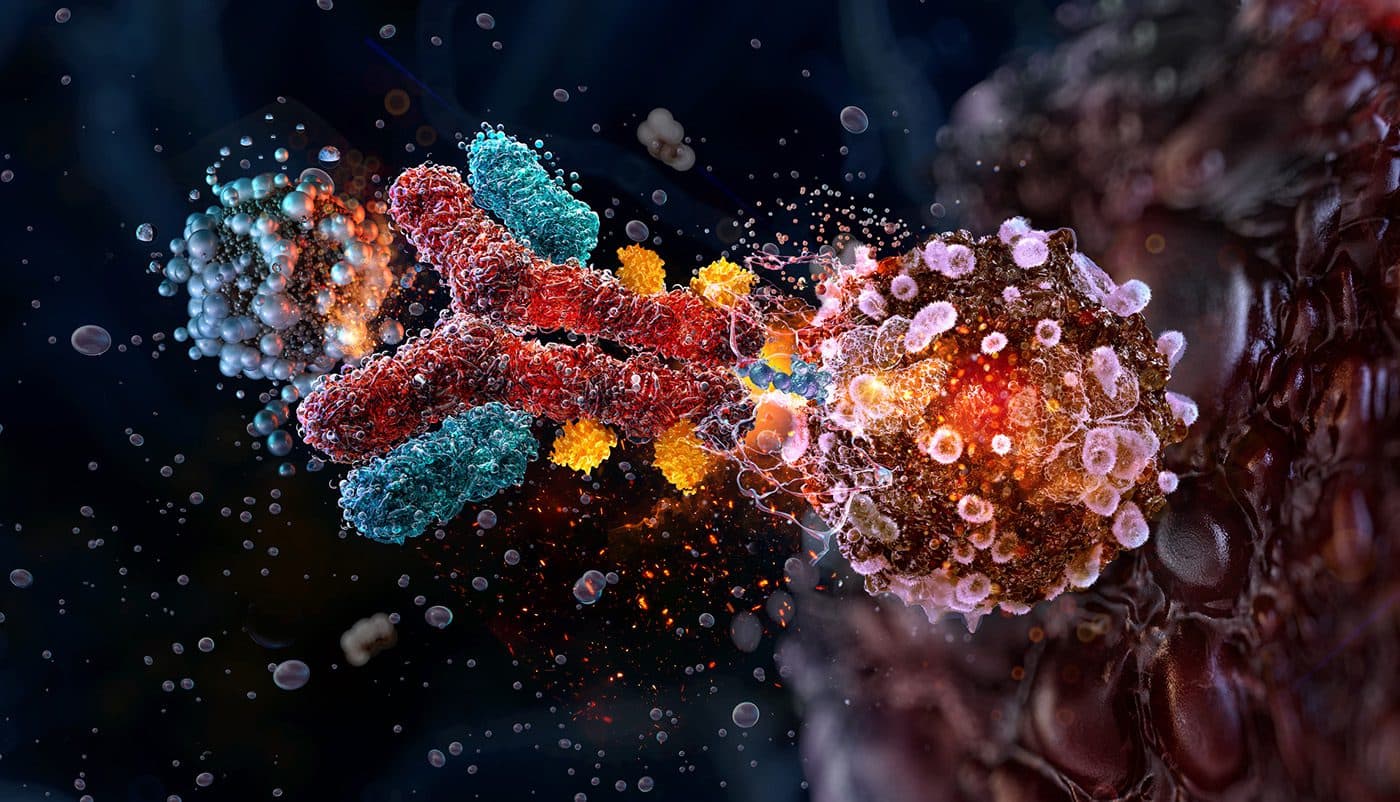
The development and use of biologic-based immunotherapies is one of the fastest-growing areas in the biopharmaceutical sector. These immunotherapies use different mechanisms of action (MoA) and formats, including chimeric antigen receptor (CAR) T cells, monoclonal antibodies (mAbs), and antibody drug conjugates (ADCs).
A crucial step during immunotherapy development is verifying MoA through delivery of the cytotoxic payloads to the targeted cells in a heterogeneous environment. The streamlined Promega HiBiT Target Cell Killing (TCK) platform is a bioluminescent cell-based system that measures cytotoxicity with specificity, simplicity, and sensitivity during therapeutic development. The mix-and-match platform supports broad immunotherapy modality assessment for four killing mechanisms—CAR-T cell-mediated killing, antibody-dependent cellular cytotoxicity (ADCC), T cell-dependent cellular cytotoxicity (TDCC), and antibody-dependent cellular phagocytosis (ADCP).
Off-the-shelf, thaw-and-use HiBiT target cells express an intracellular HiBiT peptide that remains stable in media for >3 days with minimal leakage and is released only upon cell death. Released HiBiT binds cell-impermeable LgBiT to form functional NanoBiT luciferase, generating a bright, quantitative signal. The luminescent signal is proportional to target cell death alone, with no contribution from effector cells, making the platform ideal for co-culture experiments.
The HiBiT TCK platform leverages gain, not loss, of signal detection. This approach avoids the kinetic complications of loss-of-signal assays, where prolonged luminescence decay can obscure cell death timing and complicate endpoint selection. The simplified no wash, load, or staining workflow produces robust signal-to-noise with as few as 2,000 cells in 96-well formats or 500 cells in 384-well formats.
Thaw-and-use target cells
A growing library of off-the-shelf assay components includes thaw-and-use, functionally tested cell lines that address blood cancer targets, including B cell lymphoma and leukemia, myeloid leukemia, and multiple myeloma (Raji, Ramos, H929), as well as solid tumor targets for ovarian carcinoma (OVCAR3), breast adenocarcinoma, and lung carcinoma (SKOV3, SK-BR-3). HiBiT-containing target cell lines can also be custom tailored using ViaScript®transfection.
For cell lines not in the standard panel, the ViaScript (HiBiT) TCK Bioassay enables rapid screening of target cells using transient HiBiT expression. ViaScript is a novel mRNA transfection reagent that enables rapid and titratable transient expression of HiBiT mRNA in a wide range of adherent or suspension target cell types for early high-throughput screening and clone selection. The transfected cell lines can be screened simultaneously and used in a HiBiT TCK Bioassay and paired with qualified primary effector cells and a biologic to measure ADCC, ADCP, TDCC or CAR-T cell killing. Once optimal TCK lines are identified with the ViaScript (HiBiT) TCK Bioassay, Promega’s Tailored R&D Solutions (TRS) offers custom clonal line development.
Off-the-shelf primary effector cells
Promega’s primary effector cells provide a consistent and robust method for target cell killing. The primary effector cells are MoA-qualified to measure the potency and stability of antibodies and other biologics that specifically bind and activate their respective effector cells. Stocked as thaw-and-use products, primary effector cells are functionally tested with the HiBiT Target Cell Killing Bioassays. PBMCs are ADCC-qualified, CD8+ T cells are TDCC-qualified, and macrophages are ADCP-qualified to assess Fc effector-driven activity. Effector cells are available in two product formats: as standalone vials or in bioassay kits.
The homogeneous, sensitive HiBiT TCK platform and bioassay provides a robust assay window for four immunotherapy killing mechanisms. The versatile mix-and-match platform supports experiments with different combinations of effector and target cells. The resulting luminescent signal is specific to target cell killing, making the bioassay well-suited for mixed co-culture experiments during development efforts. The HiBiT TCK platform supports ADCC with PBMC effectors, TDCC with CD8+ T cells, ADCP with macrophages, and CAR-T killing assays across a 4–72-hour time course.
Explore Morepromega.com/products/reporter-bioassays/target-cell-killing-bioassays.
SponsoredAdenocarcinomaB-cell lymphomaBiopharmaceuticalsCell immunotherapyCytotoxicityLeukemiaLung cancerMonoclonal antibodiesMultiple myelomaOvarian cancerPhagocytosisT-cellsAlso of Interest
Chronic Interferon Exposure Linked to Immunosuppression in CancerTop 10 Contract Development and Manufacturing Organizations 2026Purifying Complex Therapeutics Requires Fresh ApproachesMonoclonal Antibodies Targeting MMP-9 Alleviate Peripheral Neuropathy in Diabetic MiceIncreasing CHO Cell ProductivityDesign for Commercial Scale from Day OneRelated Media
Reporting Live from JPM 2026: Alex Philippidis and Jonathan Grinstein, PhDAI in Protein Design: Hype vs. Reality Explained by David BakerEmerging Markets Collaborate to Succeed in Post-Pandemic WorldDr. Fauci Reflects on His 54 Year Career at the NIHImproving Protein Therapeutic Production is a Key Goal of Biopharma 4.0Helen Sabzevari, PhD, of Precigen Connects Cancer and the Immune System on "Close to the Edge"Copyright © 2026 Sage Publications or its affiliates, licensors, or contributors. All rights reserved, including those for text and data mining and training of large language models, artificial intelligence technologies, or similar technologies.
MORE STORIES