Blood Cancer Therapies Informed by Spatial Remodeling of Bone Marrow
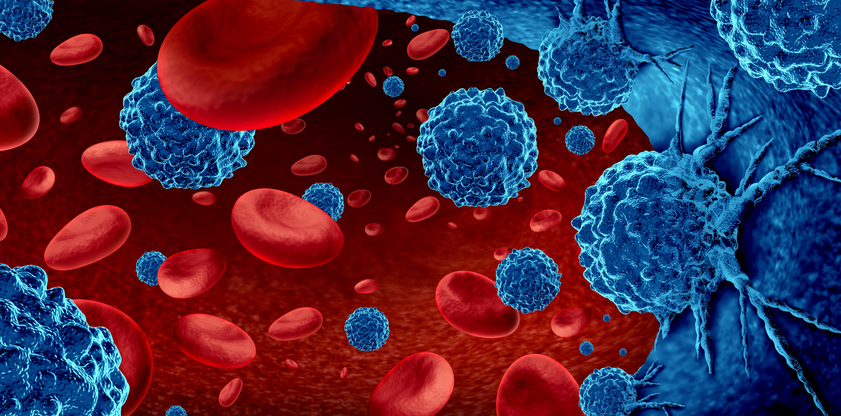
In anew study published inLeukemiatitled, “Spatial remodeling of bone marrow architecture defines tissue-state signatures of disease activity and therapeutic response in myelodysplastic neoplasm,“researchers from Weill Cornell Medicine have developed a new AI-based method to assess patients with a form of blood cancer called myelodysplastic neoplasms (MDS). The approach compares the size and shape characteristics of hematopoietic cells in the patient’s bone marrow sample with those in healthy bone marrow to generate a score that reflects disease severity.
MDS is a form of blood cancer that usually affects older adults. About one-third of patients progress to a more aggressive cancer called acute myeloid leukemia. MDS patients must undergo frequent biopsies to identify signs of remission or worsening disease.
“It’s fundamentally a chronic and progressive disease,” said Sanjay Patel, MD, clinical chief of hematopathology, and an associate professor of pathology and laboratory medicine at Weill Cornell Medicine. “With the current methods pathologists use to assess MDS samples, there are some clear-cut cases and a lot of gray area.”
The researchers developed a new method using fully deidentified patient samples that may provide more clarity for patients with MDS and their physicians.
“Using AI to assist us in looking at the spatial architecture of the bone marrow using widely available laboratory assays allows us to improve our capability to assess patients’ prognosis and perhaps triage them for precision therapies,” said David Redmond, PhD, assistant professor of computational biology research in medicine at Weill Cornell Medicine.
The MDS-Microarchitectural Perturbation Score (MDS-MAPS) score ranks patient samples based on 82 features associated with normal tissue and different genetic subtypes of MDS. The tool uses routinely collected samples, tissue staining protocols, and imaging technologies that could be implemented in most hospital pathology departments and laboratories.
“We can generate an MDS-MAPS value for a patient at diagnosis and track how it changes over time,” said Patel.
The next step will be to validate the method in larger cohorts of patient samples. The researchers will collaborate with Pinkal Desai, MD, associate professor of medicine at Weill Cornell Medicine and a hematologist/oncologist at NewYork-Presbyterian/Weill Cornell Medical Center, to study how the tool performs on other forms of MDS, and increasingly recognized precursor conditions.
“Patients with MDS and related precursor conditions have many mutations as part of the disease biology and each patient’s molecular signature is different,” said Desai. “We have always wondered if these mutations signal a different spatial pattern and whether these patterns have an impact in predicting how patients progress and respond to treatments. Together we are poised to harness technology to answer real-world clinical questions.”
NewsAcute myeloid leukemiaArtificial intelligenceBiopsyBone marrowCancer therapyHematologic and lymphatic cancerMyelodysplastic syndromeSpatial biologyPrevious article
Revvity Creates Program to Equip Young Biotechs with Scalable Informatics Capabilities Sooner than LaterNext article
10x Clinical Expansion Advances with CLIA Lab Plans, Cleveland Clinic PartnershipAlso of Interest
Bone Marrow-on-a-Chip Model Offers New Window Into Immune Cell Development and BehaviorCloudScope Enables Continuous Remote Monitoring of Brain Activity in Freely Moving MiceSmarter Cell Culture Starts with Better MediaRevvity Signs Agreement to Acquire Human Cell DesignTop 10 Contract Development and Manufacturing Organizations 202610 CDMO Up & Comers 2026Related Media
Data Integrity as the Foundation for AISmall Molecules, Big Expectations: How CDMOs Are Helping Sponsors Navigate Complexity, Speed, Scale-Up, and SustainabilityBeyond the Technology: AI Readiness in Regulated LaboratoriesAACR 2026 Video Update: Cancer Research Edges Toward an AI-Driven EraReporting Live from JPM 2026: Alex Philippidis and Jonathan Grinstein, PhDAI in Protein Design: Hype vs. Reality Explained by David BakerTop 5ResourcesRecommended For YouPodcast
Touching Base
Touching Base is the dynamic podcast series from the editors ofGEN. Each episode features a rotating case of senior editors—including John Sterling, Kevin Davies, Julianna LeMieux, Alex Phillippidis, Uduak Thomas, Corinna Singleman, and Fay Lin—who delve into emerging stories, exchange ideas, and debate the latest trends in biotech. Additionally, they talk to some of the leading voices in the industry about what's now and next.Start listening today!
Stay up to date with the lasted episodes of Touching Base bysubscribing to theGENPodcast Newsletter