Sign in
Welcome! Log into your account
Forgot your password? Get helpPrivacy PolicyPassword recovery
Recover your password
A password will be e-mailed to you.
GEN – Genetic Engineering and Biotechnology NewsHomeTopicsGenome EditingCryo-EM Reveals How CRISPR-Guided Caspase Works
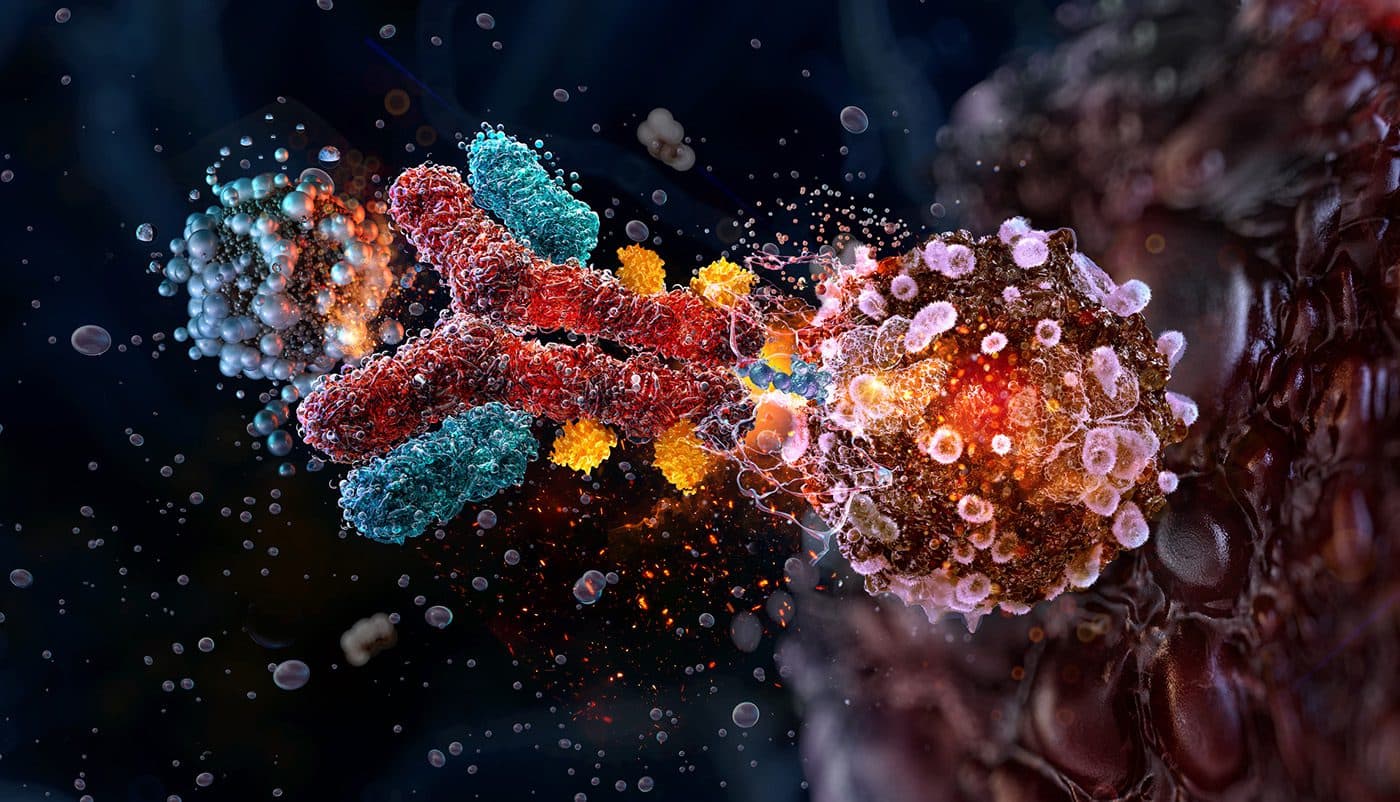
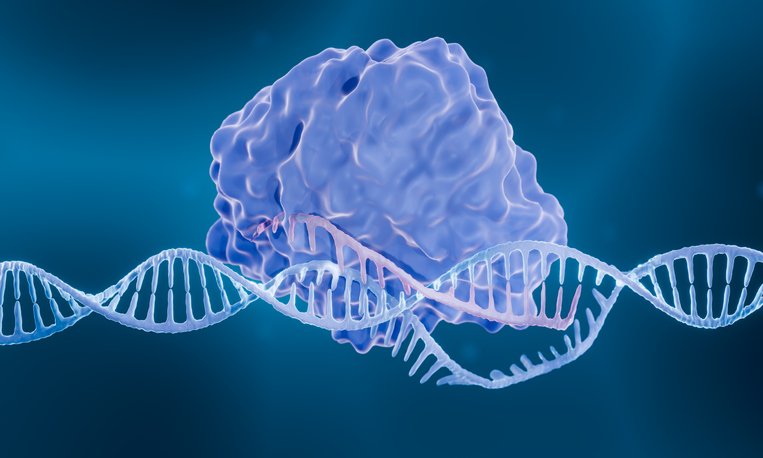
Credit: Artur Plawgo/Science Photo Library/Getty Images
A new study offers important mechanistic insights into a recently discovered CRISPR-guided caspase, or Craspase. Using cryo-electron microscopy (cryo-EM), researchers explained its target RNA cleavage and protease activation mechanisms, which could lead to promising antiviral and tissue engineering tools in animals and plants.
The work was co-led by Ailong Ke, PhD, professor of molecular biology and genetics at Cornell University, and Stan J.J. Brouns, PhD, associate professor of molecular microbiology at Delft University of Technology. They published their findings in aSciencearticle titled, “Craspase is a CRISPR RNA-guided, RNA-activated protease.”
Arecent findingthat a caspase-like protein associated withCRISPR-Cas systemselectrified the scientific community. The CRISPR-guided caspase was given a new name, Craspase.
“[W]e could use a system like this to develop many biotech and therapeutic applications if we understand all the gizmos inside this machinery,” Ke said.
The team set out to determine the cryo-EM structures of Craspase in different functional states, gathering enough “snapshots” so that they had sufficient temporal resolution to interpret its mechanisms.
“These snapshots lead to a high-definition molecular movie,” Ke said. “By watching it back and forth, we know precisely how Craspase identifies an RNA target, how this, in turn, activates the protease, how long the activity persists, and what eventually shuts the protease activity off.”
Chunyi Hu, PhD, a postdoc in Ke’s lab and one of the first authors on the paper, explained that there is tremendous interest in Craspase. “Lots of competition. We and our Netherlands collaborators pooled our strength together and worked day and night to solve the puzzle,” he said.
“A new frontier in CRISPR-Cas biology has emerged, in which the RNA-guided effectors control physiological responses using mechanisms other than nucleic acid degradation,” the researchers wrote in their paper. “Here we define how the Craspase protease is allosterically activated by target RNA recognition and inactivated by target RNA cleavage to cleave the native substrate.”
Importantly, Hu explained, “The process holds exciting potential because the output of Craspase is protein rather than DNA degradation.”
“With other CRISPR technologies, one worries whether the enzymes we use to edit our DNA are safe enough, if there might be collateral damage or off-targeting,” Ke pointed out. “With Craspase, we can achieve many of the same beneficial therapeutic outcomes without worrying about the safety of our genome.”
Ke’s team plans to delve deeper into understanding Craspase pathways and processes. But they will also move to the application side, which could include engineering in animals and plants.
“I hope more investigators will appreciate the potential of this system and join in,” Ke said. “We all think about CRISPR-guided nuclease as a tool to cure genetic diseases, but CRISPR-guided proteases could have impacts for biology in a much broader way.”
NewsCRISPRCryo-electron microscopyRNA cleavageTissue engineeringAlso of Interest
New Spectrometry Technique Could Aid Formulation DevelopmentDANDELION Computational Tool Identifies Previously Unknown Asthma-Related Genes and PathwayBuilt Without Bacteria: Bringing Cell-Free Synthesis to the BenchHuman Multi-Organ Chip Offers New Insight Into Cancer MetastasisParasite-Specific Protein HelpsToxoplasmaAdapt to Crowded ConditionsNovel Molecular Glue Discovery Platform Unlocks Undruggable Cancer TargetsRelated Media
Smart Vector Design for Improved Cell and Gene TherapiesBiotech and Beignets: The News from Day One of ASGCTFrom Functional Genomics to Cell Therapy: The Role of CRISPR-Based Gene EditingASGCT 2024: A Video Update from BaltimoreSickle Cell Salvation: The Victoria Gray InterviewPerfect Pitch: Genome Editing Pioneer Fyodor Urnov on Commercializing CRISPR Therapies and Epigenomic TuningTop 5ResourcesRecommended For YouPodcast
Touching Base
Touching Base is the dynamic podcast series from the editors ofGEN. Each episode features a rotating case of senior editors—including John Sterling, Kevin Davies, Julianna LeMieux, Alex Phillippidis, Uduak Thomas, Corinna Singleman, and Fay Lin—who delve into emerging stories, exchange ideas, and debate the latest trends in biotech. Additionally, they talk to some of the leading voices in the industry about what's now and next.Start listening today!
Stay up to date with the lasted episodes of Touching Base bysubscribing to theGENPodcast Newsletter
Copyright © 2026 Sage Publications or its affiliates, licensors, or contributors. All rights reserved, including those for text and data mining and training of large language models, artificial intelligence technologies, or similar technologies.
MORE STORIES