Sign in
Welcome! Log into your account
Forgot your password? Get helpPrivacy PolicyPassword recovery
Recover your password
A password will be e-mailed to you.
GEN – Genetic Engineering and Biotechnology NewsHomeTopicsBioprocessingDownstream Purification Platform Breaks Complex Vector Bottleneck
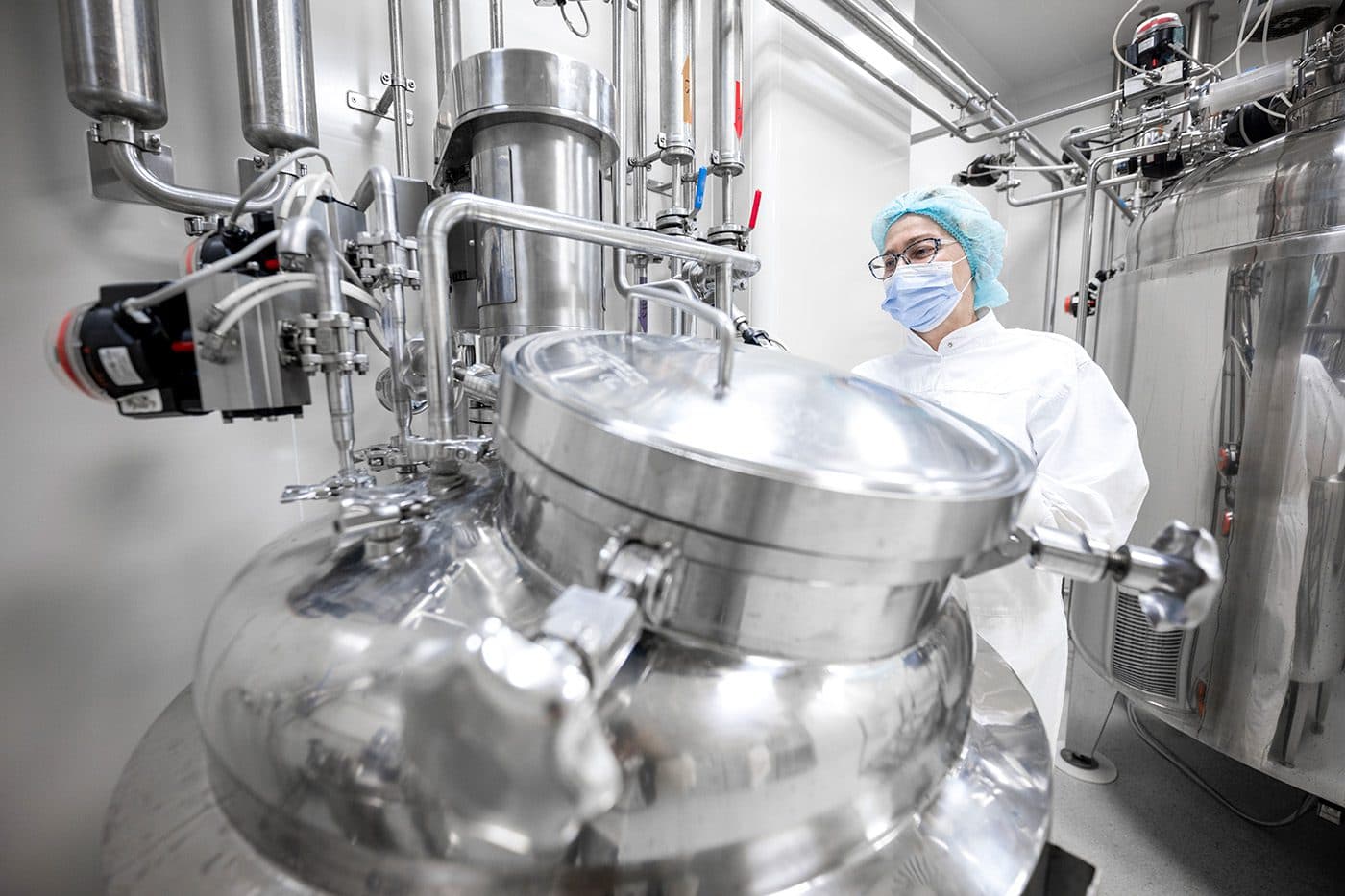
Credit: WLADIMIR BULGAR/Getty Images
Downstream processing is becoming a bottleneck as biopharmaceutical manufacturing shifts to more complex bispecific antibodies, FC-fusion proteins, and adeno-associated viral (AAV) vectors. A purification platform developed by a team of 24 researchers at North Carolina State University removes that bottleneck by providing both high flow-through and superior impurity capture.
For biomanufacturers, the combination of process intensification and more complex vectors has meant higher upstream titers that increased both product- and process-related impurities, thus increasing the downstream processing burden. The ramification is that some high-risk impurities, such as proteases, lipases, redox-active enzymes, and chromatin-associated species, have slipped through conventional capture and polishing steps and have been implicated in batch failures, clinical holds, and product recalls.
A recentpaperoutlines the strategies Wenning Chu, PhD, research scholar and first author, and colleagues devised.
Industry-relevant options
For proteins derived from Chinese hamster ovaries (CHO), the platform consisted of a resin-based pre-capture step that combines peptide ligand technology and a size-exclusion matrix, followed by a Protein A capture step, and a single-use size-exclusion mixed-mode resin for polishing. It enabled “product yields exceeding 70%,” final product pool concentration of 19–23 g/L/hour—notably more than the industry standard or approximately 15 mg/mL, “and monomeric purity of approximately 99%.” Host cell protein clearance ranged from 4 to 11 ppm.
“By shifting the impurity clearance from a bind-and-elute polishing step to a modular flow-through operation, this approach decouples impurity removal from product capture and reduces the process sensitivity typically associated with modality-specific polishing development,” Chu and colleagues wrote. “The productivity gains…were substantial.”
For AAV purification, the team used a mixed-bed absorbent followed by a capture step using either a platform AAV resin or a single-use, high-capacity chromatography membrane. By enforcing a 1:3 charcoal-to-resin ratio and optimizing the load volume, this method achieved an approximate 50% AAV recovery and a host cell protein level of 350 ng/mL—less than 100 ng per dose.
This fit-for-purpose platform purifies a wide range of products and impurities with modular flexibility and, the researchers note, “enables targeting impurity classes that often persist through conventional platforms and are removed only at the expense of yield, while still sustaining high productivity.”
These flow-through and pseudo-affinity technologies expand downstream processing options, “enabling more efficient and reliable manufacturing of complex biologics….” The team considers them “industrially relevant” particularly in light of feed variability.
Further research may focus on operations at low residence times and productivity enhancements, as well as scale-up and good manufacturing practice considerations.
InsightsAdeno associated viral vectorChromatographyDownstream processEnzymesGood manufacturing practiceAlso of Interest
Manus and UT Austin Advance Biomanufacturing Product Recovery Through BioMADE Program10 CDMO Up & Comers 2026Purifying Complex Therapeutics Requires Fresh ApproachesGene Therapy Extends Lifespan and Reduces Symptoms in Sandhoff Disease Cat ModelMonoclonal Antibodies Targeting MMP-9 Alleviate Peripheral Neuropathy in Diabetic MiceDesign for Commercial Scale from Day OneRelated Media
Boston's Bioprocessing Buzz:GENReports Live from BPI 2025Boston and Bioprocessing: GEN Reports Live from the First Day at BPIResins Address Downstream Purification ConcernsHelping Biosimilars Emerge into Global Markets Takes a Practiced HandType O Blood from Any-Type DonorsMitochondrial DiseasesTop 5ResourcesRecommended For YouPodcast
Touching Base
Touching Base is the dynamic podcast series from the editors ofGEN. Each episode features a rotating case of senior editors—including John Sterling, Kevin Davies, Julianna LeMieux, Alex Phillippidis, Uduak Thomas, Corinna Singleman, and Fay Lin—who delve into emerging stories, exchange ideas, and debate the latest trends in biotech. Additionally, they talk to some of the leading voices in the industry about what's now and next.Start listening today!
Stay up to date with the lasted episodes of Touching Base bysubscribing to theGENPodcast Newsletter
Copyright © 2026 Sage Publications or its affiliates, licensors, or contributors. All rights reserved, including those for text and data mining and training of large language models, artificial intelligence technologies, or similar technologies.
MORE STORIES