Human Biological Datacenter to Launch to Train World Model of Human Biology
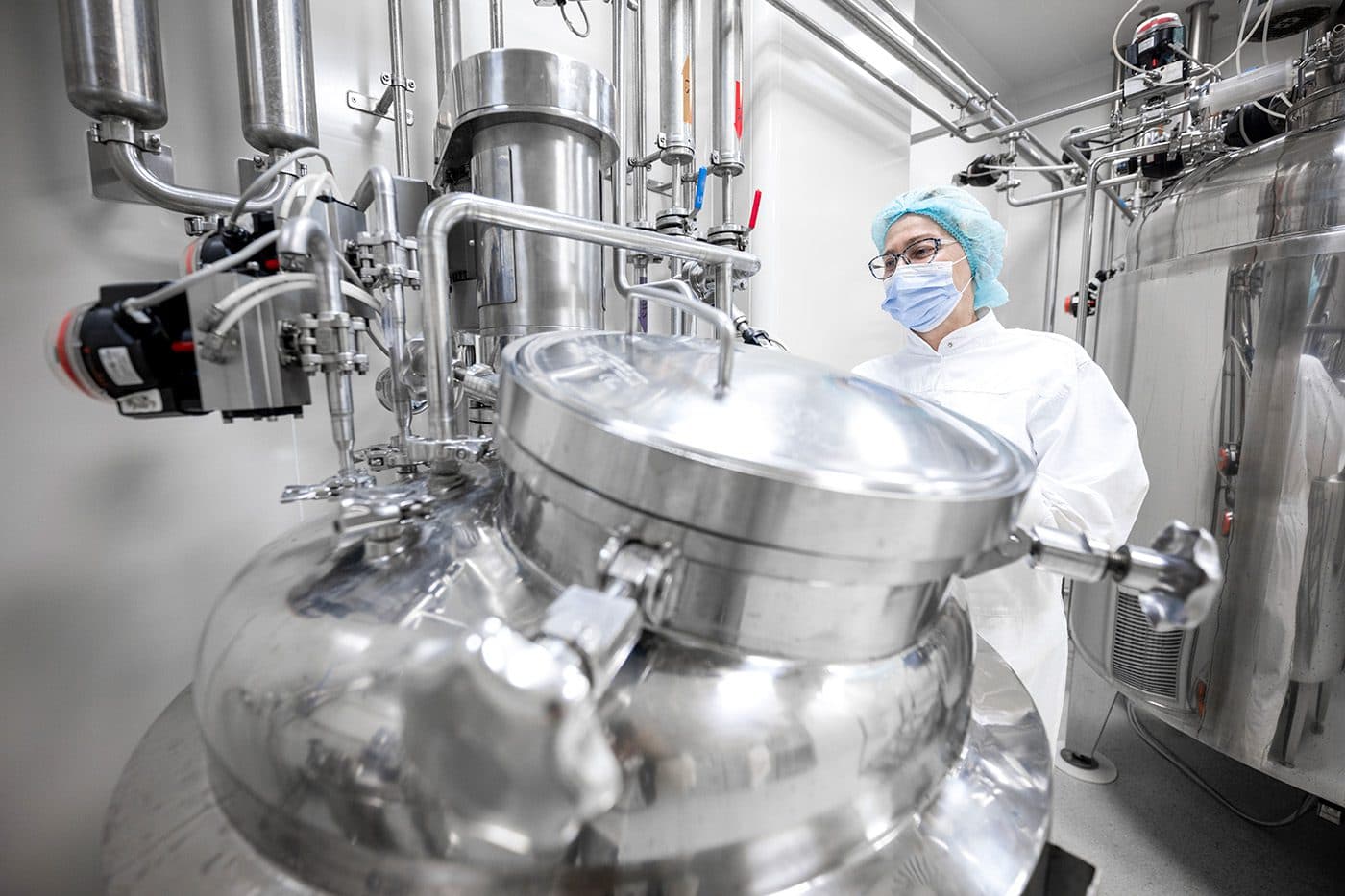
Vivodyne reports that it has launched “the world’s largest human biological datacenter,” with 12 robotic HIVE laboratories and the annual capacity to perform controlled trials on 3.1 million large human tissues per year—estimated at twice the scale of every clinical trial in the U.S. combined.
The company also introduced its Series 2 TissueDisk, a wafer-scale biological chip that simultaneously grows hundreds of large, functional, living human tissues and is manufactured end-to-end on Vivodyne’s own robotic production line.
Eight of the world’s largest pharmaceutical companies have paid for early access to the platform, according to Vivodyne, to discover and test new medicines “in humans” before ever testing in people, notes Andrei Georgescu, PhD, CEO and co-founder of Vivodyne.
Together, the TissueDisk and Vivodyne’s robotic HIVE laboratories create something that neither pharmaceutical research nor artificial intelligence has possessed before: a large-scale experimental environment in which the same reinforcement learning technique that has driven the explosion in AI language models can finally be harnessed to learn the workings of our physiology, explains Georgescu.
For pharmaceutical companies, that means learning how actual human tissue responds to a drug while decisions about targets, chemistry, dosing, and safety can still be made, he continues adding that Vivodyne’s approach allows millions of therapeutic interventions to be introduced into living human tissues, and their causal biological consequences measured directly with the most advanced, paired-data modalities available today: 3D scanning, transcriptomic sequencing, and deep proteomic analysis.
Vivodyne’s platform provides the foundation of the first world model of human biology, claims Georgescu. Previously, the controlled experiments required to reveal complex, physiological cause-and-effect could not be performed safely in patients or at nearly the needed scale, and Vivodyne makes those experiments possible in living human tissue outside the body, he says.
“Superintelligence in biology is needed more than ever, because we’re running out of diseases that can be cured with the simple, single-target medicines of today,” states Georgescu. “You cannot fix a car by turning a single screw, and the idea that the complex malfunctions in cancer, fibrosis, autoimmune disorders, or neurological disease can be fixed with a conventional single-target drug is wishful denial. To create AI that understands our intricate human biology, we need to continuously generate and train on huge amounts ofhumandata, and we can’t get that by risking people. So, we grow these functional human tissues by the millions instead; large living tissues that grow their own blood vessels and immune cells and all the structures of native tissues. They mature, get diseases, bleed, scar, and, at huge scale, we learn how to make them heal.
“Every human response gives our AI something it cannot learn from a paper or a simulation: a living substrate to poke so that it can learn, from richer data than has ever been gathered, how it pokes back. At Vivodyne’s scale of automated human-tissue trials, all those learned consequences together become the training landscape for a world model of the human body, and the physical evidence that a pharmaceutical company needs before a drug is brought to patients.”
22 human organ systems grown
Vivodyne grows over 20 types of different human organ tissues, both healthy and with patient-linked diseases, including liver, lungs, gut, bone marrow, pancreas, kidney, eyes, lymph nodes, and more, with disease-specific versions spanning fibrosis, site-specific solid tumors, inflammation, metabolic disorders, vascular disease, and countless others. The company trains causal, multimodal AI models on the experiments conducted within each organ type, alone and combined.
Connecting those models across organ systems builds a world model of the human body that can answer what happens when a pair of receptors is drugged, a biological pathway is interrupted, a therapy causes an unexpected side effect, how cells respond and communicate, and whether disease is aggravated, stopped, or reversed, points out a company official. These predictions can then be real-world tested at scale to confirm what actually happens in human tissue, and then refined and advanced.
NewsArtificial intelligenceComputer simulationRoboticsTissuesSeries 2 TissueDiskPrevious article
Biopharma’s Drawdown Is a Chance to Build Biotech Back BetterNext article
Cortical Organoids Reveal Radial Glial Progenitor Lineage DynamicsAlso of Interest
CloudScope Enables Continuous Remote Monitoring of Brain Activity in Freely Moving MiceSmarter Cell Culture Starts with Better MediaRevvity Signs Agreement to Acquire Human Cell DesignTop 10 Contract Development and Manufacturing Organizations 202610 CDMO Up & Comers 2026Harnessing Real-Time DataRelated Media
Data Integrity as the Foundation for AISmall Molecules, Big Expectations: How CDMOs Are Helping Sponsors Navigate Complexity, Speed, Scale-Up, and SustainabilityBeyond the Technology: AI Readiness in Regulated LaboratoriesAACR 2026 Video Update: Cancer Research Edges Toward an AI-Driven EraRobots on the Red Line: A Video Update from SLAS 2026Reporting Live from JPM 2026: Alex Philippidis and Jonathan Grinstein, PhDTop 5ResourcesRecommended For YouPodcast
Touching Base
Touching Base is the dynamic podcast series from the editors ofGEN. Each episode features a rotating case of senior editors—including John Sterling, Kevin Davies, Julianna LeMieux, Alex Phillippidis, Uduak Thomas, Corinna Singleman, and Fay Lin—who delve into emerging stories, exchange ideas, and debate the latest trends in biotech. Additionally, they talk to some of the leading voices in the industry about what's now and next.Start listening today!
Stay up to date with the lasted episodes of Touching Base bysubscribing to theGENPodcast Newsletter