ByAdam Zimmerman
Sept. 11, 2026
Zimmerman is a public health communications consultant.
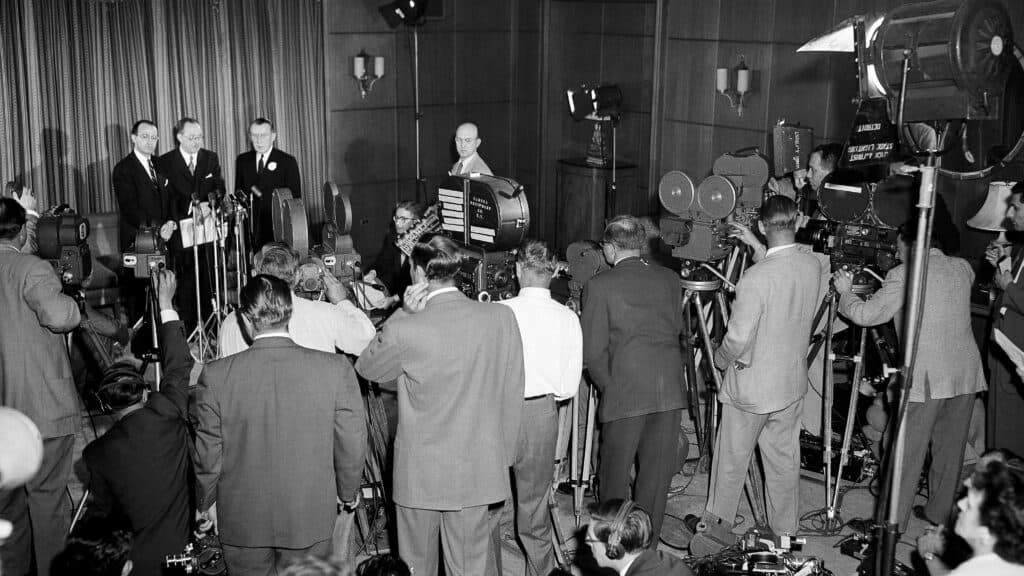
On April 12, 1955, America threw a vaccine party.
That morning, Thomas Francis Jr. — who had overseen trials of polio vaccines developed by Jonas Salk — held apress conferenceto announce the results.
Advertisement
Only it wasn’t a press conference. It was anevent.
Reporters packed the room. Tens of thousands of physicians gathered in movie theaters to hear the broadcast. Millions of Americans huddled around their radios.
The verdict: The vaccine worked. A disease that had devastated families for decades had finally met its match.
Advertisement
A documentarydescribesthe reaction: “Factory whistles blew, school children cheered, parents wept.” Newspapers ran headlines like “POLIO IS CONQUERED” across their front pages. Store owners wrote “Thank you, Dr. Salk” messages on their windows. Salk took the stage at the press conference to a prolonged standing ovation, on his way to becoming a living legend.
Fast forward 71 years, to 2026.
On Sept. 2, major medical societies released an independent research evaluation covering flu, Covid-19, and RSV shots. There was another press conference, and moregood news: These vaccines are still safe and continue to provide strong protection against death and severe illness.
But this was no event.
Experts talked about “informed decisions” and “shared commitment” and “restoring trust.” The American Medical Association launched anew websitewith JAMA articles and PDF charts, but no real people or stories. The tone was somber, the mood dour.
So much for a party.
As a communications consultant, I have spent years supporting vaccine advocates. Every conversation right now feels bleak. Measles has come roaring back. Vaccination rates keep dropping. The Centers for Disease Control and Prevention is a wreck. Robert F. Kennedy Jr., the ringleader of the country’s vaccine critics, is somehow still in charge of the Department of Health and Human Services.
For the pro-vaccine side, this is all excruciating. We spend our days debunking and fact-checking. We debate repeatedly whether to confront wellness influencers or engage them. We search endlessly for just the right analogy or metaphor to reach thehesitant parent.
We take vaccines really, really seriously. As we should. It’s a matter of life and death.
Somewhere along the way, though, we forgot how to celebrate. We are sorely lacking in optimism and excitement. There’s no sense of togetherness or belonging. We’ve gotten wound up so tightly that there’s no joy in what we’re doing.
We need to remember how to have fun again.
Advertisement
Consider how Children’s Health Defense, the organization Kennedy previously led,ralliespeople to its cause. This group is deceitful and dangerous. But it knows how to build a movement.
They fight for “health freedom.” Their volunteers are “defenders” who join an “army of truth.” They hold banners and make street signs. They host book clubs and movie screenings. They sell merch. They encourage people to “grab a couple friends” on the first Saturday of every month and go around debating opponents.
Right now, no pro-vaccine equivalent comes close to matching that energy. Which is a crying shame, because that’s exactly what’s worked for us in the past.
Francis’ press conference in 1955 was the culmination of a movement that had been building for years. More than 1.8 million children participated in Salk’s vaccine trials. They were known as “polio pioneers.” Each received a keepsakecard, which many kept for decades. Moms and dads across the countryralliedAmericans to contribute research donations. Millions did so.
The campaign paid off. Less than a decade after that national vaccine party, cases of polio in the U.S. dropped by97%.
We experienced a similar surge in vaccine enthusiasm during the pandemic. I received my first Covid vaccine in the parking lot of a Six Flags amusement park; everyone honked their horns after getting a shot. On social media, people posted vaccine selfies and wore “I got vaccinated” stickers. States got creative with all sorts offinancial incentives, from million-dollar prizes to college scholarships. Major League Baseball offeredfree ticketsto games.
Once again, the campaign paid off. Covid vaccines savedmillions of lives.
Of course, this time, the enthusiasm didn’t last. The ensuing backlash to Covid vaccines seems to have convinced the pro-vaccine side to become more cautious, more restrained, and more clinical in our approach.
Problem is, we’ve learned the wrong lesson.
To increase vaccination rates, we need to match our seriousness of purpose with a renewed spirit of possibility. We need to give people who support vaccination — and those who aren’t sure — something to get excited about and a team they feel good about joining.
Advertisement
That should start with how we talk about vaccines. One thing I never see in any vaccination messaging guide is an exclamation point. Vaccines are incredible! They do amazing things! Let’s try getting people fired up for a change!
It should also include incentive programs for vaccinations. Evidence from the pandemic was mixed, but these programs showed more than enoughpotentialto warrant additional exploration.
But the biggest opportunity lies in building our team. Think of everything we could do with just one vaccination clinic. Much as election officials recruit volunteer poll workers, health departments could recruit volunteers to staff information tables. Cities could match volunteers with older residents who need rides. Civic groups could “adopt” a clinic and bring food and swag. Schools could provide service learning hours to students who lend a hand.
Our side will always stand up for science, data, and facts. But some of the best vaccine pushes in history were marked by factory whistles blaring, car horns honking, and people cheering for a cause bigger than themselves.
It’s gotten far too quiet on the pro-vaccine side. Let’s start making some noise again.
Adam Zimmerman is a public health communications consultant.
Letter to the editor
Have an opinion on this essay?Submit a letter to the editor.
advocacy,
children’s health,
VaccinesSubmit a correction requestReprintsNewsletter
The smartest thinkers in life sciences on what's happening — and what's to come