Medra Launches Reasoning Layer for Drug Discovery Robotics
As AI infrastructure for drug discovery continues to proliferate withreasoning workflowscapable of generating hypotheses, candidate molecules, and experimental plans, Medra CEO Michelle Lee, PhD, argues that physical AI is the solution to addressing the next bottleneck: experimental validation at scale.
“Building foundation models in biology that can predict and cure disease will take thousands of years of data generation,” Lee explainedin an interviewwithGEN Edge.“The more I looked at the field, the more I realized that this data problem is actually a robotics problem.”
Ina new collaboration with the Defense Advanced Research Projects Agency (DARPA), Medra has launched AI Experimentalist, the scientific reasoning layer of its robotics platform. The system translates high-level research goals expressed in natural language into executable workflows that span the entire experimental cycle, from literature review, wet-lab execution, data analysis, and protocol refinement.
In a blog post, Medra presents an example where scientists prompt to“build anEpidermal Growth Factor Receptor(EGFR) blocking antibody assay cascade.”AI Experimentalist can propose small optimizations in execution, includingtesting linear DNA templates in parallel, optimizing expression conditions, and feeding results immediately into the next run, for compounding time savings from days to hours.
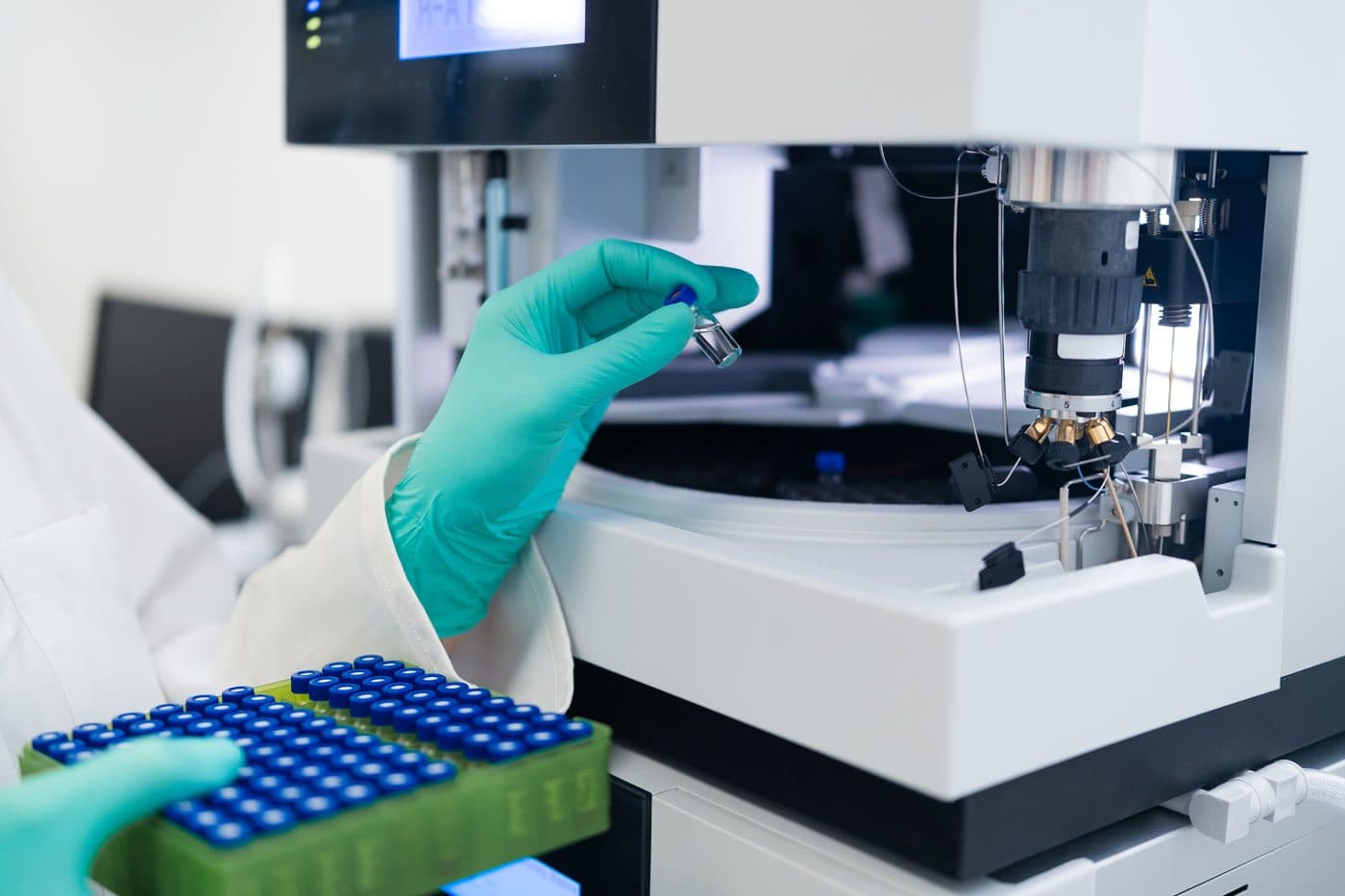
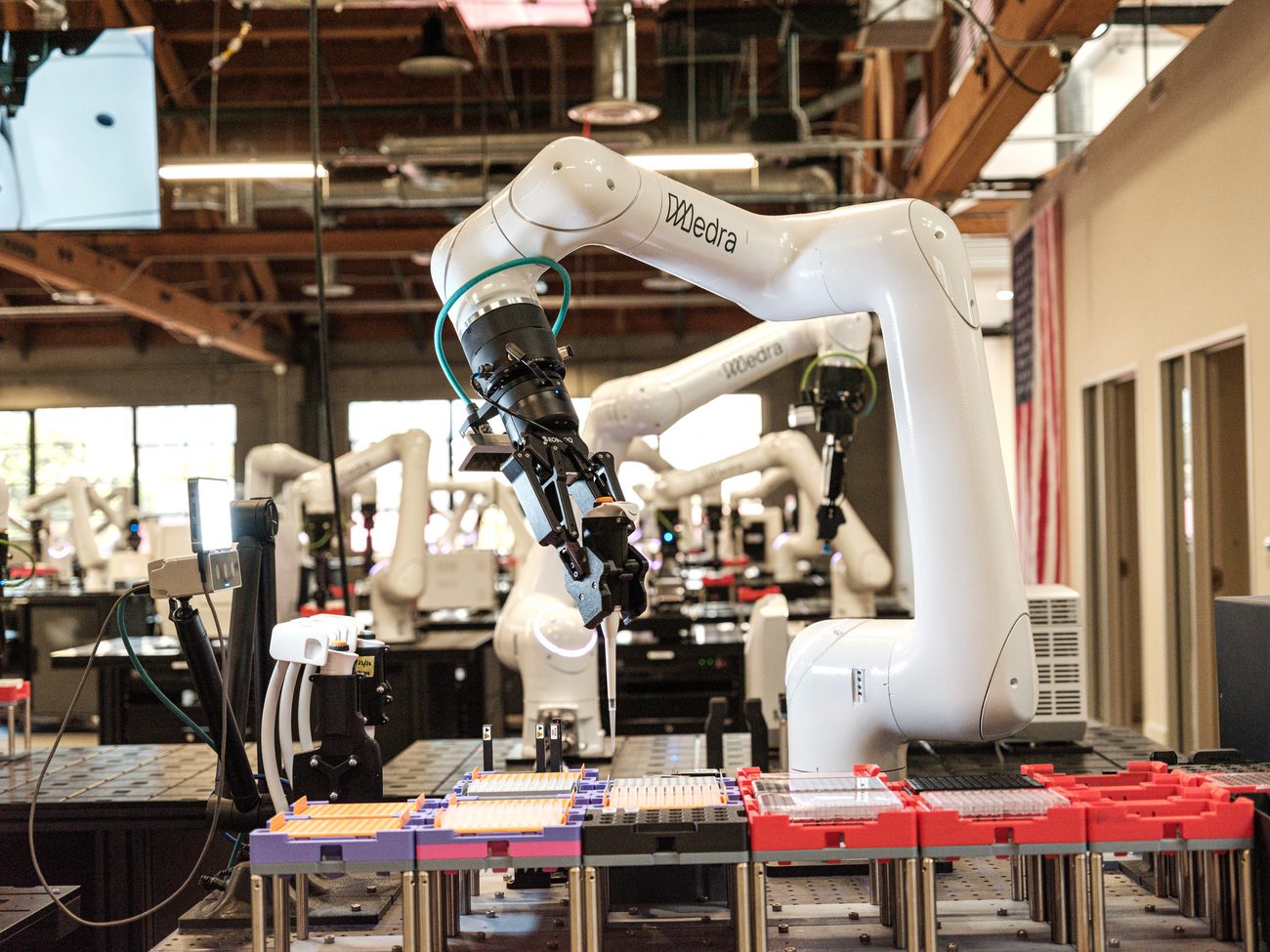
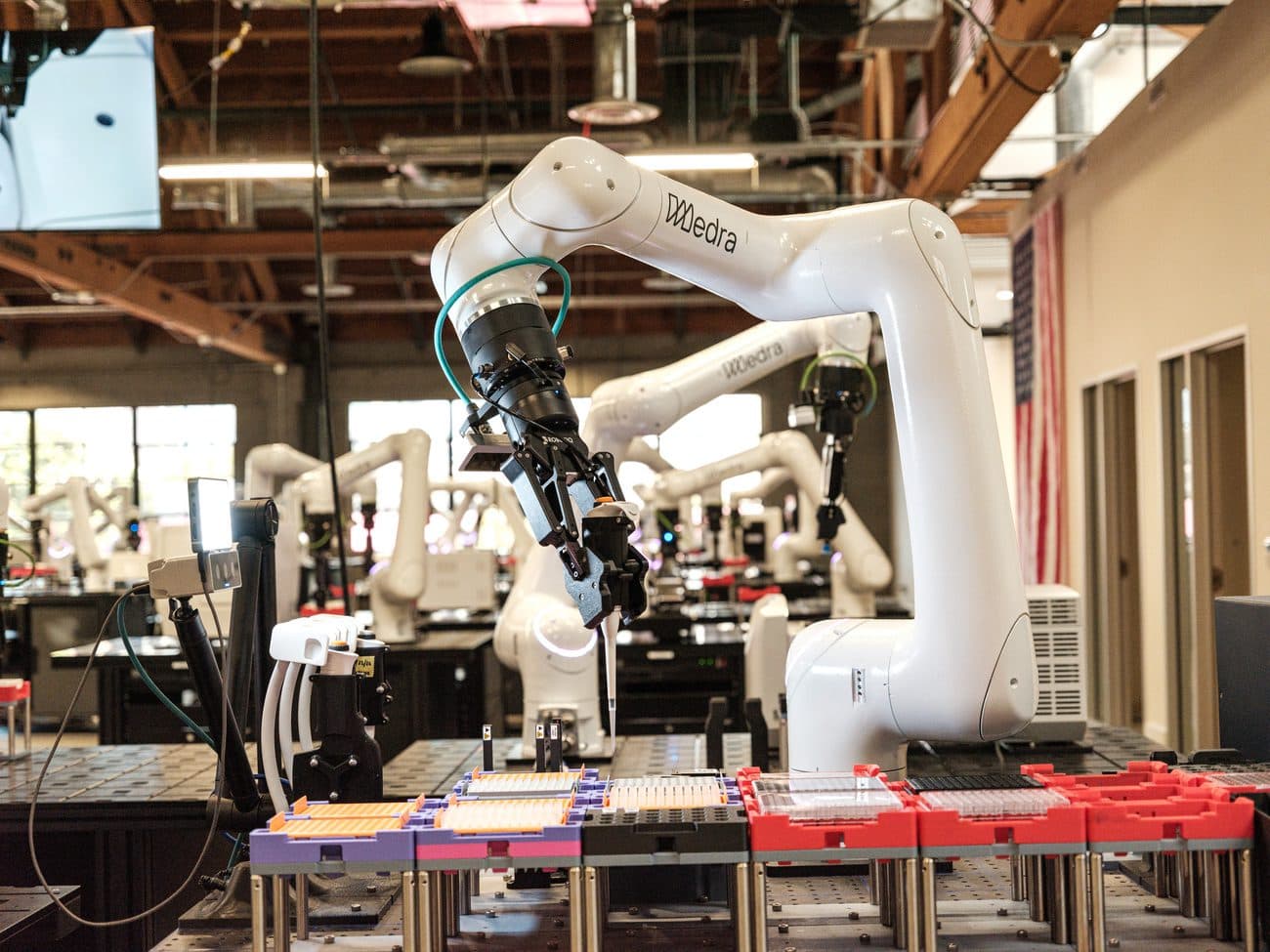
Partners can access AI Experimentalist through physical AI labs deployed on site at customer facilities or operated remotely through Medra’s flagship science laboratory,Medra Lab 001 (ML001), which unveiled in April and touts running experiments 24/7. Medra describes the 38,000 square foot facility as the largest autonomous lab in the United States.
Artisanal nature
In contrast to industrial automation, which has been powerful for repeatable tasks, such as combinatorial chemistry and screening, physical AI equips the same hardware with sensors to enable intelligent decision-making.
While many robotics players in biology are focused on the manufacturing step, Medra has the ambitious goal of accelerating end-to-end drug discovery campaigns.
“The artisanal nature of science is actually what makes certain experiments work and others fail,” said Lee.She noted that seemingly subtle variables, such as the angle of a pipette or the precise timing of mixing reagents, can have an outsized impact on experimental outcomes.
Medra is currently working with partners across academia, biopharma, and government to run and develop assaysacross a wide array of applications, including antibody discovery, protein engineering, gene editing, and cell biology.
Looking ahead, Lee says the bottleneck is not robotic capability, but integration and deployment. AI Experimentalist addresses this challenge through a multi-agent architecture and model-agnostic harness that allows Medra to incorporate new biological AI models and scientific agents. Among them are NVIDIA Nemotron models for protocol editing and optimization and the newly launchedNVIDIA BioNeMo Agent Toolkit.
“The flexibility of physical AI will be incredibly key in making scientific discovery truly autonomous,” asserts Lee.
NewsArtificial intelligenceData analysisDrug discoveryEpidermal growth factorRoboticsMedraNvidiaPrevious article
Spotlight on RNA TherapeuticsNext article
WHO Selects NIBRT as Training Hub to Help LMICs Build Biopharma CapacityAlso of Interest
CloudScope Enables Continuous Remote Monitoring of Brain Activity in Freely Moving MiceSmarter Cell Culture Starts with Better MediaRevvity Signs Agreement to Acquire Human Cell DesignTop 10 Contract Development and Manufacturing Organizations 202610 CDMO Up & Comers 2026Harnessing Real-Time DataRelated Media
Data Integrity as the Foundation for AISmall Molecules, Big Expectations: How CDMOs Are Helping Sponsors Navigate Complexity, Speed, Scale-Up, and SustainabilityBeyond the Technology: AI Readiness in Regulated LaboratoriesAACR 2026 Video Update: Cancer Research Edges Toward an AI-Driven EraRobots on the Red Line: A Video Update from SLAS 2026Reporting Live from JPM 2026: Alex Philippidis and Jonathan Grinstein, PhDTop 5ResourcesRecommended For YouPodcast
Touching Base
Touching Base is the dynamic podcast series from the editors ofGEN. Each episode features a rotating case of senior editors—including John Sterling, Kevin Davies, Julianna LeMieux, Alex Phillippidis, Uduak Thomas, Corinna Singleman, and Fay Lin—who delve into emerging stories, exchange ideas, and debate the latest trends in biotech. Additionally, they talk to some of the leading voices in the industry about what's now and next.Start listening today!
Stay up to date with the lasted episodes of Touching Base bysubscribing to theGENPodcast Newsletter