Sign in
Welcome! Log into your account
Forgot your password? Get helpPrivacy PolicyPassword recovery
Recover your password
A password will be e-mailed to you.
GEN – Genetic Engineering and Biotechnology NewsHomeTopicsBioprocessingModular Modeling Drives Smarter mRNA Manufacturing
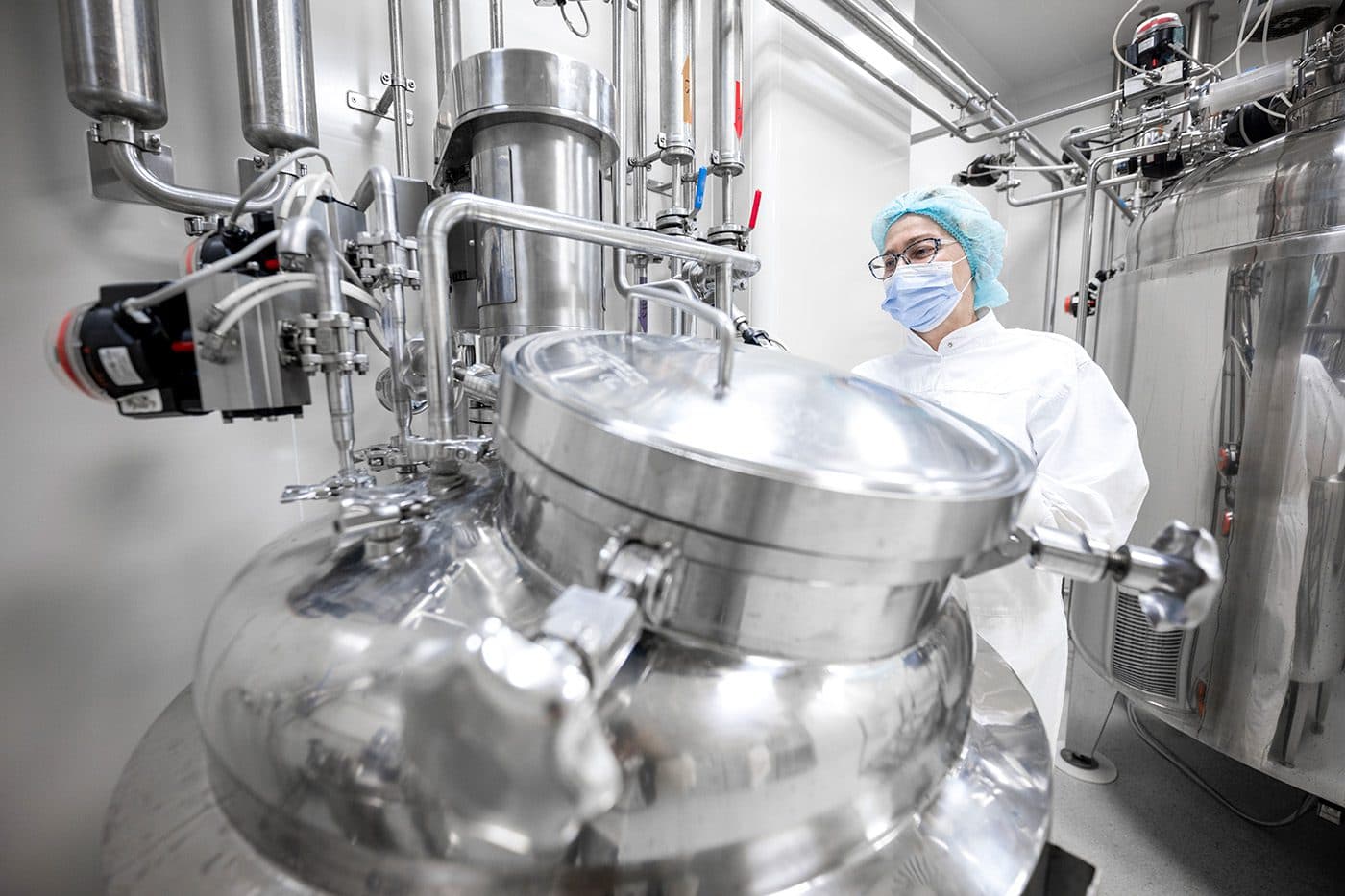
Credit: Image generated with Google Gemini
Researchers are increasingly turning to modular mechanistic models to unlock greater efficiency and robustness in mRNA manufacturing, offering a more flexible way to optimizein vitro transcription (IVT) while reducing costly experimental work.According to Wei Xie, PhD, associate professor of mechanical and industrial engineering at Northeastern University, and her colleagues, modular approaches can increase productivity and product quality.
“A modular modeling approach simplifies the complex IVT reaction network by dividing it into discrete, reusable, mechanistically defined steps,” Xie said. “This structure improves mechanistic understanding by clarifying how each step impacts key quality attributes, including yield, capping efficiency, and transcript integrity.”
Rather than relying on a single monolithic model, the framework separates IVT into individual components, such as initiation, elongation, and termination, as well as parallel processes including mRNA degradation and precipitation. Each module can be independently calibrated, validated, and refined as new experimental data become available, allowing researchers to continuously improve predictive performance without rebuilding the entire model.
The modular architecture also lends itself to the evolving nature of mRNA therapeutics. Because the framework mirrors the modular structure of nucleic-acid sequences, it can be rapidly adapted for new constructs, accelerating process development for emerging vaccines and therapeutic candidates while minimizing redevelopment effort. Beyond improving process understanding, the model provides a powerful diagnostic platform for identifying production bottlenecks that constrain yield, productivity, or product quality.
The framework combines Shapley value-based sensitivity analysis, residual analysis, and simulated reaction trajectories to pinpoint limiting process variables. Sensitivity analysis identifies parameters with the greatest influence on performance, while comparisons between predicted and experimental results reveal missing mechanisms or model deficiencies. Simulated reaction profiles can also highlight issues such as nucleotide depletion or suboptimal magnesium-to-nucleotide ratios before they become significant manufacturing challenges.
“Together, these tools provide a data-driven, mechanistic approach to quickly diagnose constraints and guide targeted process optimization,” Xie explains.
The approach also offers significant advantages during scale-up, one of the most challenging phases of bioprocess development. Because the model is grounded in fundamental molecular reactions and biochemical mechanisms rather than empirical correlations, it maintains predictive capability across different manufacturing scales and can be readily applied to new mRNA sequences, all without extensive redevelopment.
Xie says the framework supports predictive design of scale-dependent control strategies, including dynamic pH regulation and fed-batch nucleotide feeding schemes, helping manufacturers reduce development timelines while improving process robustness during technology transfer.
“A key advantage of the modular architecture is its flexibility and interoperability” Xie says. “New enzymes, reagents, or process steps can be incorporated by simply updating or adding the relevant module, without recalibrating the entire model. The framework’s ability to accommodate heterogeneous datasets generated under varying process conditions further supports rapid evaluation of manufacturing innovations while maintaining model consistency.
Perhaps the greatest impact of Xie’s approach lies in advancing quality-by-design (QbD). Acting as anin silicodevelopment platform, the modular model enables researchers to evaluate process variables before entering the laboratory. Coupled with digital twin-based Bayesian optimization, the platform narrows the experimental search space, reducing trial-and-error studies while conserving expensive reagents, such as T7 RNA polymerase.
As mRNA pipelines continue to expand beyond vaccines into broader therapeutic applications, modular mechanistic modeling is emerging as a valuable digital bioprocessing tool, enabling manufacturers to accelerate development, strengthen process understanding, and deliver more consistent product quality with fewer experimental resources.
InsightsGenetic transcriptionIn vitro assaysMessenger RNAPredictive analyticsRecombinant productAlso of Interest
Increasing CHO Cell ProductivityDesign for Commercial Scale from Day OneBreaking the Wet-Lab Bottleneck in AI-Driven Antibody DiscoveryAI Drug Discovery Hits a New Bottleneck: Experimental ValidationRNAV8 Bio Joins ARPA-H Team to Pioneer Programmable RNA MedicinesThe DNA Balancing Act in Boosting Bacterial ProductivityRelated Media
Nobel Winner Katalin Karikó Shared mRNA Vaccine Story withGEN, Mid-PandemicGEN Protocols Expert Exchanges: Patient-Derived Pancreatic Cancer Organoids Predict Response to TherapyDNA: Past to PresentCas9: As a Transcriptional ActivatorTop 5ResourcesRecommended For YouPodcast
Touching Base
Touching Base is the dynamic podcast series from the editors ofGEN. Each episode features a rotating case of senior editors—including John Sterling, Kevin Davies, Julianna LeMieux, Alex Phillippidis, Uduak Thomas, Corinna Singleman, and Fay Lin—who delve into emerging stories, exchange ideas, and debate the latest trends in biotech. Additionally, they talk to some of the leading voices in the industry about what's now and next.Start listening today!
Stay up to date with the lasted episodes of Touching Base bysubscribing to theGENPodcast Newsletter
Copyright © 2026 Sage Publications or its affiliates, licensors, or contributors. All rights reserved, including those for text and data mining and training of large language models, artificial intelligence technologies, or similar technologies.
MORE STORIES