Notch Signaling Switch Enables Scalable Helper T Cell Production for CAR T
A newStem Cell Reportsstudy describes a scalable method for generating CD4+ helper T cells from induced pluripotent stem cells (iPSCs). The work, which was done by scientists at Boston University’s Center for Regenerative Medicine (CReM) and Boston Medical Center, could boost efforts to generate off-the-shelf CAR T-cell therapies for use in patients with cancers and chronic inflammatory diseases. Their paper is aptly titled “Generation of effector CD4+ T cells from human iPSC.”
The team, led by Gustavo Mostoslavsky, MD, PhD, co-director of the CReM and professor of medicine and virology, immunology and microbiology at BU School of Medicine, and Julian Amirault, a doctoral student, claim to have found the key to producing CD4+ cells in the Notch molecular signaling pathway.
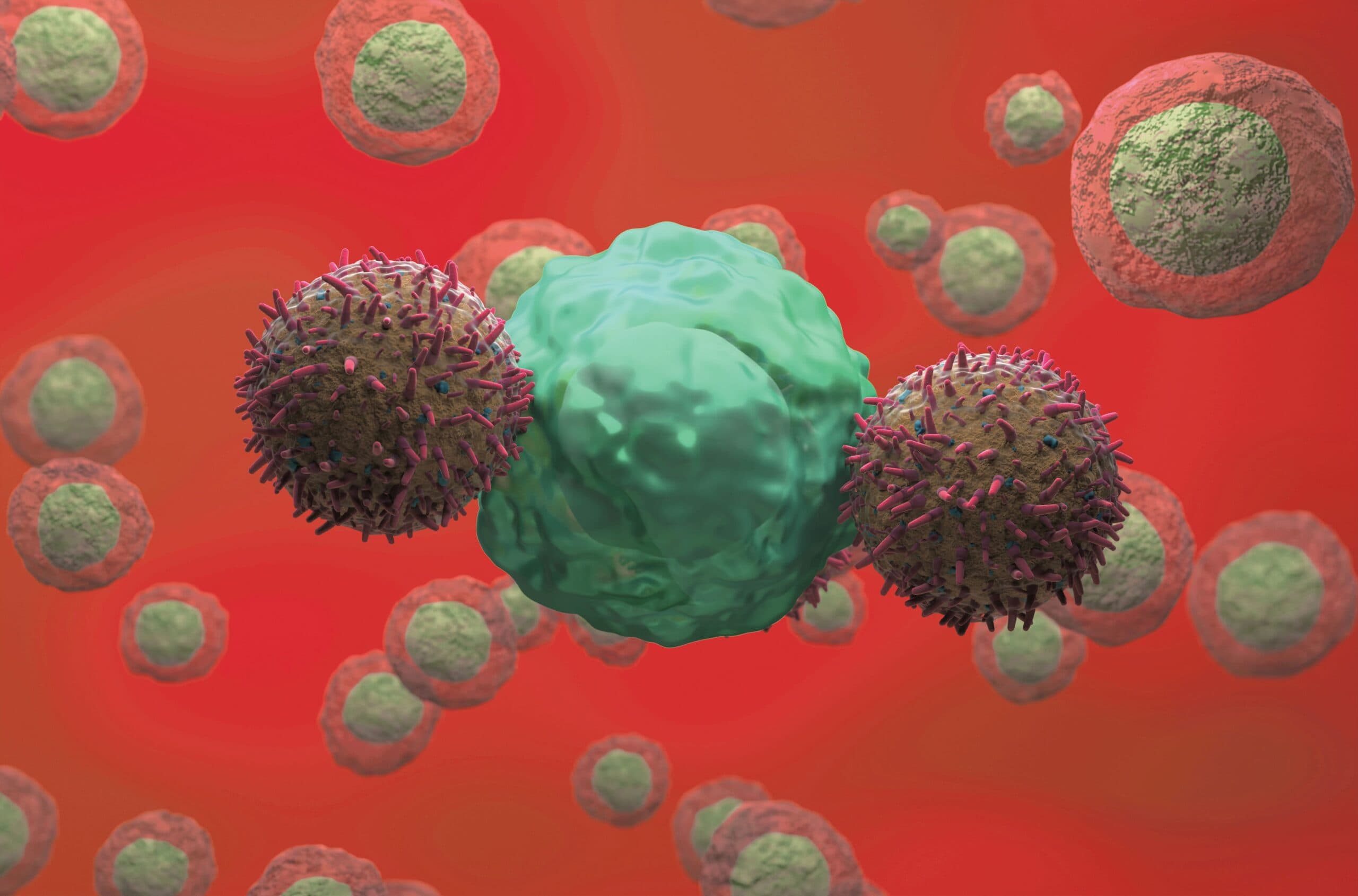
Typically, CAR T-cell therapy works by isolating a patient’s T cells and modifying them to recognize cancer cells. It’s costly to do for each individual patient, which is why iPSCs from donated skin or blood cells are of interest for large-scale T-cell production. However, reliably generating functional helper CD4+ T cells which are important for coordinating and regulating immune responses has been challenging.
But Mostoslavsky, Amirault, and their colleagues say they have found a simple and potentially scalable protocol for doing so. Notch signaling is critical to early T cell development, but the scientists found that removing it during later stages of maturation, while simultaneously reducing anti-T cell receptor signaling, let developing cells survive and mature into CD4+T cells at scale. As Mostoslavsky put it, their approach results in “T cells that look like those from blood, with a full repertoire of the different subtypes.”
Beyond the potential clinical benefits, their research also sheds new light on T-cell biology, specifically how Notch signaling shifts over time to direct cells toward either CD8 or CD4 lineage.
But for now, this study represents a step towards possibly developing a universal CAR T-cell therapy. The next step for the scientists is to introduce chimeric antigen receptors directly into their iPSC-derived CD4+ and CD8+ cells and test their ability to kill cancer in animal models. “The potential is that one day, these cells could be ready and waiting when a patient is diagnosed. No cell collection, no individualized manufacturing, just treatment,” Mostoslavsky said.
NewsCancersInduced pluripotent stem cellsNotch signalingT-cell immunotherapyT-cellsPrevious article
CAR T-Cell Therapy Puts Severe Rheumatoid Arthritis Into Remission in First Clinical TrialNext article
Molecular Pathways Driving Autoantibody Production Following SARS-CoV-2 Infection IdentifiedAlso of Interest
PD-L2 Blockade May Reduce Harmful Aging Cell BuildupWhat 25 Years of Research Have Revealed About 9/11’s Long-Term Health EffectsChronic Interferon Exposure Linked to Immunosuppression in CancerCAR T Manufacturing in Japan Gets Boost from Teijin-Shinshu University Research CollaborationADCs, mAbs, CAR Ts: One Bioluminescent Platform Measures Them AllTargeted Lentiviral Delivery Without Vector ReengineeringRelated Media
AACR 2026: A Video Update from San DiegoAI in Protein Design: Hype vs. Reality Explained by David BakerAACR 2025: A Video Update from ChicagoPrecision Base Editing Meets Single-Cell Multiomics to Advance Cell and Gene TherapiesAACR 2024: A Video Update from San DiegoFront Row Series 2: AI in Drug Discovery and DevelopmentTop 5ResourcesRecommended For YouPodcast
Touching Base
Touching Base is the dynamic podcast series from the editors ofGEN. Each episode features a rotating case of senior editors—including John Sterling, Kevin Davies, Julianna LeMieux, Alex Phillippidis, Uduak Thomas, Corinna Singleman, and Fay Lin—who delve into emerging stories, exchange ideas, and debate the latest trends in biotech. Additionally, they talk to some of the leading voices in the industry about what's now and next.Start listening today!
Stay up to date with the lasted episodes of Touching Base bysubscribing to theGENPodcast Newsletter