Sign in
Welcome! Log into your account
Forgot your password? Get helpPrivacy PolicyPassword recovery
Recover your password
A password will be e-mailed to you.
GEN – Genetic Engineering and Biotechnology NewsHomeTopicsArtificial IntelligenceNvidia Unveils Science Reasoning AI Suite with BioNeMo Agent Toolkit
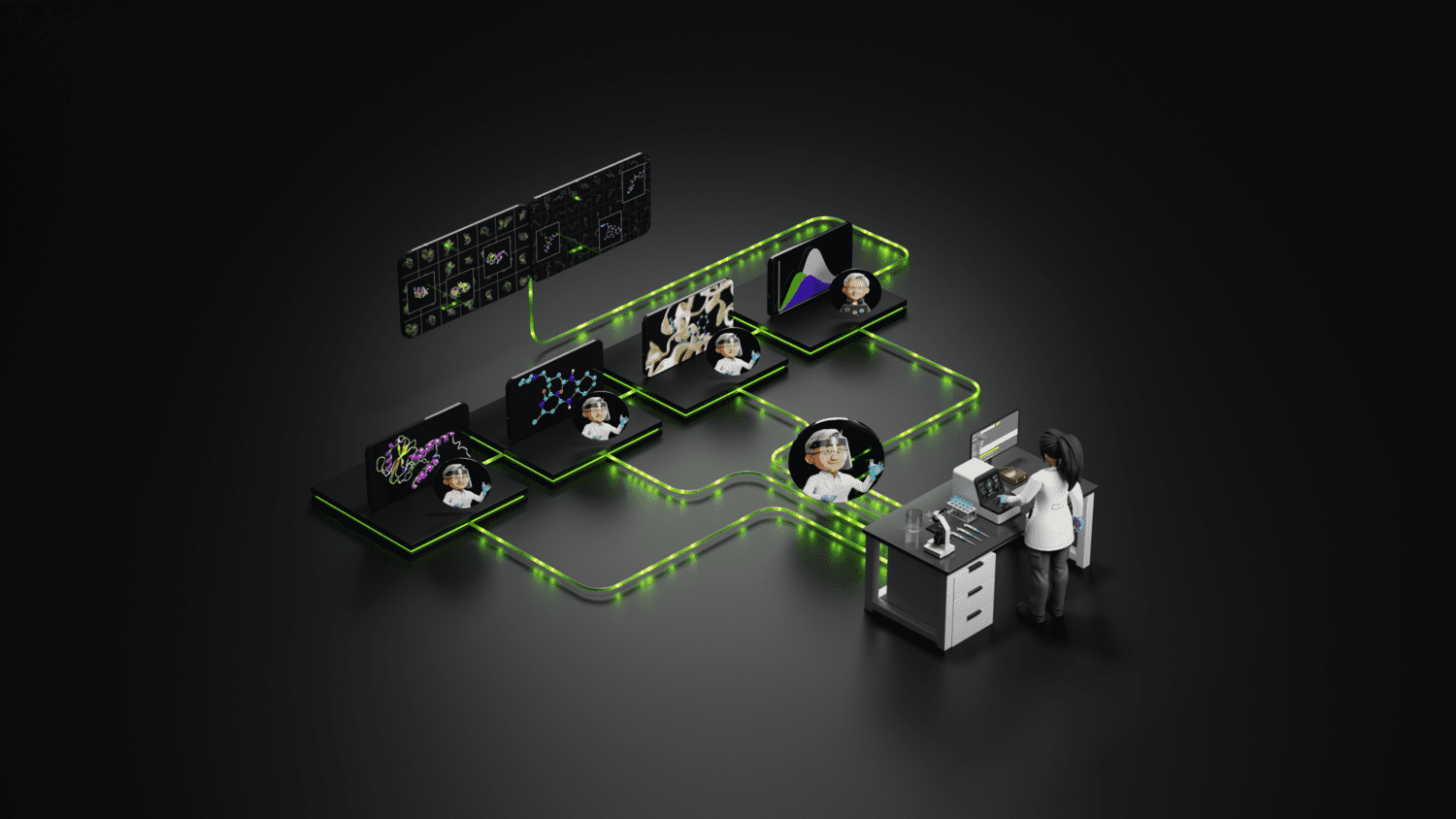
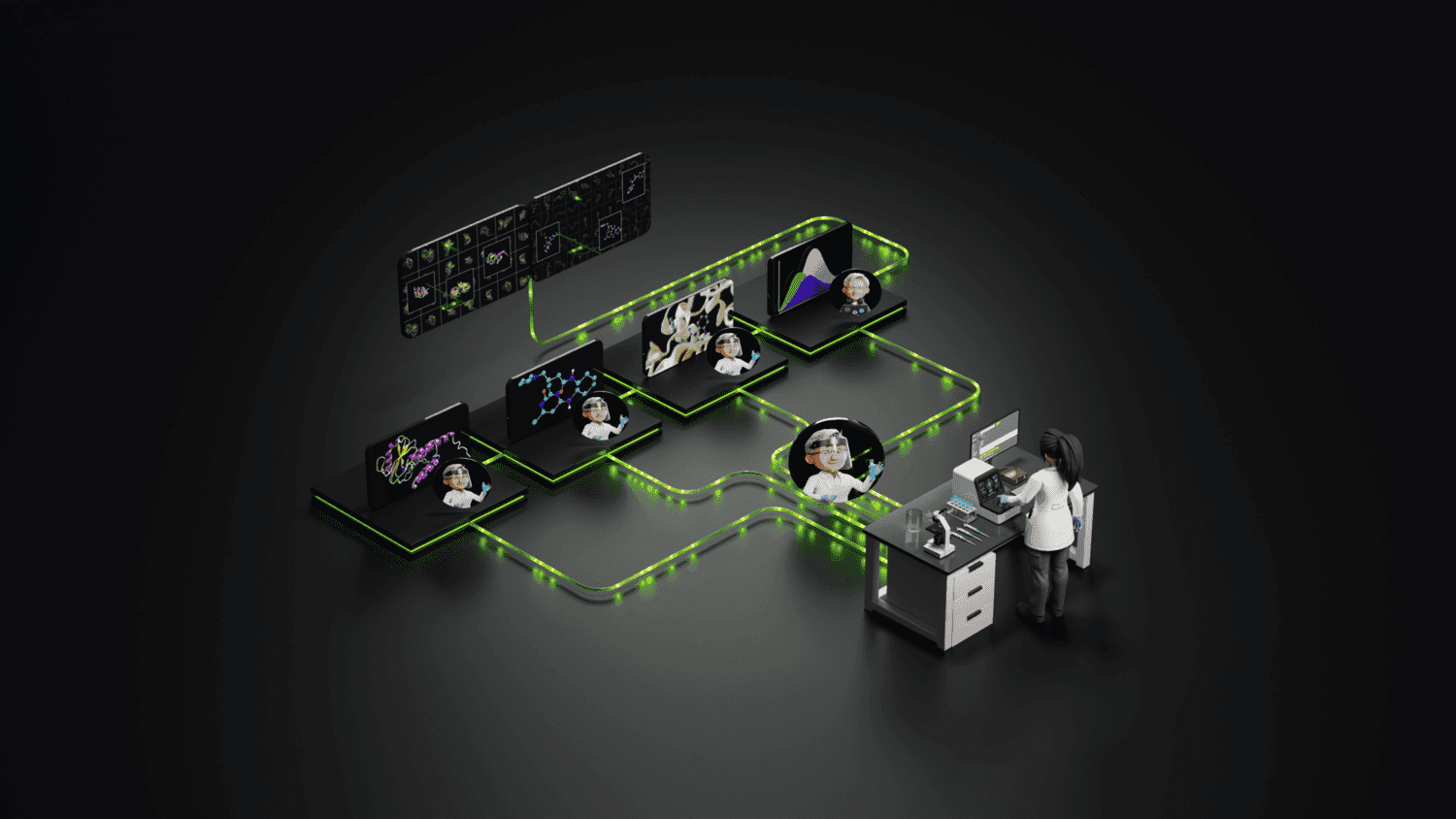
Credit: Nvidia
Nvidia has announced the NVIDIA BioNeMo Agent Toolkit, which turns complex scientific workflows into agent-executable tasks, including model selection, input preparation, workflow execution, output inspection, and results explanation.
The toolkit includes NVIDIA BioNeMo and is powered by NVIDIA NIM microservices, NVIDIA Parabricks, NVIDIA NeMo, and NVIDIA Nemotron and has applications across protein structure prediction, molecular docking, generative chemistry, genomic analysis, protein design, and biomarker discovery.
“For the first time, researchers can build AI agents that understand scientific knowledge, use scientific tools, and execute scientific workflows,” said Jensen Huang, founder and CEO of Nvidia, in a press release. “This is a new way to do science—one that can dramatically accelerate discovery across biology, chemistry, genomics, and medicine.”
Nvidia has entered collaborations with research organizations, including the Arc Institute, Open Molecular Software Foundation, and the University of Washington’s Institute for Protein Design (IPD). The partnership with IPD has accelerated runtimes for the biomolecular complex prediction tool, RosettaFold3, resulting in two times faster performance than the prior generation model.
“Every tool we’ve built for protein design is only as powerful as the scientists who can efficiently access it,” said David Baker, PhD, professor of biochemistry at the University of Washington and director of the Institute for Protein Design, in a public release. “The next leap in science won’t come from a single discovery; it will come from the speed of iterative designs and agents that can repeatedly reason through the complexity of biology at a speed humans never could.”
The toolkit’s applications include virtual screening, where agents identify promising small-molecule drug candidates by generating compound designs, docking them to a target, predicting binding strength, and filtering for developability properties. The agent can then output which candidates should be prioritized to compress timelines.
In genomic analysis and target discovery, agents can identify genetic insights and biological targets from raw sequencing data. Agents can also connect real-world data to reasoning models for biomedical research, improving the efficiency and accuracy of clinical development processes, including literature review, protocol generation, clinical trial screening, and pharmacovigilance. In medical imaging analysis, agents can process, segment, synthesize, and reason over medical imaging data to support biomarker discovery.
AI-native biology companies, including Boltz, Basecamp Research, Chai Discovery, PerturbAI, Dyno, and Proxima, have collaborated with NVIDIA to develop tools to accelerate therapeutic design workflows.Diagnostics and pharmaceutical companies, including Lilly and Natera, are using BioNeMo Agent Toolkit to scale agentic workflows across discovery, translational research, and clinical insight.
NewsArtificial intelligenceBiomarkersClinical developmentGenome analysisProtein structure predictionBasecamp ResearchBoltzChai DiscoveryDyno TherapeuticsNvidiaBioNeMo™Also of Interest
CloudScope Enables Continuous Remote Monitoring of Brain Activity in Freely Moving MiceSmarter Cell Culture Starts with Better MediaRevvity Signs Agreement to Acquire Human Cell DesignTop 10 Contract Development and Manufacturing Organizations 202610 CDMO Up & Comers 2026Harnessing Real-Time DataRelated Media
Data Integrity as the Foundation for AISmall Molecules, Big Expectations: How CDMOs Are Helping Sponsors Navigate Complexity, Speed, Scale-Up, and SustainabilityBeyond the Technology: AI Readiness in Regulated LaboratoriesAACR 2026 Video Update: Cancer Research Edges Toward an AI-Driven EraReporting Live from JPM 2026: Alex Philippidis and Jonathan Grinstein, PhDAI in Protein Design: Hype vs. Reality Explained by David BakerTop 5ResourcesRecommended For YouPodcast
Touching Base
Touching Base is the dynamic podcast series from the editors ofGEN. Each episode features a rotating case of senior editors—including John Sterling, Kevin Davies, Julianna LeMieux, Alex Phillippidis, Uduak Thomas, Corinna Singleman, and Fay Lin—who delve into emerging stories, exchange ideas, and debate the latest trends in biotech. Additionally, they talk to some of the leading voices in the industry about what's now and next.Start listening today!
Stay up to date with the lasted episodes of Touching Base bysubscribing to theGENPodcast Newsletter
Copyright © 2026 Sage Publications or its affiliates, licensors, or contributors. All rights reserved, including those for text and data mining and training of large language models, artificial intelligence technologies, or similar technologies.
MORE STORIES