Sign in
Welcome! Log into your account
Forgot your password? Get helpPrivacy PolicyPassword recovery
Recover your password
A password will be e-mailed to you.
GEN – Genetic Engineering and Biotechnology NewsHomeTopicsBioprocessingRecoded E. coli Promises More Scalable Weight Loss Drug Production
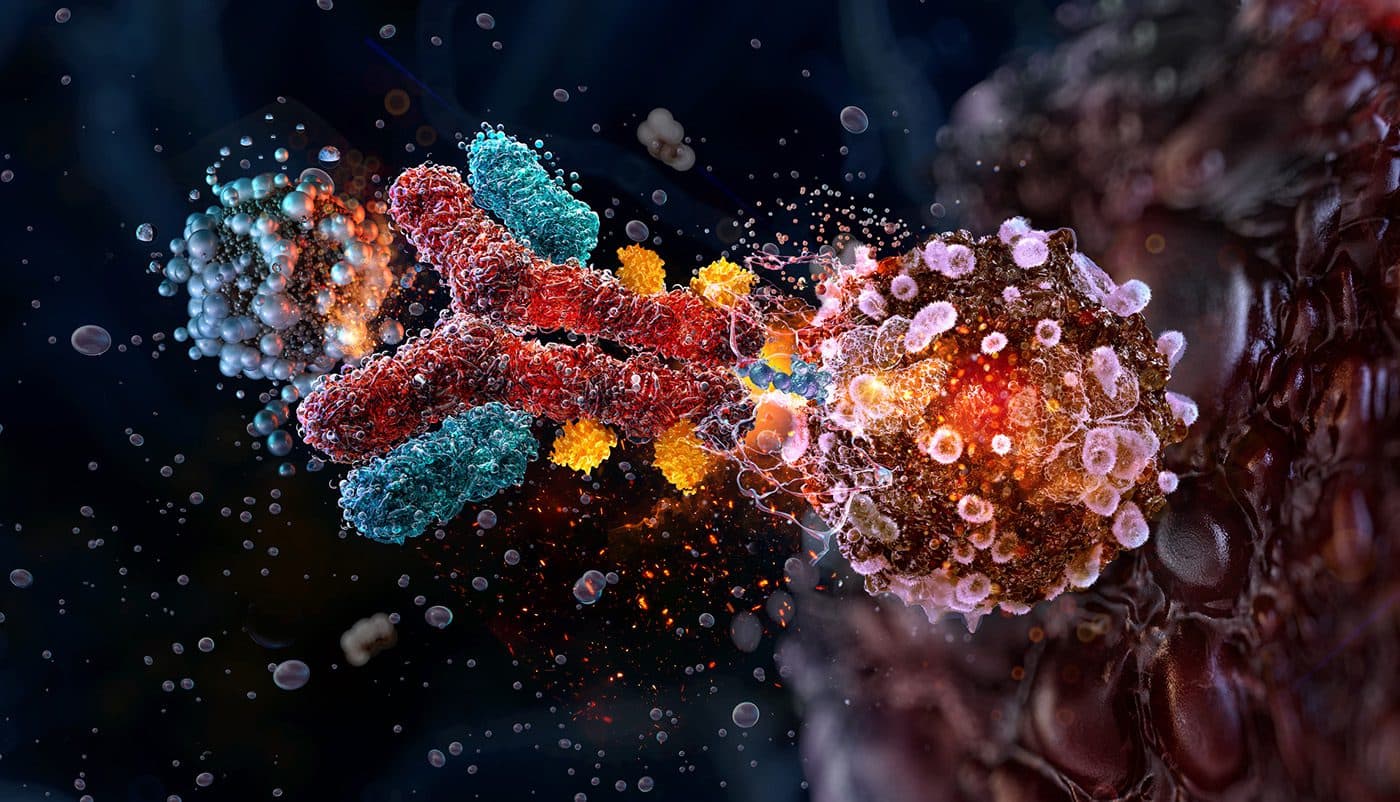
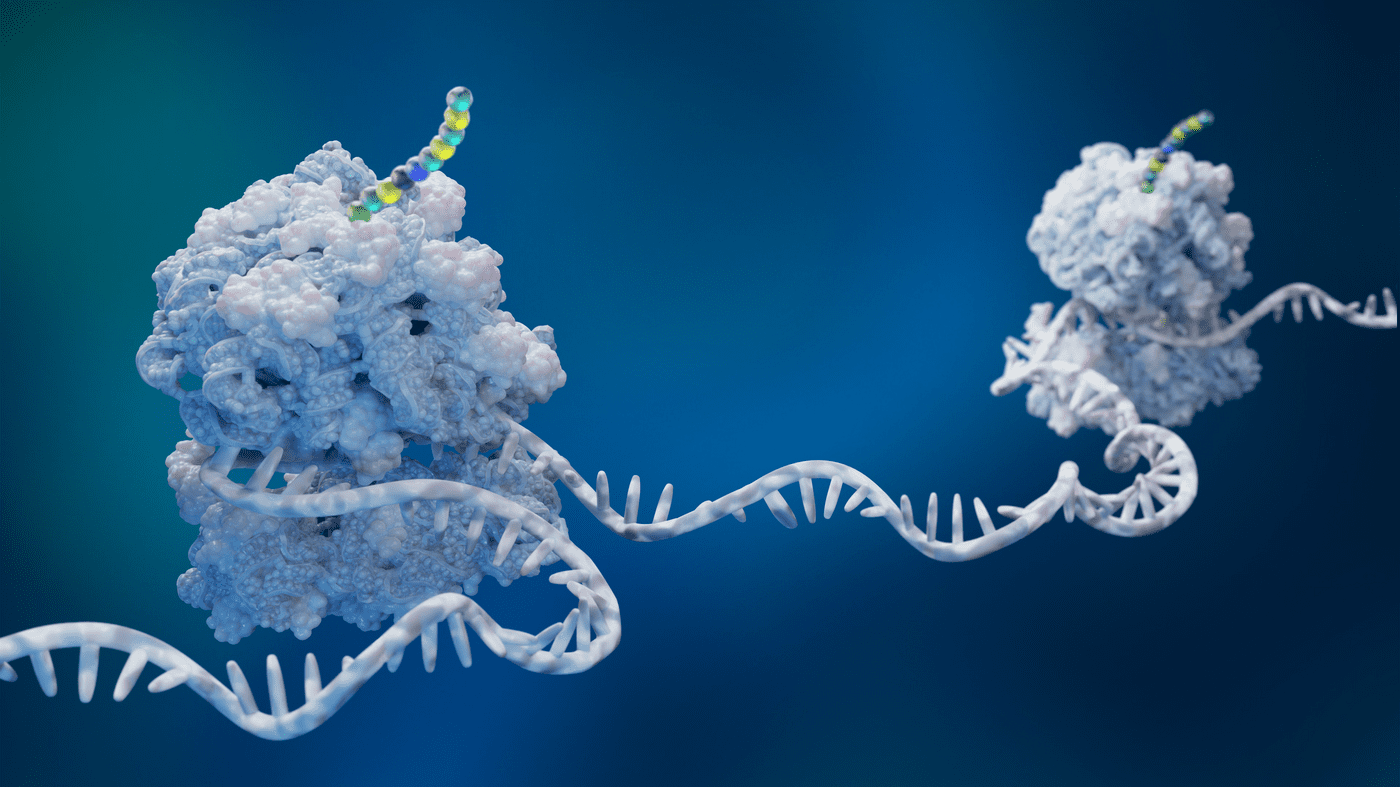
A ribosome producing an extending peptide chain of diverse amino acids (colored spheres). [Constructive Bio]
The manufacturing of weight loss drugs at large scale could get cheaper and more sustainable thanks to an engineered strain ofEscherichia coli(E. coli) bacteria.
The fully recodedE. coli,designed to use only 61 codons to synthesize proteins, is now being rolled out as a new method for manufacturing peptides with non-natural chemistries.
That’s according to Constructive Bio, the company that recoded theE.coliand now hopes this synthetic strain will transform the production of some high-volume hard-to-manufacture protein/peptide therapeutics.
“Our key message is that we’re able to produce long peptides containing non-canonical amino acids to deliver therapeutic proteins at scale by biomanufacturing,” explains Rob Salmon, PhD, head of bioprocess at Constructive Bio.
“And our key differentiator is there’s currently a market in, for example, weight loss drugs.”
According to Salmon, glucagon-like peptide-1 (GLP-1) agonists for weight loss are currently produced using chemical synthesis approaches such as solid phase peptide synthesis, which is hard to scale and generates high volumes of toxic waste.
By contrast, the syntheticE. colistrain can potentially produce these peptides using fermentation via standardized industrial processes, he says.
“We want to fit into standardized industrial unit operations and, through that, scale to thousands of liters of product that we can sell to the market,” he explains.
The strain was developed as part of research into reducing the number of codons needed to synthesize proteins in an organism from 64 to 61, allowing slots for three new non-canonical amino acids, according to the company.
Constructive Bio was founded in 2022 to take the strain forward into industrial applications, including optimizing for applications such as antibody fragments or the long peptides used for GLP-1 agonist therapies.
Since then, the optimized strain has been taken through some industrial fermentations and demonstrated promising titers, he explains, adding that he will present results at the upcoming Bioprocessing Summit in Boston.
“We’re challenging some of the assumptions from chemists that biology can’t be used to do this,” he says.
InsightsBiopharmaceuticalsDrugsEscherichia coliFermentationConstructive BioAlso of Interest
Top 10 Contract Development and Manufacturing Organizations 2026ADCs, mAbs, CAR Ts: One Bioluminescent Platform Measures Them AllMicro-Bladder Model Demonstrates How Phage Therapy Could Help to Reduce Recurrent UTIsNew Spectrometry Technique Could Aid Formulation DevelopmentThe DNA Balancing Act in Boosting Bacterial ProductivityRegulatory Demands for More Process Control Data Fueling InnovationRelated Media
Reporting Live from JPM 2026: Alex Philippidis and Jonathan Grinstein, PhDBIO CEO Rachel King Outlines Industry's Challenges on "Close to the Edge"Emerging Markets Collaborate to Succeed in Post-Pandemic WorldLessons from the COVID Crisis: An Interview with Peter HotezImproving Protein Therapeutic Production is a Key Goal of Biopharma 4.0Biomanufacturing’s 10-Year Plan for the FutureTop 5ResourcesRecommended For YouPodcast
Touching Base
Touching Base is the dynamic podcast series from the editors ofGEN. Each episode features a rotating case of senior editors—including John Sterling, Kevin Davies, Julianna LeMieux, Alex Phillippidis, Uduak Thomas, Corinna Singleman, and Fay Lin—who delve into emerging stories, exchange ideas, and debate the latest trends in biotech. Additionally, they talk to some of the leading voices in the industry about what's now and next.Start listening today!
Stay up to date with the lasted episodes of Touching Base bysubscribing to theGENPodcast Newsletter
Copyright © 2026 Sage Publications or its affiliates, licensors, or contributors. All rights reserved, including those for text and data mining and training of large language models, artificial intelligence technologies, or similar technologies.
MORE STORIES