Spatiotemporal Multiomics Charts Cellular Dynamics of Liver Metastasis
Metastasis remains one of cancer’s most difficult biological transitions to capture: tumor cells must leave a primary tumor, survive circulation, enter a distant organ, and then either disappear, persist, or eventually grow into clinically detectable lesions. A spatiotemporal study in mice and human samples identifies transient tumor-cell and immune-niche states that may offer windows for intercepting metastatic colonization.
A new study published inScienceprovides a high-resolution look at that process in liver cancer, suggesting that metastatic colonization unfolds through ordered changes in both disseminated tumor cells and the immune microenvironments that surround them.
In the study, “Spatiotemporal multiomics uncover tumor ecosystem dynamics during metastatic colonization,” researchers led by Yunfan Sun, MD, PhD, at Zhongshan Hospital, Fudan University, applied spatiotemporal multiomics to experimental hepatocellular carcinoma mouse models and human metastatic samples. Their goal was to reconstruct how disseminated tumor cells, or DTCs, survive the earliest stages of lung colonization and later transition into metastatic outgrowth.
The team integrated high-resolution spatial transcriptomics, single-cell RNA sequencing, and chromatin-accessibility profiling across nine sequential stages of lung colonization in mouse models. The resulting atlas followed liver cancer cells from their first arrival in the lungs through later metastatic progression, while also mapping changes in nearby immune cells.
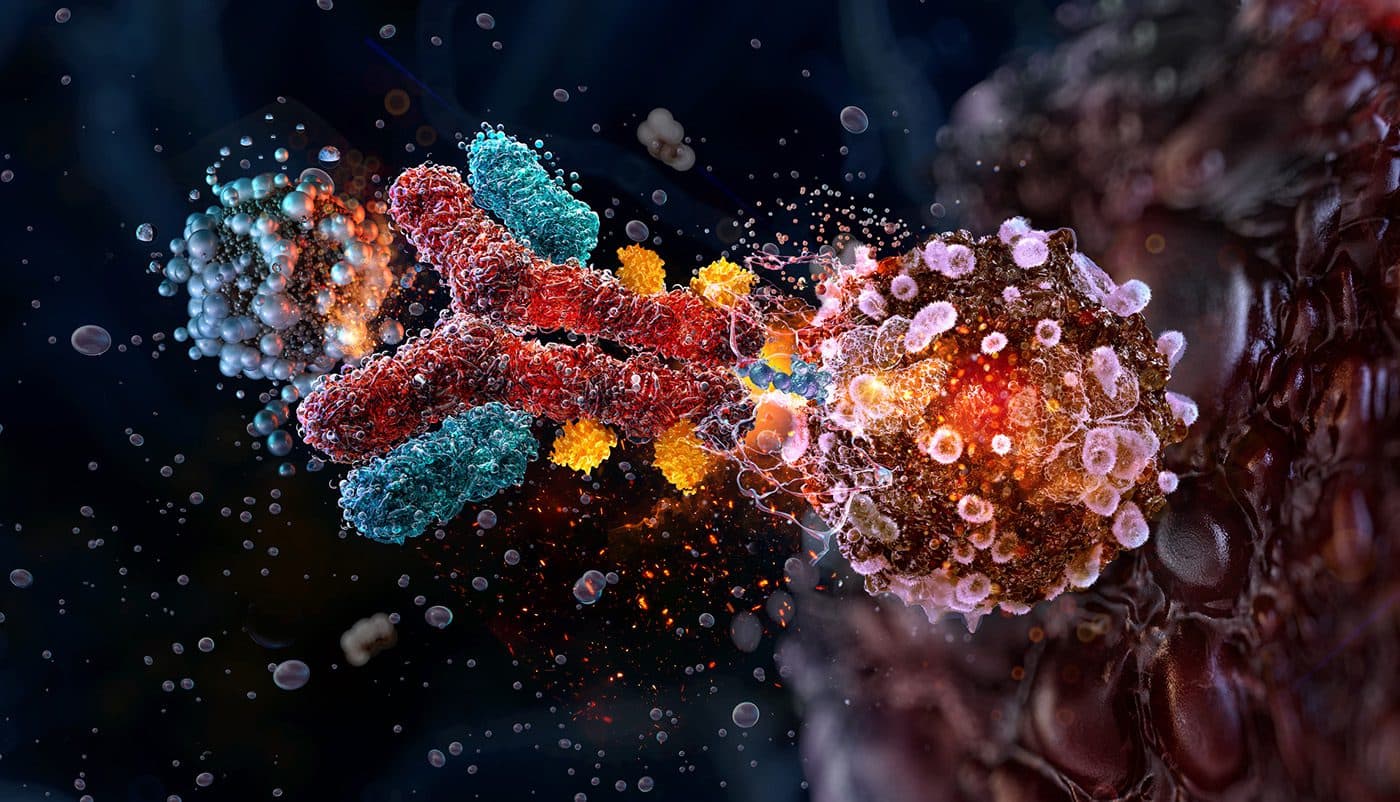
The analysis indicated that early metastatic seeding is not simply a random survival event. “After a massive innate immune clearance, primarily by neutrophils and natural killer (NK) cells, a rare subpopulation of DTCs survived by entering a transient, quiescentPhgdhhighstate,” the authors write. These cells were associated with an immune-scarce niche, allowing them to avoid elimination during a vulnerable early window.
Mechanistically, the authors linked this state to metabolic and epigenetic remodeling. Alveolar type 2 cells enriched near surviving DTCs appeared to promote thePhgdhhighphenotype. Elevated PHGDH activity fueled one-carbon metabolism and increased levels of S-adenosylmethionine (SAM). That shift was tied to H3K27me3-mediated silencing of proinflammatory chemokine genes, includingCcl2andCxcl10, which would otherwise help recruit immune cells to the niche.
Perturbing this axis genetically or pharmacologically restored chemokine expression, increased immune surveillance, and reduced metastatic outgrowth in the models, according to the study. Lineage-tracing experiments further suggested that many macrometastases derived from ancestors that had passed through the transientPhgdhhighstate.
The researchers also identified a second niche-remodeling step before rapid metastatic expansion. At this stage,Cx3cr1highinterstitial macrophages accumulated in the DTC niche. These “macrophages recruited immunosuppressive cells (T regulatory cells, neutrophils, and alveolar macrophages) and provided growth signals through the IGF1-IGF1R axis that trigger the transition of DTCs from quiescence to rapid proliferation,” the authors report in the study. Depleting these macrophages reduced metastatic burden in mouse experiments.
Together, the findings point to metastatic colonization as a temporally organized process shaped by reciprocal interactions between tumor cells and their local microenvironment. First, a rare tumor-cell state helps establish early immune evasion. Later, macrophage-driven remodeling appears to convert a quiescent niche into one that supports metastatic outgrowth.
Although the work is largely preclinical, the authors suggest that these transient states may represent vulnerabilities for micrometastasis-targeting approaches. By defining when and how early DTCs evade immune attack, the study offers a framework for developing interventions aimed not only at established metastases, but also at the earliest stages of metastatic colonization.
NewsMacrophagesMetastasisMultiomicsRegulatory T-cellsSingle-cell RNA sequencingSpatial transcriptomicPrevious article
A Computational Framework for Designing Disordered Proteins at Large ScaleNext article
Axiom’s Hong Kong Bet, Latigo’s Positive Phase II, and Base Editors for Huntington’sAlso of Interest
Moonwalk to Use $70 Million to Develop RNAi Therapies for Obesity, Cardiometabolic DiseaseSingle-Cell Striatum Atlas Reveals Neurological Disorder VulnerabilitiesSpatial Transcriptomics Tools May Link Tumor Organization to Treatment ResponseHuman Multi-Organ Chip Offers New Insight Into Cancer MetastasisGene Switch Uses Electromagnetic Fields to Control Genes RemotelyThe Microbiome Field Enters Its Next ChapterRelated Media
Omics in Orlando: A Video Report from AGBT, Day OneAI in Protein Design: Hype vs. Reality Explained by David BakerBase Pairs in Beantown: A Video Update from ASHGPrecision Base Editing Meets Single-Cell Multiomics to Advance Cell and Gene TherapiesSpace Race: 10x CEO Serge Saxonov Discusses Single Cell and Spatial Biology on “Close to the Edge”GEN Protocols Expert Exchanges: Single-Cell RNA Sequencing--Challenges and SolutionsTop 5ResourcesRecommended For YouPodcast
Touching Base
Touching Base is the dynamic podcast series from the editors ofGEN. Each episode features a rotating case of senior editors—including John Sterling, Kevin Davies, Julianna LeMieux, Alex Phillippidis, Uduak Thomas, Corinna Singleman, and Fay Lin—who delve into emerging stories, exchange ideas, and debate the latest trends in biotech. Additionally, they talk to some of the leading voices in the industry about what's now and next.Start listening today!
Stay up to date with the lasted episodes of Touching Base bysubscribing to theGENPodcast Newsletter