Transmissible Cancer Discovered in Freshwater Fish
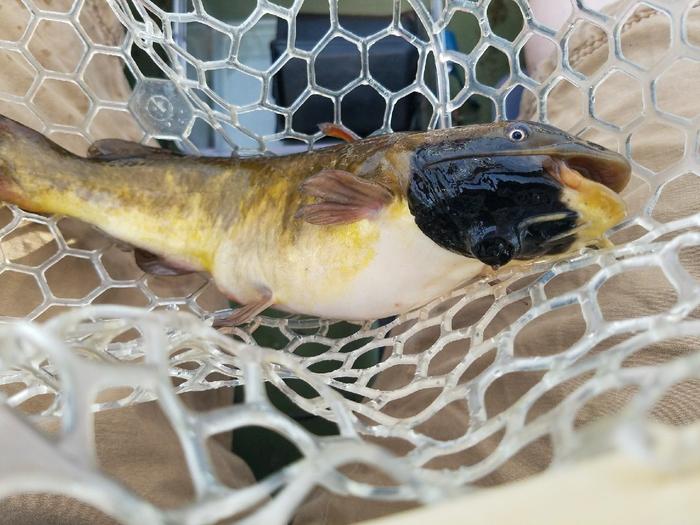
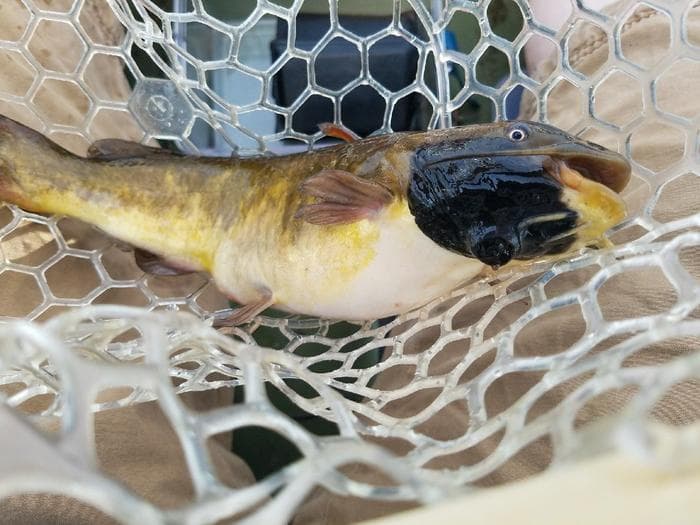
Researchers headed by a team at the University of Vermont have discovered that mysterious black skin lesions afflicting catfish in Lake Memphremagog and other New England and Canadian lakes are caused by a transmissible form of cancer, the first ever identified in a freshwater fish species. The scientists’ studies showed that the cancer cells behave more like parasites than conventional tumors, moving from fish to fish.
The discovery marks only the fourth type of transmissible cancer identified in the animal kingdom, and the first in any fish or freshwater species. Previous ones include the Tasmanian devil’s facial tumor disease, a transmissible venereal tumor in dogs, and transmissible leukemia-like diseases in clams, mussels, and other bivalve mollusks. The researchers do emphasize that the disease poses no known risk to humans. The cancer cells cannot infect or survive in another species, and the fish are safe to handle and study.
The new discovery sheds light on how cancer can spread in the wild, and raises important questions about where this cancer originated, how it will affect fish health and populations, and also how cancer works in all animals including humans.
Julie Dragon, PhD, a researcher at the UVM Cancer Center in the Larner College of Medicine, suggests that understanding this newly discovered transmissible cancer could offer new insights into cancer biology more broadly. “By studying how cancers survive and spread outside their original host, we can learn a great deal about what keeps cancers contained—and what happens when those boundaries break down,” she said. “These fish provide an opportunity to look at evolution of cancer.”
Dragon is co-lead author of the researchers’ published report inNature, titled “Brown bullhead catfish melanoma represents a novel transmissible cancer,” in which they stated, “We found extensive genomic evidence to suggest these melanistic lesions represent a transmissible cancer, to our knowledge, the first known occurrence in a fish species and the first found in a freshwater aquatic setting.”
Since 2012, anglers and biologists have reported a striking increase in brown bullhead catfish (Ameiurus nebulosus) with raised black skin patches in the cross-border lake shared by Vermont and Quebec. By 2014, nearly one in three fish showed the dark lesions. Because brown bullhead are considered indicators of environmental quality, the researchers suspected a contaminant or pathogen linked to pollution. “At first, we thought this disease might be a virus, but that wasn’t panning out,” said Dragon.
Instead, scientists found that these lesions turned out to be melanoma, a skin cancer. “This was surprising,” Dragon said, “and we wanted to know how a bottom-dwelling fish was getting a cancer we associate with exposure to too much sunlight.” For their reported study Dragon and colleagues took what she describes as a “deep dive,” into the genetics of the cancer cells.
Using whole-genome sequencing, the team compared DNA from tumors and healthy tissues in affected fish. They expected to find a genetic mutation that makes the fish susceptible to having their own cells become cancerous. Instead, they found that the cancer cells were much more closely related to each other than to their host fish—the signature of a clonally transmissible cancer, in which tumor cells themselves act as infectious agents.
“Hundreds of thousands of genetic variants are shared among tumor samples but absent from host fish, vastly exceeding levels seen in conventional cancers,” the authors reported in their paper.
The research team is now working to understand how the cancer cells spread between animals. “It seems to only happen in larger fish that are of spawning age,” said study co-lead Mark Henderson, PhD, fish biologist at UVM’s Rubenstein School of Environment and Natural Resources. “Maybe some part of spawning behavior leads to the spreading of the cancer between animals.”
The study notes that pollutants or hormonal changes could weaken immune systems, making the lake’s brown bullhead fish more vulnerable to infection. Naturally occurring arsenic may also play a role. The team did find that the fish cancer cells have elevated levels of arsenic and the geographic distribution of the cancer appears to have correlation with levels of arsenic in the lakes’ surrounding soil. “Arsenic is found naturally throughout New England, and there’s really high concentrations of it in the Vermont’s Northeast Kingdom as well as up through Maine, which is where we’ve also seen evidence of this cancer,” said Henderson.
The cancer’s ecological impact remains uncertain. Some transmissible cancers are devastating—the Tasmanian devil tumor has wiped out 90% of some populations. In contrast, the dog tumor has coexisted with its hosts and has done for thousands of years. In Lake Memphremagog, heavily diseased bullhead can survive for years, but long-term population effects are still unknown.
The researchers are beginning to explore how long this cancer may have been around, and how common transmissible cancers may be. They are exploring ponds and rivers in Massachusetts to learn more about the distribution of the cancer and to see if it may have originated there. “Our contention is that maybe it’s not as rare as everyone thinks. We’re just not seeing it,” said Dragon. “In the case of transmissible cancers, it may be that we don’t see many simply because we aren’t looking for them.”
In their paper the team concluded, “Although we cannot rule out a role for conventional pathogens in the original emergence or ecological transmission of this disease, the genomic evidence presented here overwhelmingly supports a transmissible cancer in which the tumor cells themselves act as the infectious entity.”
NewsCancer cell migrationCancersDNAFishGenetic variantsWhole-genome sequencingPrevious article
Transcripta Bio Raises $24M for AI-Driven Neurological Disease TherapiesNext article
Samsung Proposes Offer to Acquire Swiss CDMO Specializing in PeptidesAlso of Interest
PD-L2 Blockade May Reduce Harmful Aging Cell BuildupWhat 25 Years of Research Have Revealed About 9/11’s Long-Term Health EffectsChronic Interferon Exposure Linked to Immunosuppression in CancerCAR T Manufacturing in Japan Gets Boost from Teijin-Shinshu University Research CollaborationDesign for Commercial Scale from Day OneWith $116M in Series A Financing, BrainChild Bio Targets CNS Tumors, Starting with One in Children’s BrainstemsRelated Media
AACR 2026: A Video Update from San DiegoFrom Functional Genomics to Cell Therapy: The Role of CRISPR-Based Gene EditingAACR 2025: A Video Update from ChicagoAACR 2024: A Video Update from San DiegoCelebrating DNA: Matthew Cobb's Reflections on the Double HelixDecoding Genomic Diversity with deCODE Genetics CEO Kári Stefánsson on "Close to the Edge"Top 5ResourcesRecommended For YouPodcast
Touching Base
Touching Base is the dynamic podcast series from the editors ofGEN. Each episode features a rotating case of senior editors—including John Sterling, Kevin Davies, Julianna LeMieux, Alex Phillippidis, Uduak Thomas, Corinna Singleman, and Fay Lin—who delve into emerging stories, exchange ideas, and debate the latest trends in biotech. Additionally, they talk to some of the leading voices in the industry about what's now and next.Start listening today!
Stay up to date with the lasted episodes of Touching Base bysubscribing to theGENPodcast Newsletter