Sign in
Welcome! Log into your account
Forgot your password? Get helpPrivacy PolicyPassword recovery
Recover your password
A password will be e-mailed to you.
GEN – Genetic Engineering and Biotechnology NewsHomeTopicsBioprocessingWHO Selects NIBRT as Training Hub to Help LMICs Build Biopharma Capacity
Credit: Reptile8488/Getty Images
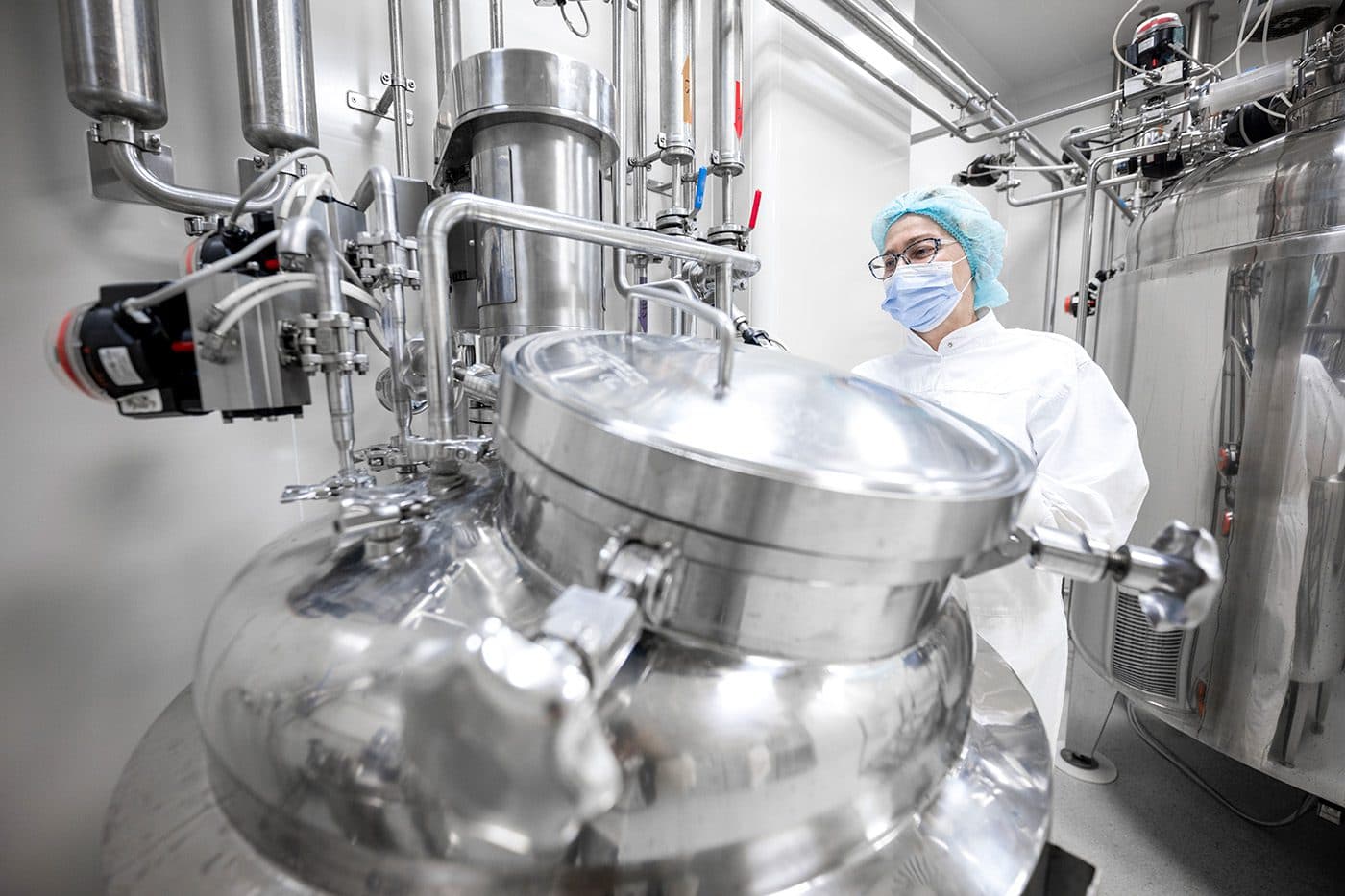
Ireland’s National Institute for Bioprocessing Research and Training (NIBRT) will help biopharma engineers hone their automation and AI skills as part of a new World Health Organization (WHO) network.
The WHOnamedthe University College Dublin-based organization as its newest training center, explaining it will provide engineers with context-specific skills courses aligned with “regional priorities, regulatory environments.”
NIBRT spokesman Killian O’Driscoll tellsGEN, “Following a competitive application process, NIBRT has now been designated as the WHO Training Center for the European Region. NIBRT will work with partners and stakeholders to identify the skills gaps within the region and provide the appropriate training solutions, which will involve a blend of online, classroom, and practical training on biopharma manufacturing.”
Engineers who take part will be taught how to use advanced bioprocessing technologies in a variety of manufacturing settings, according to O’Driscoll, who says the plan is to use the organization’s syllabus as a foundation.
“Training will cover all aspects of biopharma manufacturing based on NIBRT’s award-winning curriculum, including drug substance, drug product, QC, engineering, digitalization, etc. Automation, digitalization, AI, and related areas are a core component of the NIBRT curriculum and will form part of the training solutions,” he adds.
LMIC capacity
The WHO established the Biomanufacturing Workforce Training Initiative in 2023 to address critical skills gaps across the biomanufacturing value chain and enable countries to translate technological advances into sustainable local production.
NIBRT is now one of seven institutions selected. The rest of the network consists of the Institut Pasteur de Dakar in Senegal, the Council for Scientific and Industrial Research in South Africa, the Oswaldo Cruz Foundation in Brazil, the Translational Health Science and Technology Institute in India, Egypt’s Center for Continuing Professional Development, and Peking University in China.
The initiative directly supports World Health Assembly resolution WHA74.6, which called on member states to strengthen local production of medicines and other health technologies to prepare for emergencies.
This will be a focus of NIBRT’s training activities, according to O’Driscoll.
“One of the key actions the WHO identified following the COVID-19 pandemic was to increase biopharma manufacturing capabilities within lower-middle-income countries (LMICs). The WHO’s Biomanufacturing Workforce Training Initiative addresses critical skills gaps in the biomanufacturing value chain to support sustainable local production of vaccines and biotherapeutics in LMICs,” he says.
In a press statement, director-general, Tedros Adhanom Ghebreyesus, PhD, said, “We have designated regional training centers in each of WHO’s six regions to build the skilled workforce needed to sustain local production of vaccines and biologics. They will operate as part of a coordinated global network, delivering context-specific training aligned with regional priorities, regulatory environments, and languages.”
InsightsBiomanufacturingBiopharmaceuticalsBioprocessingHealth care organizationsAlso of Interest
Transcenta Therapeutics and WuXi Biologics Team Up to Accelerate Commercialization of HiCB TechnologyManus and UT Austin Advance Biomanufacturing Product Recovery Through BioMADE ProgramSmarter Cell Culture Starts with Better MediaTop 10 Contract Development and Manufacturing Organizations 2026Harnessing Real-Time DataAI Accelerates Biomanufacturing from Discovery to TranslationRelated Media
Reporting Live from JPM 2026: Alex Philippidis and Jonathan Grinstein, PhDBoston's Bioprocessing Buzz:GENReports Live from BPI 2025Bioprocessing in Boston: GEN Reports Live from BPI 2024Genetics in DC: A Report from ASHGBioprocessing in Beantown: GEN Reports Live from Day 2 at BPIBoston and Bioprocessing: GEN Reports Live from the First Day at BPITop 5ResourcesRecommended For YouPodcast
Touching Base
Touching Base is the dynamic podcast series from the editors ofGEN. Each episode features a rotating case of senior editors—including John Sterling, Kevin Davies, Julianna LeMieux, Alex Phillippidis, Uduak Thomas, Corinna Singleman, and Fay Lin—who delve into emerging stories, exchange ideas, and debate the latest trends in biotech. Additionally, they talk to some of the leading voices in the industry about what's now and next.Start listening today!
Stay up to date with the lasted episodes of Touching Base bysubscribing to theGENPodcast Newsletter
Copyright © 2026 Sage Publications or its affiliates, licensors, or contributors. All rights reserved, including those for text and data mining and training of large language models, artificial intelligence technologies, or similar technologies.
MORE STORIES